from somewhere i find myself lost in the feel in the feeling somewhere between the self righteous feeling of being able to do what i want and doing what i need to do im trapped between wishing i could do stuff i can and actually doing it at twelve when i click links to feelings to emotions to things i don’t fully understand my fingers twitch my head rolls and wonderful splinters of crashing ideas come careening into my consciousness but through some utter desire some distinctive and instinctive yearning i shake my passion heavy head and utter for those graces of life that so move me oceanfuls of life that pour into me flooding my conscious with desire and hunger for whats next for everything that i could do but i seem to turn around with ever increasing brevity to the next seemingly endless desire and now more than the time before i wonder if this thing will stick and will it? will i ever do anything i want if i cant decide as to what i should do maybe i should just run off and do what i cant but that wouldn’t be me and I couldn’t give myself up for what would be simply easy for me to do i just run into these walls that shape just before i reach them they are ever increasing in grandeur and i have no idea if anything i do will amount to anything at all but i feel like i have some innate desire and initiative to keep thinking about it all and wondering if there will ever be anything for me
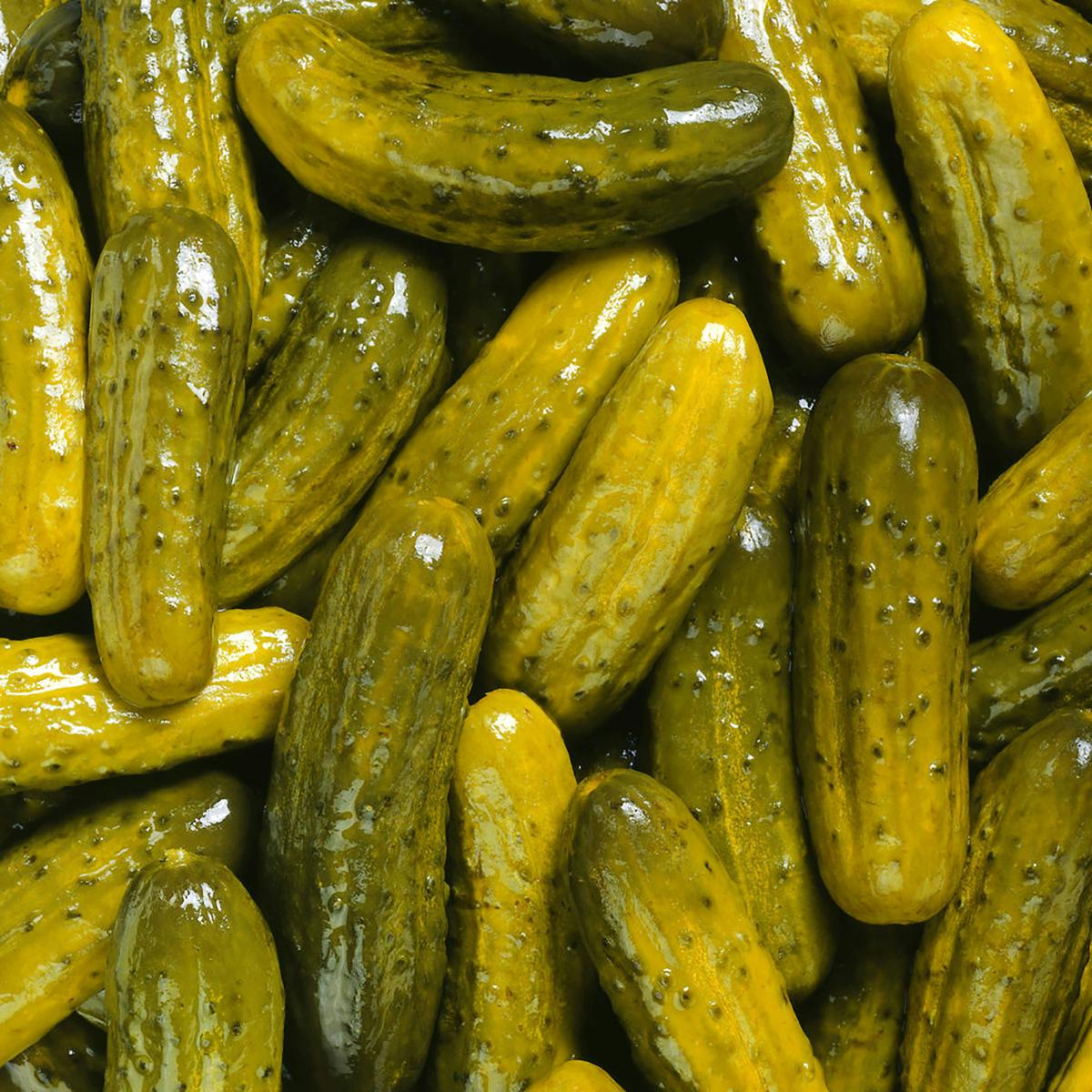
I think English words taste like pickles: crunchy on the outside with savory, meaty middles.
Image: goldbelly.imgix.net
Spanish is like a Frank Lloyd Wright stained glass window, its colorful geometry sliding into place like the children’s game Rush Hour.
Speaking Arabic is like putting on gilded silk robes that I don’t deserve.
Hebrew diffuses through my veins, and Yiddish sends me spiralling into my ancestors.
When I sat in French class, I was able to peer into a manicured francophone antique store that enthralls me.
And when I preach my dreams of universal Esperanto, I feel the international interdependency of the future colliding with the frilly beauty of antiquity.
I was barely twelve when I sat on a train pouring words onto a page, words that sounded right, that fit right, that like singing nails resonated in my chest.
I was a silversmith working self-righteous metal into ornate rings around fingers black with mud.
For much longer than I am willing to admit I have been obsessed with flags. My trusty yellow legal pad was covered with tiny drawings of real and imagined flags, and I talked extensively about the tackiness of specific flags to anyone who would listen, and, perhaps most embarrassingly, I referred to my study of flags as vexillology. I love the way the perfect geometry of a good flag looks when it is billowing freely in the wind, and a flag at half mast brings my world down with it. A flag is noble and monolithic and is ideally the distillation of a place, but there is also massive weight in the symbolism of a flag. Flags can tell the story of oppression, and they can symbolize a history fraught with complications. I love Los Angeles, but I hate its flag (it is just undeniably ugly). For centuries, a black flag with a skull and crossbones made grown men quiver, and now it is reserved for children’s games. The black, red, green, and white of the Arab flags unite those ancient, bickering states, and the stars and stripes tear through the wind on diesel pickups as they roar down highway 33.
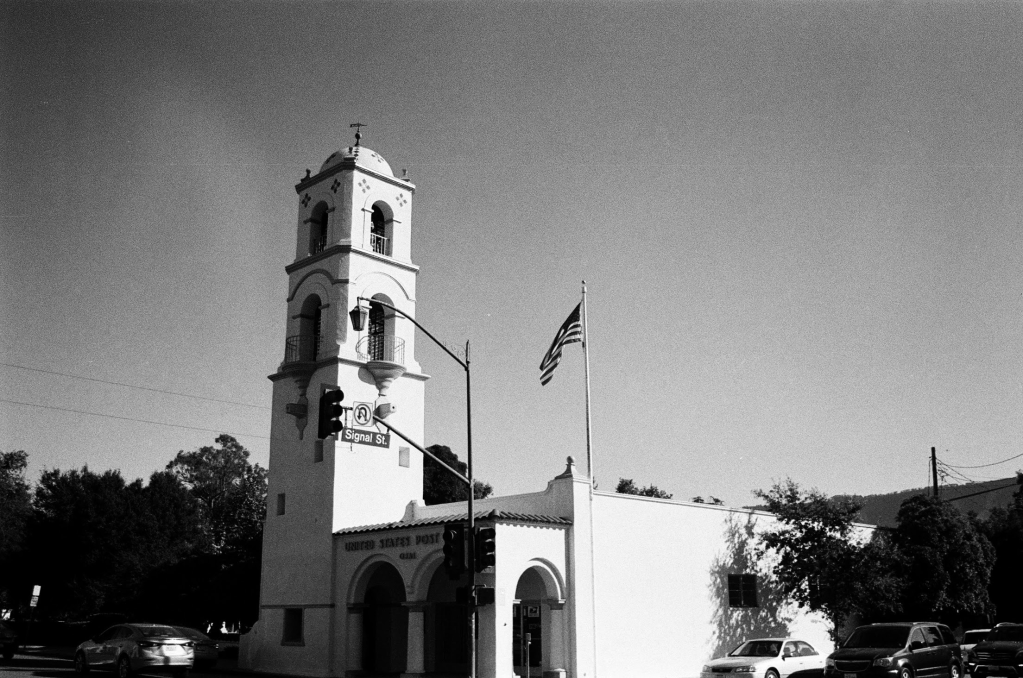
The American flag is also the focus of the first section of Arthur Grace’s America 101. The photobook describes the way Grace sees this glorious and hypocritical paradise of oddity. I spent so much time reading this book that it changed the way I take photos. But it has also changed the way I see the American flag in general. Grace juxtaposes the immense pride Americans have for the flag with the mundane usage that it receives in advertising or on smokestacks. These two parts of Arthur Grace’s America, one, comically capitalistic, and the other, powerfully patriotic, have become the lens through which I look at my own nation.
When flying, a flag can be seen on two sides. From the perspective of my Latino heritage, I see those stars and stripes representing employment and the opportunity to support a big family. With entirely different circumstances, my Jewish point of view is focused on the underpinnings of the American beliefs in freedom and expression. The symbolism of the flag is different for everyone who views it, and that is one of its strongest powers: being something everyone can relate to.
As much as I love the American flag for personal reasons, from a design perspective, it is flawed in one way: it cannot be drawn by a child with a box of crayons. This one simple test is the true mark of a perfect flag, and the American flag falls short. There are simply too many stars for it to be crayon-able. But many great flags are similarly afflicted. The Union Jack, for example, is almost stellar, but what child knows that it is not horizontally symmetrical. Or the Mexican flag—beautiful, bold, and impossible to scribble. There are, in fact, perfect flags, unmistakable even in chicken scratch like the elegant Swiss flag and the simple beauty of the Japanese hinomaru.
To me a flag is a poem. At first it presents as simply beautiful, but with time and knowledge of its history, a flag unfurls the silky layers of its meaning, its true power. A flag can be glossed over, or it can be analyzed and decoded and still maintain its original beauty. Flags tell a story, a history of a place, and that is why I am still fascinated by them.
stuck uncomfortably askew into my otherwise sweetly lapsing childhood
the odd cold memory next to geraniums and my dads’ warm hands:
it hadn’t rained in weeks but it would tomorrow
tyler and his friends tore down the highway
the truck old
the boys young
and the night infinite
four teenagers careening through space
running out of time
(twinkling like stars, the holes in the bottom of his truck shone into the cab. Twinkling not like natural light, but like reflections from yellow road reflectors and moonshine)
then as Murphy knowingly frowned
the teenagers plunged abruptly into the darkness
two flew through the night and landed bloody on the highway
but he and his passenger tumbled endlessly into that indiscriminate abyss
and someone I hadn’t thought about in years came crashing back into my life
(and those stars that lined his bare calloused toes erupted into vivid supernovas)
tyler and I were friends when i was very young. he lived in Kauai and i would visit every so often. he was a terrible influence; he would steal stupid things, and i would watch. sometimes tyler took me fishing. he would torment the fishes by cutting off their fins and sending them back to the water to die bloody but breathing. and i would watch. he told me fish don’t feel pain, but i saw that he did. he grew up between houses, neither one was particularly welcoming. he grew up never believing he had a chance. one day he was watching his younger sister, and i remember sitting where the tide leaves sandy pools on the beach. she splashed and screamed while he delicately folded her clothes placing them carefully on a log. I watched him pull a shirt over her wet sandy head and I saw how precarious tyler’s life was. he couldn’t have been more than twelve.
it barely hurts to imagine him flying down the road drunkenly focused, it doesn’t pain me to imagine his dark brown eyes, and not even the dead teenagers trapped in a combusting coffin bring me to tears



 OVS Journalism Blog
You must be logged in to post a comment.