On Saturday night, Nicki Minaj took to Twitter to do a little gift giving for some of her followers. On May 5, Minaj released the “Regret In Your Tears” music video, which is from her upcoming album. The day after, she challenged her fans to make Musically’s to her song, and the person with the best submission would get to fly out to LA to listen to some of the unreleased album. After getting flooded by submissions, @cjbydesign asked Minaj to pay for her college tuition instead of flying her to LA. The response she got was quite a surprise.
“Show me straight A’s that I can verify w/ ur school and I’ll pay it. Who wants to join THAT contest?!?! Shld I set it up?” Minaj tweeted back.
Show me straight A's that I can verify w/ur school and I'll pay it. Who wants to join THAT contest?!?!🤷🏽♀️ Dead serious. Shld I set it up? https://t.co/czH715u64a
Almost like wildfire, fans started tweeting at her to pay for various school fees, some for tuition, summer programs, student loans, and even their bills! After a dozen or so responses, Minaj loosened up on the requirements. She started giving hundreds to people who just needed the money. At the end of the night, she had helped nearly 30 people pay for various educational expenses.
Like anyone, Minaj had to stop the contest at some point, as she can’t pay for every request. She didn’t want to leave her fans hanging though, and promised to do another spree in a few months.
Ok u guys. It's been fun. Let me make those payments tmrw then see if I have any money left😂. I'll do some more in a month or 2. 😘😘😘💋💋💋💕💕🎀🎀🎀
As seen by the many tweets, Minaj spent at least $30,000, not to mention the various costs she discussed privately with some fans. This just goes to show that it really does pay off to get good grades in school.
About two weeks ago I sat down on my bed and opened Netflix. I kept scrolling and scrolling until, wait. I scrolled back up. In the Netflix Originals section there was a poster for 13 Reasons Why. I remember hearing so much hype for this show and seeing so many pictures from it. Not to mention, Selena Gomez, a producer for the show, raved about it on her Instagram a month ago. Almost impulsively I clicked play and listened to those first words, ringing through my ears.
“Hi, I’m Hannah Baker, live and in stereo.”
Photo Credit: hollywoodreporter.com
I was instantly hooked and stayed that way until the last episode. However, by the time I was done, I was shaking and crying. No, it didn’t move me or inspire me to donate to suicide prevention lines. It gave me a panic attack. That’s the hook. The show slowly, mysteriously arises, making you want more. The end comes in flashes and ends with a bang.
Up until this point, I’ve loved most shows I’ve watched on Netflix. Stranger Things brought a retro spin on an eerie missing child’s case, and Netflix also revived some of my favorite shows from my childhood, like Degrassi and Bill Nye. However, 13 Reasons Why seems rushed and overly dramatic. They took Jay Asher’s book and made it a sloppy real-life version.
Obviously the show can’t be exactly like the book, explaining the various character changes, such as Sheri and Courtney, and depicting some timeline and technology differences. Of course, they had to spread out Clay listening to the tapes to supplement an entire season of episodes. It makes sense that they’d show different perspectives to create more depth and keep interest at bay. In 2007, when the book was originally published, social media wasn’t as popular as nowadays, which makes the technology advancement sensical.
That doesn’t explain why they changed Hannah’s suicide. When I saw her death scene, my stomach twisted into a pretzel, with a cold, hollow feeling. I started crying and hyperventilating. Yes, there was a warning at the beginning of the episode, but nothing could’ve prepared me for seeing her slit her wrists and bleed out in a bathtub. My full-body aching became worse when I found out that they changed it from Jay Asher’s original story. In the book, Clay simply mentions that “Hannah swallowed some pills.”
Some have said that this scene only makes the show more powerful. However, seeing something as graphic as that does more harm than good. In fact, Hannah’s suicide could be a risk factor for those on the edge. The American Foundation for Suicide Prevention states, “Exposure to another person’s suicide, or too graphic or sensationalized accounts of suicide” could be an environment stressor that could trigger a suicide attempt. While it is given that there will be mentions of suicide, it isn’t publicized that a graphic suicide attempt is present in the show.
Many mental health professionals have spoken out about the negative affects of this show. Along with Hannah’s suicide attempt, the story itself glorifies suicide. The entire show is buzzing all around social media for its amazing cast and storyline, so it’s hard to detach it from all the talk, to talk about what it’s actually worth.
The entire premise is that a girl kills herself and blames it on other people, which is usually the opposite of what actually happens when someone takes their life. There is usually a feeling of helplessness and worthlessness, but suicide is (and always will be) the choice of a single individual. Viewers also miss the internal struggle that most people on the edge experience – the constant back and forth decision-making of whether or not they’ll commit.
Other less prominent issues are in play. Clay’s childhood friend, Skye Miller, tells him that suicide is for the weak and cutting is for those who are strong. Despite being grotesquely wrong, this glorifies self-harm, as a “strong” thing to do. Self harm is never a healthy, safe choice and can cause numerous health problems, besides leaving scars. The school’s health counselor’s, Kevin Porter, lack of training is appalling. He doesn’t recognize obvious signs of Hannah’s suicidal thoughts and doesn’t report that she was sexually assaulted after he pressures her into giving out the name of her assailant, which she refuses to do out of fear. This scene will discourage many students to seek help in times of need, which could cause many lives to be lost.
Finally, Alex’s suspected suicide attempt is unnecessary and a cheap way to obtain a second season. He obviously exhibited signs of suicidal ideation, but this was uncalled for. The story has no mention of Alex killing himself and for a show that wants to honor the original story, this makes zero sense. My hope is that if they make a second season, they will be more aware of how to handle his suicide in a more appropriate (and less triggering) fashion.
For what its worth, this show does open up a dialogue about suicide awareness. While the information in this show isn’t all factual, it at least depicts suicide as a very real, very horrible thing. If you or someone you know is considering self-harm, please get help. Call the National Suicide Prevention Lifeline at 1-800-273-8255.
There comes a time in every senior’s career when they have to start picking colleges. Now, I’m far from being a senior, but I started thinking about colleges after going to the East Coast during spring break. Through all my time thinking about location, majors, and programs, one thing has stuck with me.
Photo Credit: breakthroughmiami.org
How are we, as children, supposed to decide the course of our lives? When someone chooses a college, they chose their connections, their future job opportunities, and many other hidden factors. When we choose a major, we cut off most of our time to explore other subjects of thought.
Picture this: You walk in to Ms. Oberlander and Mr. Alvarez’s college meeting. You sit down, take out your laptop, and open Naviance. You take a look at the colleges you’re thinking about. UCSB, Chapman, Harvard, or Yale. You have your target schools, but you know in your heart you’re dying to go to your reach school. You raise your hand to go to the bathroom, interrupting Ms. Oberlander’s speech about freedom.
It’s a little ironic. When most students go to college, they don’t know how to handle themselves. Just three months before freshman orientation, they still had to ask to use the restroom. They still had their parents doing their laundry and making them dinner. Teachers still told them how to dress, how to act. At OVS, we have the unique opportunity to learn some of the skills most college students lack so that we are more prepared to take on this new challenge.
However, OVS (and any school for that matter) can’t prepare us for what’s out there. It can’t prepare you for the choice between going to class or playing video games. It can’t prepare you for the people who will hurt you or how to make friends. They can only cross their fingers and hope you succeed.
Over the weekend, my friend dragged me to a Ventura movie theater to watch the Power Rangers. Yes, Power Rangers. I remember walking into the movie theater wishing I could go get my nails done instead. I sat down and prepared myself to fall asleep.
Right when my eyes started to flutter, Billy Cranston, the soon-to-be blue ranger, admitted he had autism. Not in an embarrassed or comical way, just simply put. Jason Lee Scott, the red ranger, responded with sarcasm, which Billy said he didn’t understand.
While this scene may seem insignificant and random to most, it is just the kind of positive, informative representation that people with autism need. Billy’s autism isn’t made to be the punchline, the means of a joke. Billy is a valuable member of the team, just as strong as the others. He was even the first to morph, something the entire team struggled with.
Photo Credit: comingsoon.net
This moment is joining the many moments in media embracing autism. Sesame Street is introducing its first character with autism, Julia. She’s afraid to shake Big Bird’s hand when she first meets him, prompting Big Bird to get upset. However, Elmo explains to Big Bird that it is harder for her to come in contact with others. By the end of the episode, she is playing tag with the group and is jumping with excitement.
These moments are so momentous because they’re bringing awareness to a larger audience. They’re informing the public through interesting storylines and complex character developments. They’re also bringing much-needed representation. Now, little girls and boys with autism will believe that they can be superheroes. Preschoolers will learn about their best friend’s disorder, and these successes will pave the way for new stories to be made.
While scrolling through Instagram, I came across a startling post. In the past 24 hours, 14 young black girls have been kidnapped in Washington DC. Even more astonishingly, it has taken an outcry on social media, not pure human concern, for media outlets to even report on this horrific incident.
When new Metropolitan Police Chief, Chanel Dickerson, was appointed two months ago, he pledged to find all the missing girls in DC. This statement comes at a dire time in our nation’s capital. Since Wednesday, 22 kids have gone missing, adding on to the hefty 501 case so far this year. Needless to say, these missing reports are nothing new.
What is almost more concerning than the sheer number of cases is the public’s lack of knowledge. When I asked my friends if they had heard about these cases, none of them knew. Whether it be lack of speaking out by major news outlets or seeing a headline and forgetting it, they had no idea that 14 girls our age have been taken from their families, friends, and homes. Even though media involvement can be dangerous in some cases, news about these girls needs to come out so that the public can keep a watchful eye and even protect these girls.
Members of the Congressional Black Caucus are appealing to Attorney General Jeff Sessions and FBI Director James Comey to open a federal investigation. They call for help because of the fear of a deeper, scarier underlying agenda and the obvious racial stigmas present.
Photo Credit: bbc.com
“(W)hen children of color go missing, authorities often assume they are runaways rather than victims of abduction,” the lawmakers said. This statement has been backed up with looming facts and other reliable sources coming out to make statements as well.
DC City Councilmen Trayon White believes that there is an underlying theme of racial prejudice involved. “We had a 10-year-old girl missing the other day, but there was no amber alert,” White said. “We just feel like, you know, if this was a white person or from another neighborhood, there would be more alarm about it.”
Especially in cases involving minors, it’s critical to reach out to the public for help, as most child abduction victims are killed in the first 24 hours. White’s concern holds a lot of standing, because although some of the 14 new cases are adults, these people have been put in a terribly unsafe position.
In fact, many DC residents believe these kidnappings to be part of a human trafficking scheme. One would believe that this fact alone is enough to spark national outcry, but we still find ourselves missing 14 girls, with limited headlines and a lack of information on how to help them, before we hear their names in eulogies.
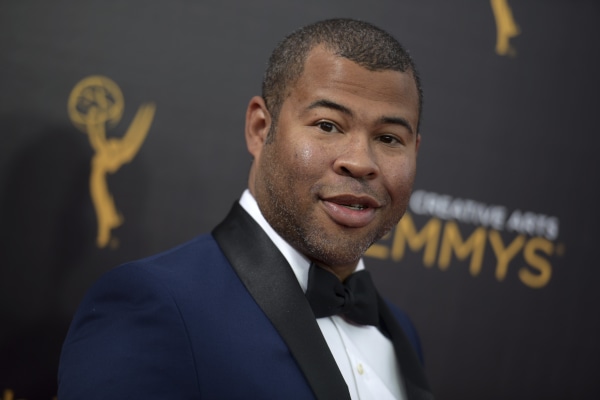
Three weeks after it’s release, Get Out has had its share of victories. From staying in the top three top-grossing films in the United States box office to getting a 99% rating on Rotten Tomatoes, it’s only fair to call this movie a huge success. Along with these triumphs comes an exciting new moment in history: Jordan Peele, the famous co-creator of the comedy show Key and Peele, has become the first black director to gross $100 million with a debut film.
This feat is especially exciting when you take in a few factors. First, this movie had a modest budget of 4.5 million, which usually makes it difficult to become popular in such a competitive movie market. Second, this is Peele’s first movie, as he has only dipped into television. Not only did he direct the movie, but he also wrote the screenplay. Finally, this is the second huge success for the Blumhouse Production company – known for making low-budget horror movies – this year. It also produced Split, a psychological thriller that made $250 million with a measly $9 million budget.
Peele revealed his motivations for making this hit in an interview with Fresh Air‘s Terry Gross as much more than just a typical horror movie. He classifies this film as a “social thriller,” which is extremely accurate with its racially charged plot during such turbulent times in this country.
Photo Credit: nbcnews.com
“It was very important to me to just get the entire audience in touch in some way with the fears inherent [in] being black in this country,” Peele said.
Award shows, such as the Oscars, have been criticized for their lack of diversity for years. This news shows that people of color continue to transcend expectations, which calls for even more recognition. Even though Get Out couldn’t be considered for many awards shows, as it is a horror film, it still is loud evidence of black excellence. In the future, I hope more diversity will show through in Hollywood, as it has been proven many times that people of color can be just as successful as anyone else.
On Friday, audiences will once again revisit the “tale as old as time” when the Beauty and the Beast makes its live action debut. The movie, featuring the amazing acting abilities of Emma Watson and other Hollywood veterans, has already been featured in many famous news platforms. Why? In an interview done by Attitude, a British magazine, the director, Bill Condon, revealed that LeFou, Gaston’s trusty sidekick, will be gay.
While he didn’t specifically say what will happen, this statement was met with many different reactions. To some members of the gay community, this was a breath of fresh air. Finally, Disney, a huge media influencer, has validated the gay community with its first “exclusively gay” moment. The fact that a character in such a beloved classic is out, or at least exploring his sexuality, is the representation that many wished they had when they were younger.
However, some members of the gay community were upset by this update. Ryan Houlihan, a Teen Vogue writer, states his ailments in the following, “They made the gay character a villain, relegated him to being a sidekick, gave this explicitly queer role to a straight actor, and then muddled the issue by making him sexually ‘confused’ – just to hedge their bets.” It’s also terrible that Lefou’s entire “gayness” is him pining over his unattainable straight friend. What the LGBT+ community needs is a gay character who gets his feelings reciprocated and a meaningful plot progression.
No matter the opinions, the media has gone into a frenzy about this new additive to the plot, making it a hot topic for new interviews of the stars. Emma Watson, the actress of the remade feminist Belle, made it quite clear that LeFou’s gay moment isn’t extremely pronounced, on the other hand, she called it “subtle.” Apparently, it’s a mystery whether he is in love with Gaston, as it isn’t written in the script.
Bill Condon thinks the attention is “overblown,” as Josh Gad’s character is featured in a background dance scene with another man. Condon’s response to this attitude surprises me. Saying that this movie will feature the first “exclusively gay moment” in Disney’s history is a pretty big deal, so being shocked by the media outburst seems a little odd.
Nevertheless, I’m excited to see this moment for myself, as I want to experience this revolutionary moment on the big screen this Friday. Watch a preview of LeFou’s famous “Gaston” here:
In an interview done by Fox News, Teen Vogue writer Lauren Duca’s authorial legitimacy was questioned. She was asked to be interviewed after writing a piece on Donald Trump back in December 2016. So, as one would assume, she thought they would ask her about the article. Instead, they went on for ten minutes about how, as a fashion writer, she was unable to accurately write about politics.
This kind of blatant sexism is found in many places in journalism and is becoming commonplace with female journalists. The fact that a respected news organization like Fox News could let an interview like that air is beyond me. This incident didn’t just spark unrest for Miss Duca, but for journalists like her. Why is it that because a woman writes about fashion, makeup, or hair, she is incapable of writing about more serious things like politics or other current events?
This false predisposition is just what Teen Vogue sought to disprove in the newest edition of their magazine. Wrapped in a tall collectible format, hundreds of ideas were displayed to their many, avid readers. From the profound significance of the Academy-Award winning movie, Moonlight, to one man’s relationship with makeup, this magazine tackles a wide variety of ideas.
After reading this volume on my flight back to Los Angeles, I was blown away by the passion some of these authors wrote with in their articles and the stereotypes of a “teen magazine” that were totally disregarded. I read interviews of celebrities, such as Troye Sivan and Lena Dunham, done by people close to them. They were laced with a feeling of comfort, something you couldn’t find with a typical interview. I learned of the uplifting story of a Syrian girl finding a new life and love after fleeing her war-stricken country. I read stories of all different kinds of love: sisterly love, pet-owner love, love of fashion, and self-love. This volume talked about consent, masturbation, sexuality, and other essential lessons not always found in the sex-ed taught in high schools. The photoshoots showed candid smiles, unique fashion, and people of all races and sexualities.
Photo Credit: thefashionspot.com
In the future, it is my hope that more magazines will follow suit. Continuing to write about fashion and makeup, but also about things that matter outside of that realm, will further enrich the knowledge of many. It is important to hear voices from many walks of life, as representation is the first step to feeling empowered.






 OVS Journalism Blog
You must be logged in to post a comment.