poetry rambling

In English, we have a “March Madness” poetry bracket. I like that we are reading poetry instead of writing essays. Writing essays is fine too, but reading poetry is more enjoyable. After reading so many poems in one sitting, I’ve found a greater appreciation for poetry, because the range of poetry styles and topics is so diverse. I submitted “The Rose Family” by Robert Frost because I thought it was really cute. Another poem I really like is “My November Guest” by Robert Frost, even though I didn’t like it at first because it seemed like any other poem. Once I found an analysis of the meaning, however, I felt more appreciation for it. However, there were some other poems I also really liked. I liked reading “This is Just To Say”  by William Carlos Williams, although I’m not sure how exactly poems like that qualify as poems. I don’t like descriptive poems about landscapes and things, because they feel so dry and meaningless. I like the poems that don’t make any sense because they seem more profound that way. For example, I have no idea what “They Shut Me Up in Prose” by Emily Dickinson means, but it is really enjoyable to read, and I bet it will be even better when I understand it. Also, “Masks” by Shel Silverstein is really cute and it has a good message behind it. Shel Silverstein writes a lot of nonsensical, funny poems, but there are some really good, more heartfelt poems buried among the fun ones. Even some of his silly poems, like “The Generals,” potentially have a more serious message behind them. I find it really impressive how authors of poetry and other writing have such a capacity for evoking emotion and experiences.

Picture Credit: Department of English

A short story about waiting for the bus

Once upon a time, there was a man named Bill. He sat at the bus stop, and it was raining. He held of bouquet. It was a bouquet of roses. They were very pretty at one point, but he had been sitting and waiting at the bus stop for a while, and they were wilting. It was wet and cold outside, but he knew that it would be better when he got on the bus. He wore a dress shirt and pants that were not warm enough to shield him from the cold, wet, weather. Bill shivered. 

He stared out at the supermarket across the street. It would be dry and warm in the supermarket, but he was waiting for the bus. 

Bill looked out at the damp scenery, doing and thinking nothing. He was simply waiting in a cold, trance-like stupor. 

A woman walked along the sidewalk, holding an umbrella. She was walking her dog, and the dog was wearing a little raincoat. As she approached the bus stop, she could see a man sitting on the bench. She wondered if he was waiting for the bus, and she wondered if he knew that the bus had been decommissioned earlier that month. The woman hesitated. Should she tell him that the bus would not come? He looked quite still and content, waiting, and she did not want to intrude. And perhaps the bus was back in order. She was afraid to interrupt his day and afraid to be wrong, so she walked past the bus stop and said nothing.

Bill waited for the bus, but the bus never came. It continued to rain for years, and for years, the bus never came. Bill sat a the bus stop, waiting for the bus. Every year that passed watered the seedling of despair that Bill nurtured in him. His bouquet of roses died, and his clothes faded. With this despair, Bill clung to the hope that the bus was almost here and that when the bus came, it would restore the delicate life in his bouquet and the robust color of his clothes, and everything would be right again. Sometimes he thought he heard the hiss of an engine or the grumble of the wheels, but it was an illusion brought on by the rain.

Eventually, Bill grew old and died at the bus stop, waiting in the rain. 

Photo by Jana Shnipelson

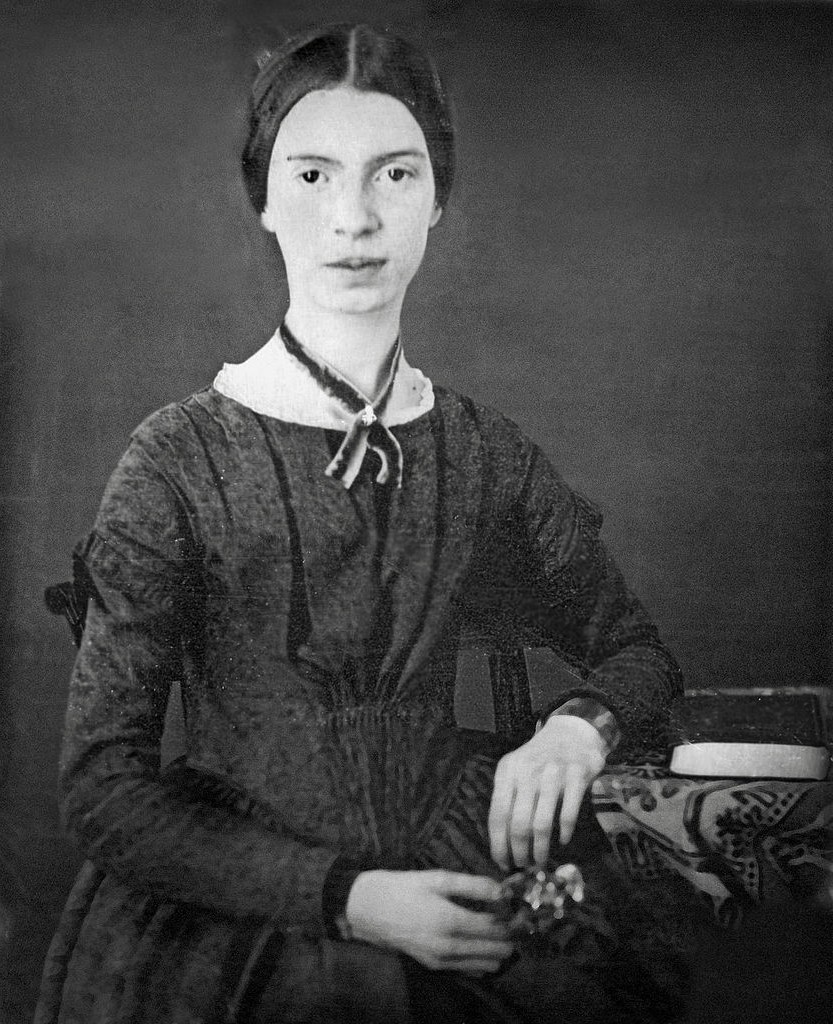
Emily Dickinson Poetry

I think Emily Dickinson’s “This World is Not Conclusion” is one of her most underrated poems. Here’s an analysis:

PC: https://pictures.dealer.com/l/longsubarusne/0206/e4cd7c82d5d22ed969b04975e716e254x.jpg

In “This World is not Conclusion,” the opening line asserts that the world we know and inhabit is not the only one and that death is not final. The statement ends with a full stop, in contrast to the hyphenated lines which follow. This difference signifies that the narrator is firm in his/her belief, which could be ironic, as the rest of the poem is concerned with doubt. Next, Dickinson describes a “Species” which “stands beyond –,”  to be “Invisible, as Music – / But positive, as Sound –”. This paradox suggests that the world may not be as rational as we would expect if music and sound can have opposite qualities. “It beckons, and it baffles – / Philosophy, don’t know – / And through a Riddle, at the last – / Sagacity must go – ” the poem continues. That which the narrator seeks both compels him/her to investigate and leaves him/her bewildered in the search for truth – another example of juxtaposition. No conventional intellect can answer the question of what happens when one dies. The poet writes that scholars have puzzled over this “Riddle” for centuries while other men have adopted religious faith, especially Christianity. But Dickinson says that sometimes this faith slips in a world becoming increasingly skeptical. When this happens to an individual, they will laugh at themselves a little, ‘correct themselves,’ so to speak, and blush in case anyone saw. To believe in something whose existence cannot be proven by any means, – in fact, can oftentimes be disproven – is embarrassing, the poet insinuates. People “[Pluck] at a twig of Evidence – / And [ask] a Vane, the way –.” The “twig of Evidence” metaphor describes how little proof there is, but could also imply that there is much more to be found – a whole tree from which the narrator has plucked but a twig. Conversely, the tree could bear information that invalidates the narrator’s belief system, but which they choose to ignore for that very reason. Dickinson’s intentions here are ambiguous. Also, the notion that a weathervane can tell “the way” is nonsensical because this device constantly changes direction. Perhaps the word “Vane” punningly suggests that truth-seeking is all in ‘vain’ and won’t produce any results. The final stanza reads “Much Gesture, from the Pulpit – / Strong Hallelujahs roll – / Narcotics cannot still the Tooth / That nibbles at the soul –.” This excerpt alludes to a Church service, and then concludes with a metaphor to communicate that no expression of faith can inhibit the doubt which “nibbles at the soul”. The poem as a whole explores the conflict between faith and doubt, especially when it comes to belief in an afterlife. It is up for interpretation as to whether this belief is well-founded or ill-considered.

Poem 1

They can’t stay in the present.

Because

their eyes are three seconds ahead,

their head is three years behind.

And the light

that shines above the head,

is seven more years 

slower than tears.

scopeblog.stanford.edu

Poetry, again

I lift weights

I have mates

My least favorite fruit is dates

I’m currently looking for good insurance rates

I love playing Crazy Eight’s

When my mom gets angry she throws plates

I work at the docs, carrying crates

Our future awaits;

This poem needs someone to narrates.

pc: vecteezy.com

The Story of a Man Snapping my Neck

For weeks on end all felt in my neck was a strain

My misaligned spine was causing me quite a lot of pain

So after months of waiting I made a chiropractic appointment

Which did much more than a muscle relaxing ointment

CRACK

At first I thought the man had killed me

for his monstrous hands hinted at villainy

I had thought he snapped my neck in half

Or stretched it out like a giraffe

I was vulnerable in this behemoth’s grip

For he could pull my limp head off if his hands were to slip

I was at this mans mercy

pleading he wouldn’t hurt me

But in the end he helped me

And made sure to announce his efficacy

Back Pain and Chiropractors

https://www.healthline.com/health-news/science-says-chiropractor-can-help-solve-back-pain

This love is like the moon

This Love is like the moon: the guiding light

The guiding light that is taking me home

The moon hangs on the flowers as we roam

The brilliant moon Illuminates the night

The moon watches new flowers bloom with delight

A tale as old as time, take me back to Rome

The guiding light that dims in the unknown

This love and the moon fell victim to fright

Going on, there are wounds that we must mend

Eventually, the story must end

An eclipse veiled the moon just as we feared

It’s hell on earth and the cities on fire

The serenity of the moon has tired

Just like the moon, this love has disappeared

image from weather.com

capstone pt. 12

That all changed when she brought me to the ocean

In those rich minutes the light was warm gold,

viscous, she let it in

floating in the sodium and the waves.

Rocking back and forth

I fought the ocean,

that colossal blue,

as it pulled the warmth from my heavy limbs,

Suspended four inches from the plexiglass surface,

blowing fat bubbles that distorted your reflection.

Time changed that though,

and warm gold became cool to the touch

sad skin

No matter how warm

Rubs against mine

Like pruned fingers

on paper

capstone pt.7

This trip turned all that thought inward at times

It forced me to really think about what i was feeling,

and to sit inside my heart

so that my hard wired head could stop

and i became content to be in my own space

content to sit within myself as I moved. 

content to just watch as the world changed around me

merely maneuvering my truck from idea to idea

it forced me to process things by writing them

but it also gave me the space to think things through in conversations on the phone

but that depended entirely on cell service 

the oaks

wrinkles

white walls

metallic beige

flying roaring

cutting

white walls

warm animals 

in half motion

motioning

in motion

you latch on to these moments, these images, as they race in your head, as they take tight turns, as a force like gravity pulls and pulls you away. you find yourself empty save the quiet conversations and the warm silence. the moments that make you you. but how ‘bout I move them? 

how ‘bout i reorganize the pantry

pull the back towards the front

pour it all out

how ‘bout when you feel those candlewarm memories

in your stainless vaccum

you feel them.

you feel the road, the car

the pull

you feel the moment, the memory

fading

into the fog

capstone pt. 14

______

Then on friday

as the sun set I tore down highway 1

past cambria

by hearst castle

frantically searching for a place to get in the water

and even as the sun dipped under the saddles I sped through

I could feel I could find it

and I did

I changed quickly and jogged past multiple signs which thoughtfully informed that this area was the elephant seal’s area not the humans area, I wasn’t wearing my glasses and it was not very bright so I only saw them as I was leaving 

but I saw surfers in the water and the break looked nice enough so I ran through the grass towards the beach 100 yards off

where the grass stopped the seals started

some small but others enormous

big black bodies

pink mouths

and the screaming

but nothing could pierce the orange and purple sky 

I darted through a maze of them

(entirely honestly I don’t know where the courage to do this came from)

but

I sprinted the last 20 feet to the water, threw my board down and paddled hard past the break to arrive at the silent surfers

I was a mess of limbs and heavy breathing but their boards just made small sounds when they breached the swaying surface and i settled into the salt and the sea

it was a pitchy little close out but occasionally the ocean would toss in this fast pulling right that could pick you up at the rocky point and deposit you on the other side of the cove in just seconds, forcing you to take a deep breath while you paddle back past the seals and the sand

I told this guy that I had been looking to get in the water before sunset and I thanked him for sharing his spot with me

“I’ve come here every day for a couple weeks hoping this spot would be breaking”

“oh yeah?” I said, moving closer by kicking underneath my board

“It opens up only a couple times a year, it needs just the right swell direction, if the waves are too big it washes out, and if it’s too small it doesn’t break, oh and the wind blows it out almost every day on top of that.”

A wave came and he tore off down the line

I watched the sun set from the water 

splashed the cold water on my face.

And When i got back to the car I wrote

I wrote for him,

To her.

To her we are all just bodies

Blubbery and black

She pulls and pulls

The heat from our soles

But occasionally she opens up

And gives back

as he got in his truck I ripped out the page in my journal and handed it to him