Nostalgic Pride


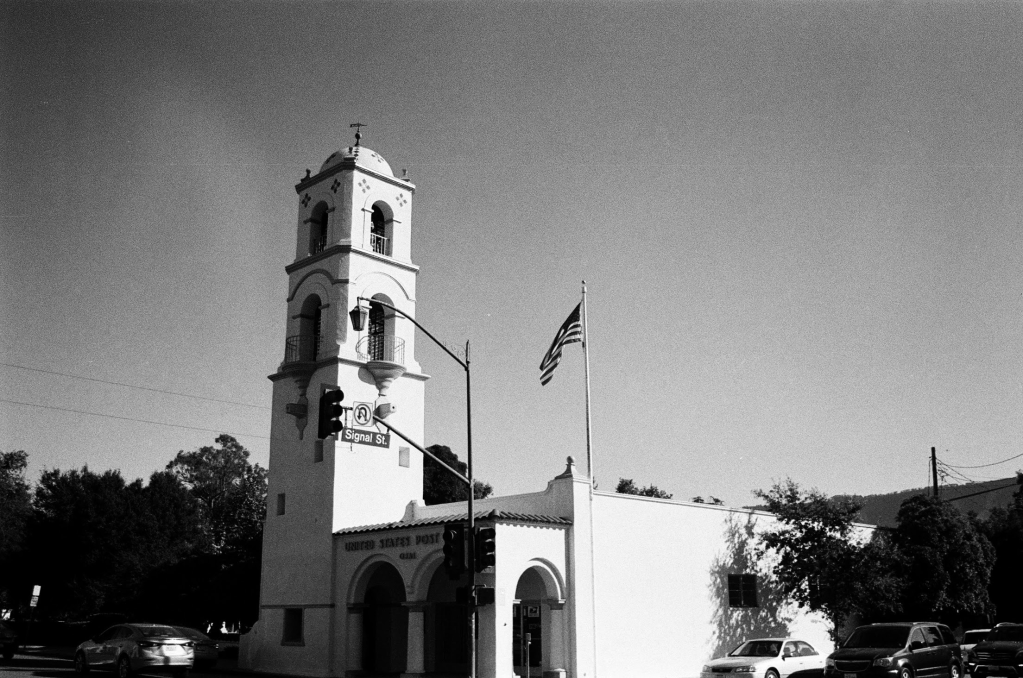
SCENE — 7:00am on MONDAY, JANUARY 2020 in OJAI, CA. SHE WAKES UP IN DISTRESS FROM A LONG AND GLORIOUS SLUMBER.
scars never go away.
no matter how many dollars you spend on Mederma.
they fade, but their reminiscence will always remain.
cuts, bruises, scratches, and blisters hurt
but cuts will heal. bruises and scratches will vanish. blisters and sores go away,
scar takes a different type of hurt. a different type of stab. a scar is a much deeper pain.
happiness, anger, regret, remorse, and fear burn.
but anger will simmer down, regret will turn into acceptance, remorse will turn into forgiveness, and fear will be overcome.
but love is a different type of burn.
love is a different type of hurt. a different type of happiness. a different type of pain.
just like a scar, love fades.
just like a scar, love will never go away.
just like a scar, love is a weakness that can be cut open at any time.
for better or for worse…

“So I did my calculations, there are 93 days before Thanksgiving, 93 long days until I can see April again. To those that don’t know April, she’s my companion…”
I read Hemingway’s A Fairwell to Arms a couple of days ago… ‘They threw you in and told you the rules and the first time they caught you off base they kill you…” They do kill you, I’m telling you.
I didn’t care for writing any journal yesterday. Tired and dulled by all the handbook rules they were announcing last night, I went to sleep quickly. I need to get out of this place, maybe I’ll get kicked out so that I’ll see April back in China again? But deep inside, I know I’m not going to do that. Men are selfish.
I really miss April.”
Because of the virus now I can’t go back to her again. It’s basically the same scenario all over. But this time, I’m willing to get kicked out for her. (not saying I will and definitely not confessing to anything)
I really miss April.

For much longer than I am willing to admit I have been obsessed with flags. My trusty yellow legal pad was covered with tiny drawings of real and imagined flags, and I talked extensively about the tackiness of specific flags to anyone who would listen, and, perhaps most embarrassingly, I referred to my study of flags as vexillology. I love the way the perfect geometry of a good flag looks when it is billowing freely in the wind, and a flag at half mast brings my world down with it. A flag is noble and monolithic and is ideally the distillation of a place, but there is also massive weight in the symbolism of a flag. Flags can tell the story of oppression, and they can symbolize a history fraught with complications. I love Los Angeles, but I hate its flag (it is just undeniably ugly). For centuries, a black flag with a skull and crossbones made grown men quiver, and now it is reserved for children’s games. The black, red, green, and white of the Arab flags unite those ancient, bickering states, and the stars and stripes tear through the wind on diesel pickups as they roar down highway 33.
The American flag is also the focus of the first section of Arthur Grace’s America 101. The photobook describes the way Grace sees this glorious and hypocritical paradise of oddity. I spent so much time reading this book that it changed the way I take photos. But it has also changed the way I see the American flag in general. Grace juxtaposes the immense pride Americans have for the flag with the mundane usage that it receives in advertising or on smokestacks. These two parts of Arthur Grace’s America, one, comically capitalistic, and the other, powerfully patriotic, have become the lens through which I look at my own nation.
When flying, a flag can be seen on two sides. From the perspective of my Latino heritage, I see those stars and stripes representing employment and the opportunity to support a big family. With entirely different circumstances, my Jewish point of view is focused on the underpinnings of the American beliefs in freedom and expression. The symbolism of the flag is different for everyone who views it, and that is one of its strongest powers: being something everyone can relate to.
As much as I love the American flag for personal reasons, from a design perspective, it is flawed in one way: it cannot be drawn by a child with a box of crayons. This one simple test is the true mark of a perfect flag, and the American flag falls short. There are simply too many stars for it to be crayon-able. But many great flags are similarly afflicted. The Union Jack, for example, is almost stellar, but what child knows that it is not horizontally symmetrical. Or the Mexican flag—beautiful, bold, and impossible to scribble. There are, in fact, perfect flags, unmistakable even in chicken scratch like the elegant Swiss flag and the simple beauty of the Japanese hinomaru.
To me a flag is a poem. At first it presents as simply beautiful, but with time and knowledge of its history, a flag unfurls the silky layers of its meaning, its true power. A flag can be glossed over, or it can be analyzed and decoded and still maintain its original beauty. Flags tell a story, a history of a place, and that is why I am still fascinated by them.

Boundaries are a part of our healing process. Many of us grew up in homes where boundaries were non-existent. As children, our boundaries were crossed so often that we become adults without them. We were told how we felt, how to behave, and how to interact with others. This disconnected us from our intuitive responses of stating (and following through with) our own personal limits.
All healthy relationships require boundaries. There’s no shame in us not having boundaries in our relationships if we never had this behavior modeled for us. It’s something we have to learn. And practice. And slowly integrate into our lives.
Disclosure: when I first started setting boundaries it was terrifying. The reactions I got often sent me into fear along with many panic attacks. Being in toxic relationships in the past, confrontation with others was my number one fear. I would completely shut down with the thought of telling someone how I felt about the way they were treating me. It took me a while to realize I am not responsible for the emotional reactions of others. It took me a while to see how this benefited me and everyone I had relationships with.
Boundaries are kind. They provide clear limits of where we end and another begins. They allow other people to understand how to best engage with us. Setting and receiving boundaries can feel terrifying and guilt ridden, especially coming from codependent dynamics.
And for those with unresolved trauma, boundaries can feel like abandonment. They can trigger defense mechanisms within us. All we can do is objectively deliver them with grace. Then hold them regardless of reaction.
You must be logged in to post a comment.