Film Analysis: Glass Onion – The Art of Hiding in Plain Sight

Most viewers, when consuming a piece of murder mystery media, expect layered complexity; they take into account every character’s dialogue, attributes, and motives in hopes of uncovering the buried answers. Glass Onion: A Knives Out Mystery director Rian Johnson—fully aware of this standard approach to mystery stories—flips the murder mystery genre on its head by featuring conspicuous clues and foreshadowing so straightforward that the audience disregards it as extraneous.

Johnson incorporates seemingly standard yet meticulously intentional staging and direction to explicitly reveal how the film’s murders were committed, well before it is verbally revealed much later. The most striking example is during the film’s first on-screen murder, with Miles handing Duke his own glass. Miles urges his friends to look at Birdie’s extravagant dress spin while simultaneously giving Duke his glass. The shot features Birdie’s dress blurred in the foreground, while Miles and Duke are in focus in the background. While the act is quick, Miles’s deliberate murder of Duke is blatantly displayed. But due to Miles calling attention to the colorful dress, viewers are drawn away from the switching of glasses behind her. Furthermore, when Duke’s phone and gun go missing, Johnson ensures that the film’s cinematography and editing present Miles being in possession of both, without explicitly calling attention to it. In the scenes following Duke’s death, his phone can briefly be seen—in short cuts—in Miles’s back pocket. Moreover, when Miles runs away looking for Andi, he runs unnaturally and clumsily, always keeping at least one hand out of sight, implying he is holding Duke’s gun. These intentional visual cues demonstrate how the truth is often directly embedded in the film’s directing and framework, but always eclipsed by Johnson’s carefully orchestrated spectacles and misdirections.

Sakura Kage — Miles' Glass

PC: Google

Just my Luck

It would be an understatement to say that my next few weeks will be exceptionally demanding; I need to prepare for my final SAT test, finish three supplemental essays due next week, and study for the fast-approaching final exams. And while holiday break is right around the corner, I still have January-deadline applications and my Senior Capstone project that I will need to dedicate my time to.

Needless to say, I didn’t have a second to lose.

But last week, I began to feel a sharp pain in the back of my jaw.

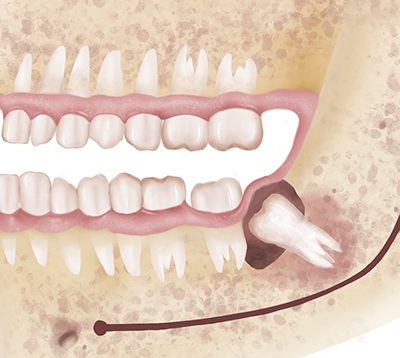
Upon visiting the dentist, it was discovered that the stinging sensation was the result of a wisdom tooth that had pierced through my gums at an awkward angle. To make matters worse, two other wisdom teeth had mostly emerged on my bottom row in an unparallel manner. With their current trajectory, these wisdom teeth would continue to erupt and eventually collide with adjacent teeth, meaning it was imperative that I have them removed as soon as possible.

With my operation likely scheduled for Thursday, I will have to postpone my final exams and leave school early, as the recovery process may take up to two weeks. This has simultaneously served as both a wake-up call to accomplish as much as possible before my surgery and a primary cause for concern for how I will be able to complete my tasks afterwards.

While I understand that wisdom teeth removal is absolutely necessary, unavoidable, and essential, it couldn’t have been more ill-timed.

Wisdom Teeth Removal In Baltimore | The Maryland Center

PC: Google

Progression or Regression: Overreliance of Digitization

Within the last ten years, humanity has made significant innovations in technological advancements. It has been proven to be undoubtedly useful in making certain actions efficient or accessible in both casual and professional settings. However, I feel as though society is diverging from technological implementations that serve to truly “assist ” us as users and now exist to either replace us or exploit us.

Some restaurants now require a digital menu where customers order directly from their devices, without the need for any direct human interaction. Cars and home appliances are increasing their reliance on digital technology, such as the tablets built into cars, or phone apps that remotely control refrigerators or air conditioners. While these products seem to be designed for streamlining, being advertised as the newest and most advanced innovations of today, they are more often than not accompanied by a subscription fee or other service demand that serves as the sole crux of the product’s capacity to function. Businesses intentionally configure their products to maximize profit over functionality, resulting in more things we depend on in our daily lives being susceptible to failure if the power were to go out, if there is no service, or if a subscription isn’t paid.

7 Benefits of Smart Home Appliances | Spencer's TV & Appliance | Phoenix, AZ

Picture Credit: Google

Film Review: Everything Everywhere All At Once

Everything Everywhere All At Once is a film that, on paper, by all means, should not work; its story is convoluted with so much happening, with elements taken from various conflicting genres such as action, comedy, drama, romance, absurdist fiction, and science fiction.

And yet, it is one of the most expertly crafted and passion-filled films I’ve ever seen.

While the movie is crammed with so many genres, themes, and unconventional ideas, it somehow manages to excel at everything it tries. Its generic action movie premise centered around the multiverse—a concept that has been overused and grown stale in modern media—is harnessed to enhance its narrative and its themes, rather than serving as a simple gimmick; the multiverse is presented as a parallel to the overwhelming abundance of possibilities and choices in modern life.

Within infinite possibilities, there is so much to be envious, confused, and disappointed in. The choices we made or didn’t make may have driven us away from a more successful or happy life. And yet, this mindset of trying to find meaning in everyday life by chasing extraordinary achievements is what often blinds us from appreciating what we already have.

Without explicit spoilers, the film ties together all its characters and plot lines in service of conveying the theme of cherishing the seemingly insignificant gifts we have, instead of trying to find meaning in a meaningless world.

Everything Everywhere All At Once - Evelyn chases Joy

Picture Credit: Google

Communication and the Lack Thereof

As obvious and redundant as it may sound, communication is such a significant aspect of social interaction. It serves as the bridge that allows for bonding, understanding, and mutual growth among people. And yet, it feels as though communication is often not applied for these purposes.

More often than not, I sense negativity from those around me through complaints or protests. I admit, I understand it is much easier to complain; it can be fun or relieving to express distaste in the moment, especially if it is something that is weighing you down. However, while I don’t believe it is inherently wrong to complain, it feels as though people spend so much more of their time talking about the things they hate rather than the things they love. Furthermore, it can be difficult to express your passions or love when the voices around you constantly reinforce that the things you love should be hated.

Conversely, there are those who don’t communicate enough, assuming that others will understand their motivations or thought processes without the use of a straightforward explanation. But not everyone is alike and able to come to the same conclusion. Resultingly, lack of communication can lead to misunderstandings, assumptions, and unintended conflict that could’ve been avoided with direct conveying of information.

East Texas Assessment | 7 Essential Social Skills

Picture Credit:Google

Piano’s Expressionism

Music, like most forms of art, is created through the channeling of a person or persons’ passion, expressing their thoughts, emotions, and experiences by encapsulating them in a tangible piece of work. Likewise, when listening to music, I aim to understand the artist’s thought process—what they were feeling and what they want to say—rather than simply consuming. However, instrumentals are unable to convey the artist’s message verbally and directly, thus requiring communication through subtlety and nuance.

This is where I believe the piano excels.

While there are exceptions, a majority of instruments are typically limited in the vibe and tone they can evoke in listeners. However, the piano is versatile in its style, being able to complement and enhance all genres of music. Depending on how it’s played, a piano can sound grand or melancholic. Furthermore—due to the piano’s wide range—a single pianist is capable of playing the melody and harmony simultaneously, being able to harness complete emotional depth all on its own.

Redemessia - spiral piano by Cersatti Art Wall Art

Picture Credit: Google

Losing Myself in Social Media

I find procrastination to be my greatest weakness. I am easily susceptible to distractions that provide a sense of comfort and escape from my responsibilities. Thus, over the last couple of months, I have been actively working to diminish the effects of procrastination on my ability to be productive: I would listen to white noise, go to cafes, and distance myself from people who I thought would hinder my focus.

However, upon checking my screen time hours, I was dumbfounded to see that I spend 2-3 hours on social media applications daily. I initially didn’t know how this could be true, as I didn’t feel as though I had been spending so much time on social media. But that is how social media tricks you.

Short scrolls of videos feel so quick and condensed that it is hard to imagine they take up a significant amount of time. But the number of times I would pick up my phone for short scrolling sessions throughout the day would add up to the point where I would be spending more time on platforms with short scrolling videos, such as Instagram or TikTok, than on platforms with longer content, such as YouTube or Netflix.

In the 2-3 daily hours spent scrolling, I could watch a full movie or complete my homework. Yet, I find myself mindlessly consuming insignificant content that I end up quickly forgetting anyway.

Moving forward, I will aim to reduce my time on social media platforms significantly, as I fear that with this current trajectory, I will waste so much time I could be spending in the real world working towards my goals in hobbies or academics. Specifically, I will implement time limits or remove social media applications from my devices entirely. Because a platform designed to bring people together shouldn’t be keeping me isolated from the rest of the world.

Adolescents must confront the challenges of social media dependency – King  Street Chronicle

Picture Credit: Google

The Duality of Being Sick

I wake up to the stinging sensation in my throat every time I swallow. Getting out of my bed seems so taxing. Even when I eventually manage to get myself up, my head feels as though it has grown twice as heavy overnight.

In my case, it is evident what caused my sickness: I spent the week stressed due to excessive amounts of homework and SAT studying, I had consumed unhealthy foods and drinks, and both the overworking and sugar consumption contributed to insufficient amounts of sleep.

No one likes feeling drained or hurt every time they take a step or swallow. And yet, I doubt that every day we are healthy, we think to ourselves, “I’m glad I am healthy today,” or “I’m glad my throat isn’t hurting.”

Our bodies are an entity of their own, systematically designed to communicate their needs to us. On the surface, it is telling me today that I haven’t been taking care of my body, exhausting it to its limit with poor nutrition and inadequate rest. But furthermore, it serves as a reminder to appreciate every day I wake up feeling healthy.

Person blowing nose, surrounded by medicines and home remedies

Picture Credit: Google

Investing in Happiness

It is often stated that we should capitalize on our childhood and adolescent days, cherishing our time young before the responsibilities of adulthood. But while the future is always uncertain, it is also strongly emphasized that our choices, habits, and achievements during our growth, particularly during high school, heavily dictate the course of our careers and future well-being.

It feels as though the happiest people among my generation are those who care less and thus worry less. They bury themselves in constant temporary pleasures to shield themselves from unwanted responsibility and discomfort.

These people tell me I worry too much.

Then, there are people who put every waking moment to good use. They bury themselves in constant work, sacrificing momentary pleasure in favor of ensuring that their future is abundant in possibilities and is as stable as it can be.

These people tell me I’m not worried enough.

Nothing is in black and white. I can’t tell if I’m wasting my time or not making the most of my youth. I am left in a state of paralysis, unsure whether to be happier now or to invest in future happiness.

Worried about the future? The science behind coping with uncertainty | New  Scientist

Picture Credit: Google

The Absence of Certainty

Most aspects of life are not permanent or guaranteed, subject to spontaneous change.

Those who were once closest to you can drift apart due to physical distance or changes in character, leaving you feeling as though a piece of you was stripped away and left hollow. Artificial intelligence is increasing in its influence at an overwhelming rate, contributing to the perception that humans are obsolete in the face of technological advancements and posing a threat to human jobs. And with the current trajectory of United States politics, international students, such as myself, never know what new policies could be established that hinder or outright restrict our ability to continue my education in this country.

If these factors are out of our control, it makes us wonder why we try. If they are within our control, it makes us doubt whether we are trying hard enough. 

Now more than ever, the very act of trying or investing time into anything can feel so daunting, with there being no peace of mind that we will be reciprocated for our efforts. But as much as I find comfort in what is familiar, I realize that change is not inherently or always an adversary.

The act of continuing despite uncertainty forces us to adapt and grow in alignment with the contiously unraveling world, serving as a testament to our resiliance. So while I can not prevent the disruption of the familiar, I refuse to let it leave me behind.

Deciding in uncertainty - Thot Cursus

Picture Credit: Google