Film Review — Wake Up Dead Man

While Wake Up Dead Man is undoubtedly the weakest film among the Knives Out trilogy, it is still an extremely enjoyable viewing experience.

The presentation and cast are the best they’ve been in the trilogy so far, with Daniel Craig and Josh O’Connor in particular having passion, charisma, and chemistry that radiates throughout their delightful interactions.

Another aspect of the film I appreciated is its approach to religion as a primary theme. Despite Christianity being deeply rooted within the narrative’s events and messages, the film doesn’t enforce one singular outlook on religion. Characters—primarily Wicks, Jud, and Blanc—parallel different responses and interpretations of Christian values, providing nuance and ambiguity where most other religious stories would impose a clearer, black-and-white answer. Wicks uses religion to justify self-serving actions, weaponizing it as a means of harvesting power and manipulating his followers to his will. Jud wants nothing more than to spread the healing and love of Christ, serving the world instead of fighting it. And Blanc represents absolute neutrality, acknowledging how faith can be a source of healing while resenting the religion’s historical abuse and hypocrisy.

However, the narrative’s ending and twist reveal is what ultimately brings this film down from its predecessors. While the killer’s motivation—on paper—makes sense, their plan relies on so much suspension of disbelief and convoluted coincidences that the mystery becomes impossible to deduce for viewers. In an attempt to make the murders seemingly unsolvable, the film sacrifices a narrative that makes sense as well as opportunities to incorporate clever foreshadowing throughout its runtime.

Wake Up Dead Man Knows the Whodunnit is Inherently Political. (It's also a  Perfect Movie.) ‹ CrimeReads

PC: Google

Film Review — F1

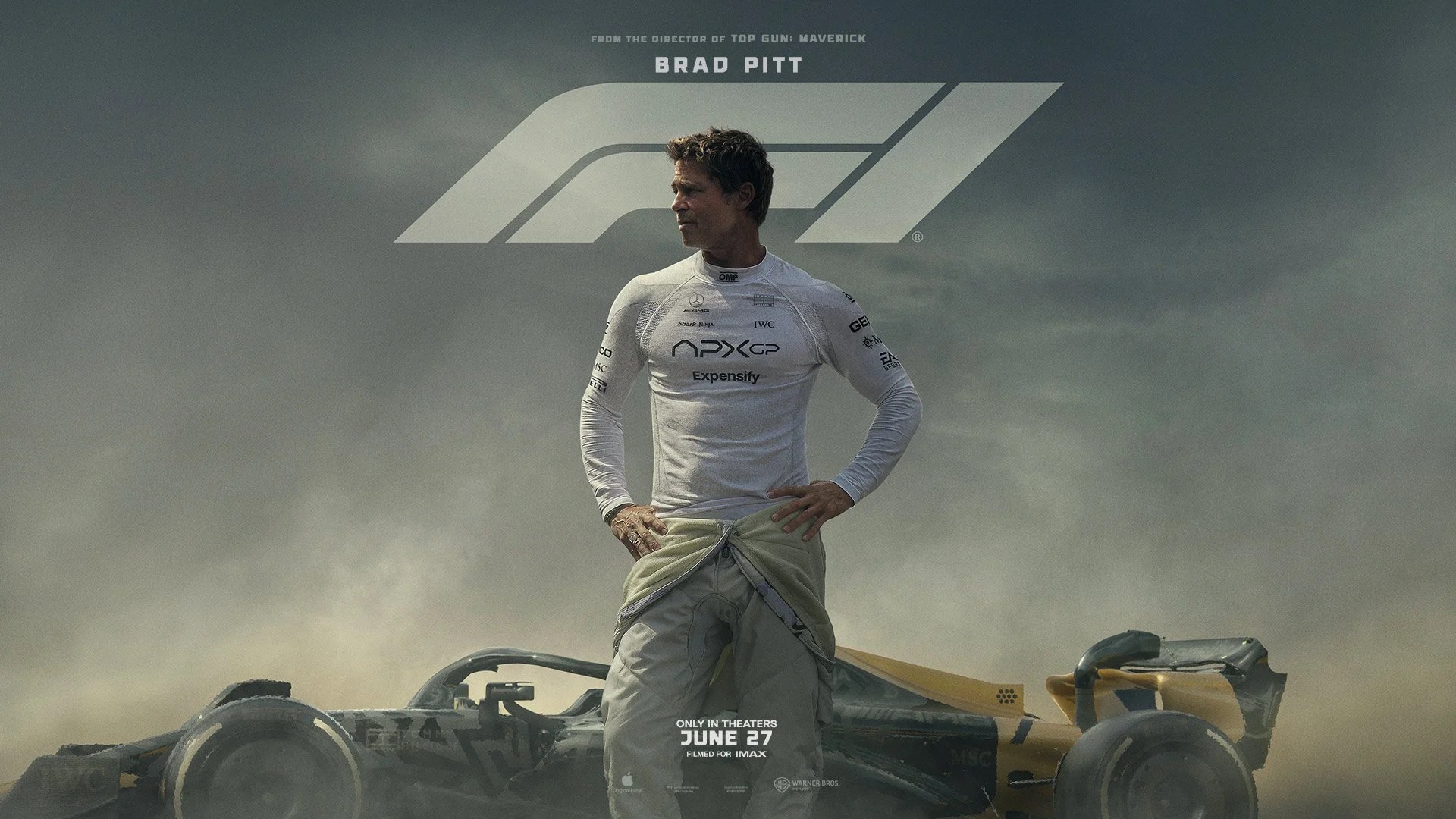
On paper, F1 is a very standard and generic sports story filled with familiar narrative and character cliches. An old, grumpy veteran reluctantly working with a younger, cocky rookie, eventually growing to appreciate the people around him and rediscovering his love for a sport, is not groundbreaking storytelling for the sports genre. And yet, the cast and presentation elevate the viewing experience beyond this basic premise.

Brad Pitt and Damson Idris have such magnetic and charismatic chemistry that made their seemingly cliché dynamic a delight to watch unfold. Their acting and rapport were certainly a primary factor that contributed to the film’s enjoyability.

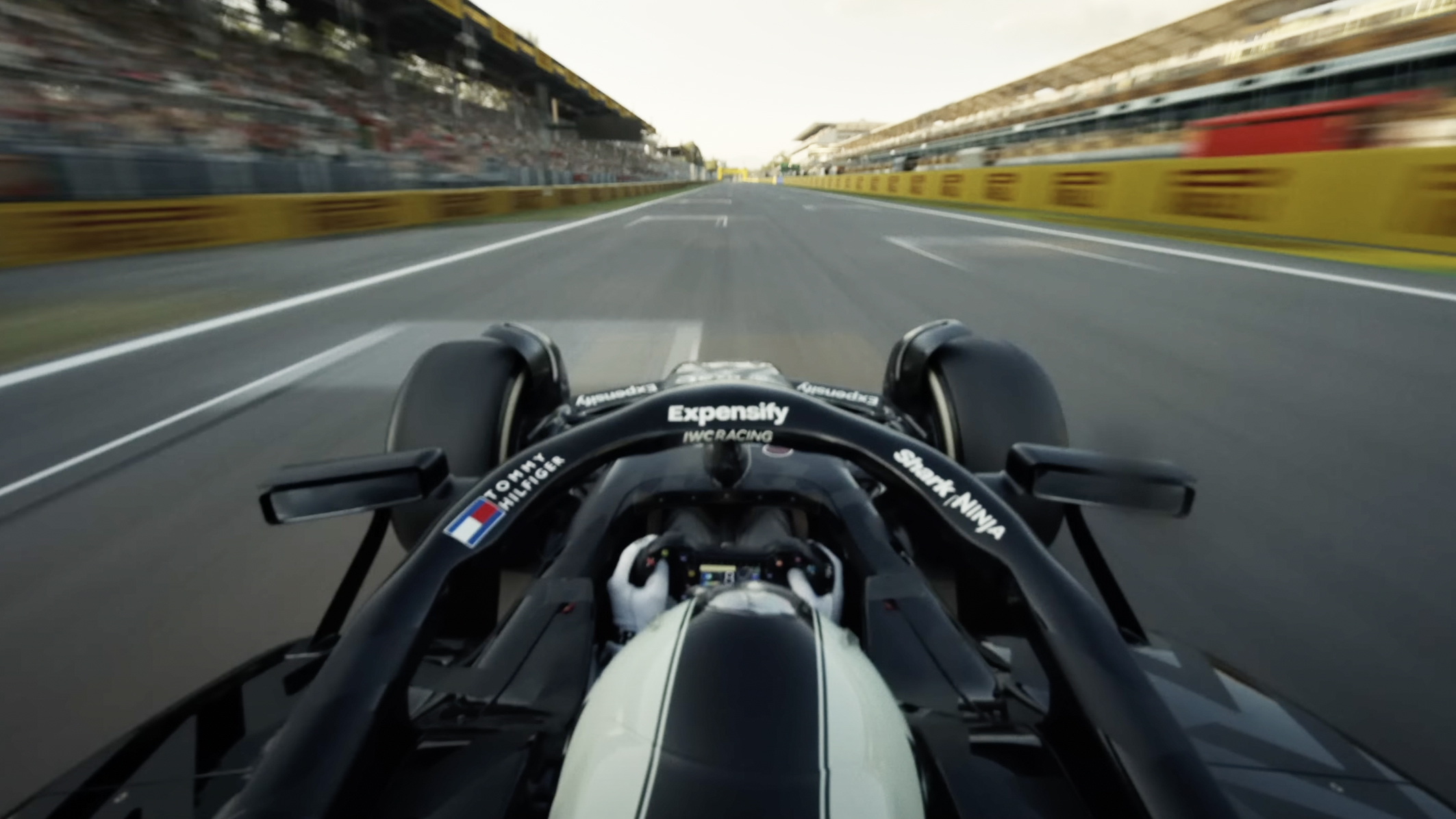
Furthermore, all audio and visual aspects of the film are breathtaking, amplifying the intensity and excitement of the racing sequences to their utmost limit. The cinematography and directing were particularly miraculous, leaving me questioning how they were able to pull off what they did with the camera.

However, my biggest issue is the romance subplot between Sonny and Kate. Much like Top Gun Maverick—another film directed by Joseph Kosinski—scenes that serve to explore the protagonist’s relationship with their love interest ultimately drag out the viewing experience without contributing much to the rest of the narrative. The bloated 2-hour 35-minute runtime could definitely be condensed if these scenes were reduced or even removed entirely.

Despite its flaws, F1 holds a special place in my heart. The movie came out during a time in my life when I, too, was questioning the worth of a sport that was once so important to me. I believe that this film played a significant role in restoring my fleeting passion for this sport. The “flying” scene and “it’s not about the money” quote stick out to me in particular; sometimes, we are drawn by a purpose beyond mere winning or recognition.

Five things we learned watching the first official F1 movie trailer | Top  Gear

PC: Google

Film Analysis — Sinners

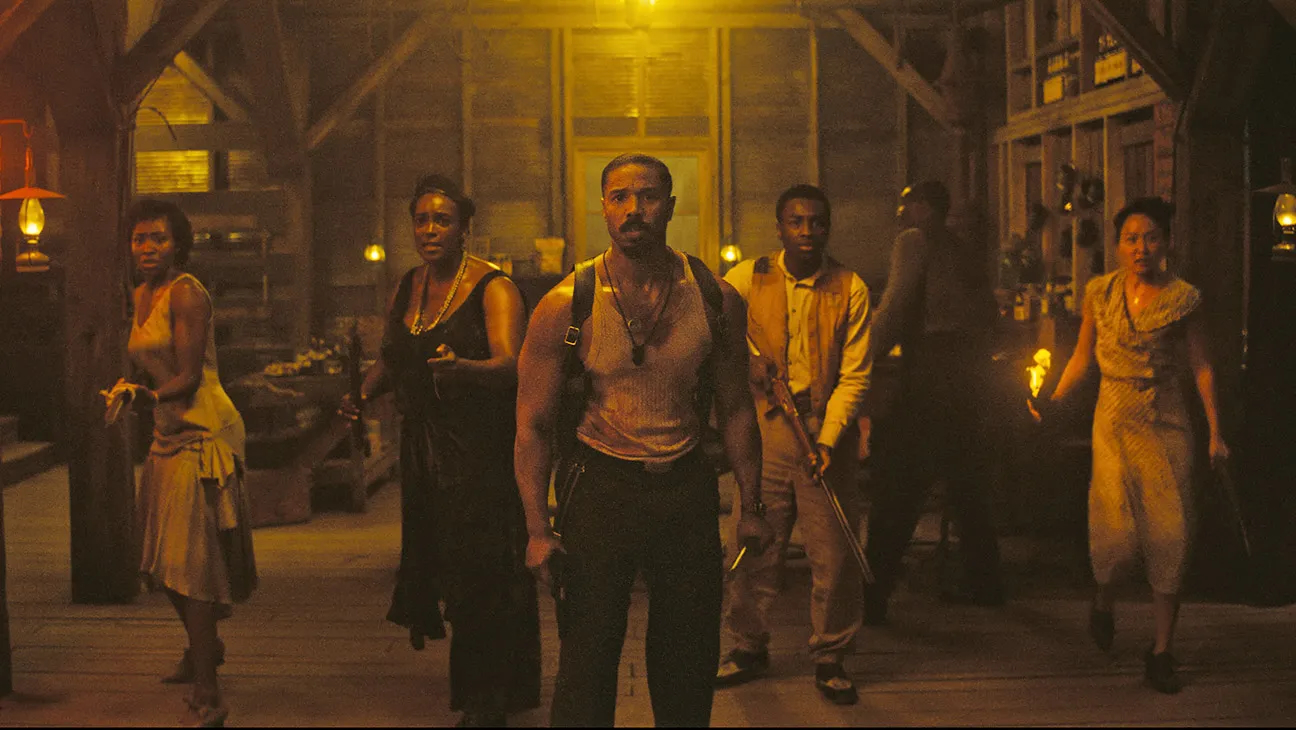
Surrounding the subject matter of the 2026 Academy Awards, Ryan Coogler’s Sinners seems to be the primary topic of discussion. The movie set the all-time record for the most Oscar nominations presented to a single film, earning a total of 16 nominations. From merely hearing the film’s premise, I couldn’t imagine it warranting the praise it seemed to be receiving. But after seeing the film for myself, it was clear that the film held a significant amount of subtext beneath its seemingly simple exterior.

On paper, the film seems to be a generic and straightforward musical horror thriller featuring vampires. But my favorite aspect of the movie is how it takes its seemingly simple premise to convey a complex, layered story featuring historical and political subtext. The film could’ve so easily had the threat of vampires serve as a metaphor for racism. But instead, Coogler explores more nuanced themes through its premise; the vampires represent assimilation under one unified group and hive-mind. Their ultimate goal to corrupt Sammie for his extraordinary musical talent mirrors the exploitation and cultural appropriation of Black culture, with music being incorporated to further reinforce the juxtaposed themes of individualism versus unification; while the music in the juke joint is composed of various instruments and voices layered on top one of another, the music from the vampires seem very coreographed, rehearsed, and in sync, once again highlighting their desire to assimilate and strip cultures of their originality.

The Deeper Meaning of the Blues Music in 'Sinners,' Explained | Marie Claire

PC: Google

Why Are We Here?

Mankind is generally considered to be the most intelligent species on Earth due to our unmatched cognitive abilities and capacity for technological advancement. No other creature comes close to our cumulative knowledge and global impact. And yet, it despite our intellect, we are the only species that doesn’t belong in the natural order of the world.

Most aspects of the natural world, whether it be plants, animals, or habitats, serve a distinct purpose and vital purpose. While there is death through competition and predation, it is all in conformity to the circle of life. While some resources are finite, these creatures could effectively sustain themselves by only taking what is absolutely necessary for survival. However, humanity is the one exception to the circle of life. No other creatures take more than what they need. No other creatures exist to serve only themselves. No other creatures are capable of making immoral or unjust actions.

Human Impact on Our Environment - Online Degrees & Programs | Kent State  University

PC: Google

Complacent Divided

Hating is easy. Complaining about inconvenience is easy. Antagonizing the world is easy. Destroying in a tantrum is easy. But regardless of whether the hate is justified, it is in human nature to keep pursuing ease once exposed to and comfortable with it. And yet ease is rarely what we need.

Overcoming is hard. Fixing what’s flawed is hard. Understanding one another is hard. Giving the benefit of the doubt is hard. But recently, it seems as though people have become complacent with ease.

More than ever, I believe that we need to be more patient and willing to cooperate with one another. As much as I struggle with social interaction, it is an immovable truth that both my school community and the world at large are filled with people I constantly need to converse and engage with. So why are we so hateful? Why are we so quick to point fingers and pinpoint a single source of blame? Why do we not think twice about the things we say? Why can’t we meet halfway?

Of course, not everything in life works out as intended. No matter how much they try, some people may be inherently incompatible. But that highlights my point: we have to try. Despite our school’s exceptionally small student population, a lot of us don’t know each other particularly well. And yet, everyone is so quick to complain, assume, and accuse. If we are all forced to coexist and depend on one another, then we might as well try to understand one another.

How Many People Have Ever Lived On Earth?

PC: Google

Film Analysis: Glass Onion – The Art of Hiding in Plain Sight

Most viewers, when consuming a piece of murder mystery media, expect layered complexity; they take into account every character’s dialogue, attributes, and motives in hopes of uncovering the buried answers. Glass Onion: A Knives Out Mystery director Rian Johnson—fully aware of this standard approach to mystery stories—flips the murder mystery genre on its head by featuring conspicuous clues and foreshadowing so straightforward that the audience disregards it as extraneous.

Johnson incorporates seemingly standard yet meticulously intentional staging and direction to explicitly reveal how the film’s murders were committed, well before it is verbally revealed much later. The most striking example is during the film’s first on-screen murder, with Miles handing Duke his own glass. Miles urges his friends to look at Birdie’s extravagant dress spin while simultaneously giving Duke his glass. The shot features Birdie’s dress blurred in the foreground, while Miles and Duke are in focus in the background. While the act is quick, Miles’s deliberate murder of Duke is blatantly displayed. But due to Miles calling attention to the colorful dress, viewers are drawn away from the switching of glasses behind her. Furthermore, when Duke’s phone and gun go missing, Johnson ensures that the film’s cinematography and editing present Miles being in possession of both, without explicitly calling attention to it. In the scenes following Duke’s death, his phone can briefly be seen—in short cuts—in Miles’s back pocket. Moreover, when Miles runs away looking for Andi, he runs unnaturally and clumsily, always keeping at least one hand out of sight, implying he is holding Duke’s gun. These intentional visual cues demonstrate how the truth is often directly embedded in the film’s directing and framework, but always eclipsed by Johnson’s carefully orchestrated spectacles and misdirections.

Sakura Kage — Miles' Glass

PC: Google

Just my Luck

It would be an understatement to say that my next few weeks will be exceptionally demanding; I need to prepare for my final SAT test, finish three supplemental essays due next week, and study for the fast-approaching final exams. And while holiday break is right around the corner, I still have January-deadline applications and my Senior Capstone project that I will need to dedicate my time to.

Needless to say, I didn’t have a second to lose.

But last week, I began to feel a sharp pain in the back of my jaw.

Upon visiting the dentist, it was discovered that the stinging sensation was the result of a wisdom tooth that had pierced through my gums at an awkward angle. To make matters worse, two other wisdom teeth had mostly emerged on my bottom row in an unparallel manner. With their current trajectory, these wisdom teeth would continue to erupt and eventually collide with adjacent teeth, meaning it was imperative that I have them removed as soon as possible.

With my operation likely scheduled for Thursday, I will have to postpone my final exams and leave school early, as the recovery process may take up to two weeks. This has simultaneously served as both a wake-up call to accomplish as much as possible before my surgery and a primary cause for concern for how I will be able to complete my tasks afterwards.

While I understand that wisdom teeth removal is absolutely necessary, unavoidable, and essential, it couldn’t have been more ill-timed.

Wisdom Teeth Removal In Baltimore | The Maryland Center

PC: Google

Progression or Regression: Overreliance of Digitization

Within the last ten years, humanity has made significant innovations in technological advancements. It has been proven to be undoubtedly useful in making certain actions efficient or accessible in both casual and professional settings. However, I feel as though society is diverging from technological implementations that serve to truly “assist ” us as users and now exist to either replace us or exploit us.

Some restaurants now require a digital menu where customers order directly from their devices, without the need for any direct human interaction. Cars and home appliances are increasing their reliance on digital technology, such as the tablets built into cars, or phone apps that remotely control refrigerators or air conditioners. While these products seem to be designed for streamlining, being advertised as the newest and most advanced innovations of today, they are more often than not accompanied by a subscription fee or other service demand that serves as the sole crux of the product’s capacity to function. Businesses intentionally configure their products to maximize profit over functionality, resulting in more things we depend on in our daily lives being susceptible to failure if the power were to go out, if there is no service, or if a subscription isn’t paid.

7 Benefits of Smart Home Appliances | Spencer's TV & Appliance | Phoenix, AZ

Picture Credit: Google

Film Review: Everything Everywhere All At Once

Everything Everywhere All At Once is a film that, on paper, by all means, should not work; its story is convoluted with so much happening, with elements taken from various conflicting genres such as action, comedy, drama, romance, absurdist fiction, and science fiction.

And yet, it is one of the most expertly crafted and passion-filled films I’ve ever seen.

While the movie is crammed with so many genres, themes, and unconventional ideas, it somehow manages to excel at everything it tries. Its generic action movie premise centered around the multiverse—a concept that has been overused and grown stale in modern media—is harnessed to enhance its narrative and its themes, rather than serving as a simple gimmick; the multiverse is presented as a parallel to the overwhelming abundance of possibilities and choices in modern life.

Within infinite possibilities, there is so much to be envious, confused, and disappointed in. The choices we made or didn’t make may have driven us away from a more successful or happy life. And yet, this mindset of trying to find meaning in everyday life by chasing extraordinary achievements is what often blinds us from appreciating what we already have.

Without explicit spoilers, the film ties together all its characters and plot lines in service of conveying the theme of cherishing the seemingly insignificant gifts we have, instead of trying to find meaning in a meaningless world.

Everything Everywhere All At Once - Evelyn chases Joy

Picture Credit: Google

Communication and the Lack Thereof

As obvious and redundant as it may sound, communication is such a significant aspect of social interaction. It serves as the bridge that allows for bonding, understanding, and mutual growth among people. And yet, it feels as though communication is often not applied for these purposes.

More often than not, I sense negativity from those around me through complaints or protests. I admit, I understand it is much easier to complain; it can be fun or relieving to express distaste in the moment, especially if it is something that is weighing you down. However, while I don’t believe it is inherently wrong to complain, it feels as though people spend so much more of their time talking about the things they hate rather than the things they love. Furthermore, it can be difficult to express your passions or love when the voices around you constantly reinforce that the things you love should be hated.

Conversely, there are those who don’t communicate enough, assuming that others will understand their motivations or thought processes without the use of a straightforward explanation. But not everyone is alike and able to come to the same conclusion. Resultingly, lack of communication can lead to misunderstandings, assumptions, and unintended conflict that could’ve been avoided with direct conveying of information.

East Texas Assessment | 7 Essential Social Skills

Picture Credit:Google