Do you ever wonder what the world looked like before anyone was here?
What would the earth look like if there were no buildings, no cars, no sign that it had been touched by any human ever.
Take a look around at exactly where you are right now. Stop reading for a moment, close your eyes, and try to picture it.
Photo Credit: pinterest.com
I think there would be lots of dry grass where I am. If I were to lay down on the ground, I would slowly sink into the scratchy brush until my back met the hard dirt below.
The air would be cool. There would be lots of oak trees everywhere.
A creek might curve its way through the little valley, slowly moving across the open space. Supposedly there used to be one, but it’s long gone now.
It’s night time. The sky would be so dark, but the stars would be so bright, speckled against the blackness.
I’m not quite sure what it would sound like. I know there would be wind, rustling the brush a little bit. The barn owls, coyotes, and mountain lions would roam through the hills, looking for something to eat.
I’ve never known the world when it was untouched, the way it was supposed to be. But, I think about it all of the time.
In cross county, my coaches always remind us that the sport has as much to do with mental strength as it does physical strength.
With that in mind, I’d like to invite you to come running with me – for the mental part, at least.
Here’s what a few miles look like inside of my head.
Mile 1: Don’t start too fast, just get warmed up. It’s hot today, but not as bad as it usually is. The gravel crunches beneath my shoes. We reach a little bit of downhill.
I hear my coach’s voice: “Let gravity do the work.” Get your breathing back. Drop your arms. Shake it out. The road in front of us curves up a long hill. It’s steep. Slow it down. What hurts worse, lungs or legs? Legs. I can breathe still. My calves tighten the farther up we climb. I count my steps between each exhale. We’re running in 4/4 time. I inhale on the 1st beat, exhale through 2, 3, 4.
Mile 2:
Sweat drips down my forehead. I wipe it off with my shirt. Take it easy now. My breathing is steady – that’s good. My left calf hurts more than my right. The opposite of yesterday. This hill is a bitch. Settle in, we’ll be here for a while. It hurts.
Mile 3: Keep your arms down. Breathe. The road settles and is flat for a while. You’re not tired, it just hurts.
Mile 4: What hurts worse, lungs or legs? Both. You’re not tired, you just can’t breathe. There’s a difference. The next two miles are steady uphill. Use your arms! The harder you work the faster you’ll be done.
Mile 5: This hill is a BITCH. My ragged breathing is louder than my shoes on the pavement. Sweat covers my whole body. My arms ache from pumping and the muscles in my legs feel like they’re made of both cement and water at the same time. My mouth is so dry that when I touch my tongue to the roof of my mouth it sticks. Eyes up, on the road. So close. I feel awful. I can’t breathe. The smell of wood chips in the orchard makes me want to puke. Push. Everything hurts.
The Finish:
I jog past the green gate the marking the end of the road, the end of the run. My left foot leaves the pavement and lands on grass and the right follows. Don’t sit down. Breathe. As I walk back and forth beneath the oak trees, my lungs start to settle down. The tension in my legs slowly fades, first easing up in my quads and then from my calves.
My breathing returns to normal. I’m not hurting anymore. I just ran five miles. I feel good.
I suppose there’s something sort of compelling about them, being a glorified, rebellious accessory of sorts.
I used to love the smell of smoke. It reminded me of when I was younger.
Now I never trust anyone who likes cigarettes. Cigarettes kill people.
They do it slowly, squeezing the air out of your lungs little by little, until one day, you can’t breathe at all. They burn holes in your throat and melt your skin, but, at that point, you’ve grown so used to the feeling that you’re convinced it makes you feel better.
In the beginning, before it becomes a problem, you can still decide when you want to smoke. You know it’s addicting, but you tell yourself you’d never let it go that far.
But, after a while, when your first urge after you wake up is to go outside and smoke or when a meal never feels complete until you’ve finished a cigarette- that’s when you really have no control at all.
Cigarettes kill and if you still smoke that either means you just don’t care or you live under the false pretense that young people are invincible. Either way, you’re foolish.
Maybe I’m wrong. I probably shouldn’t be so judgmental.
But, there are plenty of other ways to be fascinating.
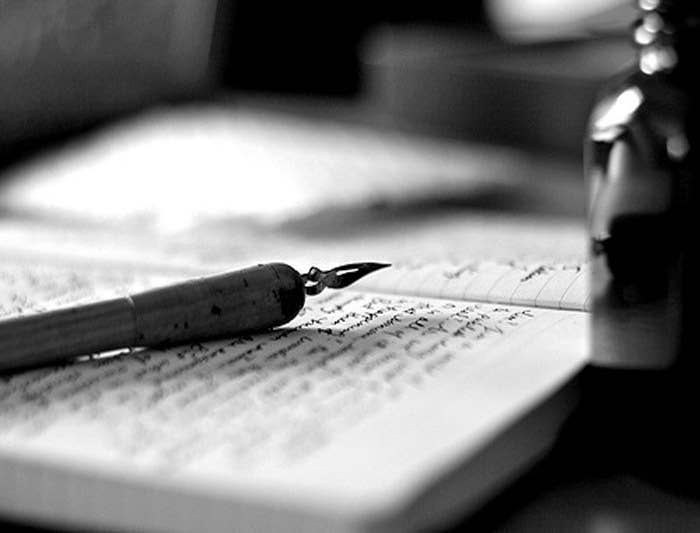
When it comes to writing, I plan everything out in my head.
Even if I’m not physically writing, I’m pretty much always thinking about how and when and what words to use next.
It happens all the time: when I’m walking down the street and see someone eating alone at a restaurant, in a movie theater with my friends, whenever I’m doing anything. I start putting together bits and pieces of a story or poem, trying my best to remember it all, until I have the chance to jot something down.
My mind is constantly filled with words, phrases, and thoughts. I don’t think there’s ever been a time when it was completely empty.
But, for some reason, I can’t seem to find any words at all to explain how I feel about you.
I’ve been trying for months now, but they never seem to fit together quite right.
The thing is, I think about you all of the time. I know how it feels, but I just don’t know how to describe it.
Maybe it’s because I don’t fully understand it myself. Maybe it’s because the only messages I ever get from you are hopelessly unclear.
Whatever it is, I hope I work it out soon. Because, once I do, you’re going to have a lot of reading to catch up on.
My dad always seemed to find a way to stay strong. During hard times, he remains tough and tells me it’s going to be okay. The day he found out he had a blocked artery and needed heart surgery, the day my grandfather died, the day my mom got hurt and had to go to the hospital, and the day his favorite pet died, he never cried. It’s not that it wasn’t hard for him, it all was. The reason he didn’t cry was because he always wanted me to know that it was okay, that it was all going to be okay. He stays strong because he hopes that no matter how bad the situation, we will find a way out of it. My dad doesn’t cry because he wants me to think that everything is going to be okay.
The outline of all my ribs were visible, even through the tank top I wore. My hip bones stuck out and created a visible lines in the XS leggings I wore which were still too big. You could see my spine through my shirt and my tail bones were visible too. There were bruises on my back from laying down, my bones would cause purple and blue marks to form on the skin covering them. My jaw had become sharp and it looked as if my cheeks went inward. My collarbones practically popped out of my skin and my sternum was defined and visible. If I lifted up my shirt, my deteriorating heart beating slowly through my chest was easily seen.
About a month before the day listed above was the day when I had officially been diagnosed. We had known something was up for a while. The cutting out of food groups; skipping meals; weighing myself at least twice a day; crying before, during, and after eating; the fact that all my clothes now fit loosely; my low energy level; and much more made my parents suspect something wasn’t right. But, today, a professional had given the thing controlling their daughter an official name: anorexia nervosa . That same day, the result from my EKG came in, my heart rate was dangerously low and we were called in the doctor’s office immediately. As soon as I walked in, she put a device on my finger that revealed my heart rate: 38 beats per minute. Due to all the weight I had lost, and the fact that I had been depriving myself of the calories I needed, my body started to break down the muscles in my vital organs in order to receive the energy needed to survive day-to-day life.
My heart was the main victim of this. The doctor told me that I needed to stop water polo and all exercise until my heart rate was normal. Water polo was what made me happy: it was my identity, my passion, my motivation to get better, and my dad knew this. I had never cried so hard in my life. After five minutes of me in tears, my mom broke down too, but my dad stayed strong and comforted the both of us. She then told my parents about the hospitalization programs she recommended for me. I cried on the drive home and for hours when we were home, I cried and cried and cried. As I lay alone in bed that night, no matter how hard I tried, I couldn’t sleep. My plan was to go to wake up my dad and ask him to be with me, I felt bad about waking him up, but I didn’t know what I would do without him right now. I knew if I woke up my mom, she would start to sob too. It was hard enough dealing with the pain I brought upon myself, I couldn’t manage to see the pain I inflicted on her. I wanted, no, I needed him to tell me that I was strong, tell me that I could get through this, tell me that everything was going to be okay. I walked into their room and used my phone for light, but to my surprise he wasn’t there. I walked back to the hallway and looked at the shut office door with light coming from underneath it. Maybe he wasn’t tired and decided to do some work. That thought made me feel better because then I wouldn’t be waking him up, but as soon as I opened the door, my heart already-failing heart felt like it had stopped working completely. There was my dad: eyes red, cheeks stained. He sat on the floor holding a tissue wet with tears. This was the first time in my thirteen years alive that I had seen my dad cry.
I’ve always claimed to hate all big cities. They make me feel claustrophobic and whenever I’m surrounded by so many massive buildings, I can’t help but be reminded of all of the damage that we’re causing to our planet.
At some point, I managed to convince myself that LA was the worst of them all.
Aside from the fact that the public transportation is terrible, air pollution is even worse, and there are simply too many people crammed into too small of an area. I could never see myself living in a place like that.
But, for some reason, my last trip to Hollywood almost convinced me that it isn’t as bad as it seems.
Photo Credit: past daily.com
Maybe it was because it was so busy, so overflowing with energy. In a place that I’d thought to be the root of all destruction to the natural world, I discovered that it was full of real, living people. The city was alive.
Maybe it was all the lights. I’ve only ever been used to endless black skies, so dark that the stars light up the world. You can’t see stars on Hollywood Boulevard, at least, not the ones in the sky. But the neon blues, pinks, and yellows gleaming throughout the streets somehow compliment the night sky. They’re sort of magical – similar to stars in that it feels like they are begging you to fall in love beneath them, but also very different.
Maybe it was the man sitting on a bench at 11:30 PM who yelled to my friend and me, “You are so beautiful! Have a beautiful night!” It wasn’t in a gross way, though, you could just tell he was looking to make other people happy. He might have been drunk, but hey, we don’t judge.
Or maybe it was just because I was tired and had been caught off guard or something.
I still hate Los Angeles. But, maybe now, just a little less than before.
Everything’s been a little different since the fire.
The drive back home is darker now. The trees seem angrier, defeated.
Even now, when the breeze picks up it stirs around the ashes that had settled into the dirt, the ashes that first arrived over six months ago.
I can still remember it so vividly. I can still smell the smoke, I can feel the ashes burning my eyes. I remember how hard it was to breathe. The air was thick and the world was sluggish and grey. For awhile I forgot that the sky wasn’t normally orange. The wind was hot. Everything felt dirty.
I can still picture seeing what was left of my uncle’s house for the first time. The home and business that he had spent so long building was reduced to a pile of black dust and scrap metal and crumbling rocks. I wonder how long it took.
My brother found a metal garden sign buried in the rubble. It read one word. Simplify.
How ironic can the world be? The fire had already taken everything from my uncle, so why, at the last second, did it feel the need to cough up a message telling him to simplify?
I was angry for a long time. I was sad. Our little town doesn’t deserve this, I thought.
But slowly, I’m starting to think maybe there are some good things that have come out of this, scattered all around.
The hills were black for a long time. And then it finally rained. So the grass started to grow, and trees that I’d assumed to be dead starting sprouting leaves again.
And now, there are hundreds of wildflowers blooming all over the ground. I’ve never seen some of these flowers before in my fifteen years of living here.
Credit: wildnatureimages.com
Before the fire the hills were dark green and brown, earthy. During the fire they were red. After, they were black, scorched. But now, they’re speckled with blues, yellows, purples, light greens, and covered with orange California poppies.
The only way that they are able to bloom is because the brush above them was burned away.
Maybe there’s some irony in that too. But I think it’s also very beautiful in a way.
And it’s the little things like these that we have to be thankful for.
The three words we have all (hopefully) heard since our early childhoods. Anytime you go to throw something away, they spin in a constant loop in your mind reminding you what to do with plastic and waste.
Unfortunately, these words have lost their meaning. I like to think that we are starting to become more environmentally aware, but the truth is that not much is changing; or at least, change isn’t happening quickly enough.
Here’s the thing: while we might all be aware of our incredible impact on the environment, we’re not actually doing anything about it.
After watching a TEDx Talk about this subject, I learned some frightening facts.
It is predicted that by 2050, there will be more plastic in the ocean than there are fish.
For many manufacturers in the world, the United States especially, it is less expensive to use new plastic to produce items than it is to use recycled plastic. In 2012, only 9 percent of post-consumer plastic was recycled. The remaining plastic was discarded.
“Without a profitable market in which to sell used plastic, many recyclers export it, in a process known as outsourcing waste. In 2011, America’s primary export to China was used plastic.”
Plastic does not biodegrade. Over time, it breaks down into smaller and smaller pieces called micro-plastic. These microscopic pieces of plastic are eaten by organisms, which are then eaten by tiny fish, which then are eaten by bigger fish, and so on. Eventually, the plastics that have been eaten by marine life will work their way up the food chain to humans. Even though we might not be physically eating it, the chemicals from plastic have been shown to be linked to obesity and cancer.
While it might not be our fault that the oceans are filling up with plastic, it is our responsibility as human beings to resolve this problem.
Photo credit: plasticsoupnews.blogspot.com
Oftentimes we are desensitized to the harsh reality of just how damaged the planet is becoming. Sure, we know that we’re not treating the environment as well as we could be, but maybe we think that it won’t really become a problem until we’re not around anymore. Maybe that’s right, maybe we won’t start seeing the real effects until our generation is long gone.
But if we don’t correct past mistakes, there will come a time when there is no land on Earth that is untouched by plastic. There will come a time when there is no more fresh water available, or when it is impossible to stay outside for longer than three minutes without being sunburned due to the ozone layer dissolving. There will come a time when our planet’s resources have all been used up so that it will no longer be able to sustain human life.
Photo credit: Ticotimes.net
So we have to start now. There are so many simple things that we can implement in our daily lives that can contribute to bettering the environment. The next time you get a drink at a restaurant, don’t take a plastic lid and spoon. Pack your lunch in a bandana or reusable containers instead of in a paper or plastic bag. Do everything in your power to end single-use and stop using unnecessary plastics.
Simply put, we need to stop teaching our children the words “reduce, reuse, recycle,” because they just aren’t working anymore.
It’s strange how people can change without even being aware of it.
Take me, for example.
image via Pinterest.com
I used to have so much more to say but now I just have so much more to think.
There was never a conscious decision.
I never told myself, “Today’s the day I’m gonna grow up!”
I think it just happens gradually, it takes lots of time.
I think part of getting older is becoming more self-aware and learning new things about yourself.
I started to notice that things were changing when I discovered that my parents opinions aren’t always the same as mine; when I realized that even though it’s difficult sometimes, I am allowed to think for myself.
I started to see that someone’s bad decision shouldn’t define who they are as a person.
My friends tell me that I’m different than I used to be.
“It’s not a bad thing, or a good thing. It’s just a thing, you know?”
But I believe there is a lot of good that can come from change. I think that being different than I was before means that I’ve learned a lot and that I’ve started to become who I’m supposed to be – who I want to be.




 OVS Journalism Blog
You must be logged in to post a comment.