Merchant of Venice as the Newest Member of the Almost Masterpiece Club

A while back, I reviewed all the books I did for required reading in high school, and nearly all of the books in the “almost masterpiece” tier were from Ms. Whipple’s classes. I don’t know how she keeps getting away with this, but I’m adding Merchant of Venice to this tier. (The most I will say about Heart of Darkness is that I put it in the “I respectfully tolerate” tier.)

Before I read Merchant of Venice I actually thought I would put it in the “respectfully tolerate” tier, as I thought it would have aged too poorly for me to be invested in. My only exposure to it was a Jewish youtuber I liked using the play as the ultimate example of a poorly aged classic, so I feared the only thing I would find in it would be garden variety antisemitism.

Though after reading it I suppose I know why we’re learning about it. It’s true, parts of the character Shylock, the main Jewish character in the play, and especially the way other characters treat him that make me cringe. People call Shylock a dog and Lancelet, the most “love to hate” character in the play, outright says he should hang for his religion. But once I read about Lancelet tricking his blind dad into thinking he’s dead, just for the kicks of it, I began to wonder if my disgust towards the characters is meant to be the point.

All of the Christian “heroes” have unsavory qualities, even outside of their antisemitism. Portia mocks the men who want to marry her because they are foreign. Bassanio is a gambler and wannabe gold digger. And what most surprised me was how Jessica, Shylock’s daughter, sells her dead mother’s ring to buy a monkey. As a Jewish convert to Christianity, the other characters act like she is her father’s moral superior, but her actions only make the rest of the cast’s moral standards suspect.

At this point, I can’t help but wonder if Shakespeare was on the better side of history, that he really try to write Shylock as the most sympathetic character in a sea of terrible people. He has some of the best lines, many of which sufficiently call out the injustice of his world, and his villainous actions can’t hold a candle to many of Shakespeare’s tragic heroes. My bread and butter are works where nearly everyone are equally terrible people, as it makes the halfway decent ones stand out all the more. So I can’t help but find that Merchant of Venice scratches my itch, so into the Unofficial Whipple Tier it goes. I don’t think it’s quite on the level of works like Invisible Man, which are stories that I think anyone can get something out of it. I still get that youtuber’s discomfort with Merchant of Venice, so I’m not making this messy story required reading for all of humanity. For all my low expectations I still think it needs an inventive production to bear stomaching for modern audiences.

PC:Google

Ranking all the Books I Read So Far in High School

Along with a nice and accurate, but short, explanation of the tiers. The works listed early are the ones I favor relative to the others in the same tier.

It Does Not Deserve Rights: Ishmael (sorry Alvarez, but the gorilla gave me Neil DeGrasse Tyson vibes. Say that I’m privileging humanity all I want, but I will stand by my fervent hatred of this book. I rank John Steinbeck’s pro-euthanasia fantasy over this dribble).

I Respectfully Tolerate Them: The Crucible, The Things They Carried, Of Mice and Men, The Adventures of Huckleberry Finn. (I feel like this is the unofficial “problematic faves” tier. It doesn’t mean that these works weren’t impactful in their own time or can’t still be enjoyed today, but reading them I felt that essential parts of the narrative’s worldview aged poorly, i.e. John Steinbeck’s pro-euthanasia fantasy. And since the worldview of a book is the basis for its themes and who the story is willing to develop, it means that these works, in my opinion, really suffer on their own merits).

Makes Sense They’re Classics: Julius Caesar, Siddartha, The Odyssey. (I find these to be the true neutral, and regard them in the way non-English people regard classic novels. Parts are genuinely moving, parts seem so divorced from contemporary standards for art that they are hard to engage with as a modern audience. A British actress I follow once said that Julius Caesar was her favorite Shakespeare play, which I found interesting because, though I’ve only read three of his plays, I think Julius Caesar is a bit bland by the Bard’s standards).

Uniquely Excellent: The Haunting of Hill House, Twelfth Night, The Importance of Being Earnest, Wuthering Heights, Brave New World, Narrative of the Life of Frederick Douglas, Cannery Row. (It’s my unofficial Whipple tier, I don’t know how she keeps doing this. I usually love these books because they have themes that I really resonate with, because they present interesting questions and tensions, or even because their words are written so wonderfully. But I also feel that these works are very much “favorites” in that I believe they stick in my mind because they have a lot of elements that I personally favor, and might not be universally applicable or endlessly nuanced.)

Actual Masterpieces: Romeo and Juliet, Invisible Man, The Great Gatsby, The Catcher in the Rye. (These books are like the ones from the previous tier, but they are endlessly nuanced and readers can appreciate them even if they have wildly different interpretations of the text. Ambiguity is always the best thing about art, as arriving at a conclusion can make one feel like they’re part of the artistic process itself. To qualify for this rank, it also helps if every word in the work feels like it was written like magic, i.e. Romeo and Juliet and Invisible Man).

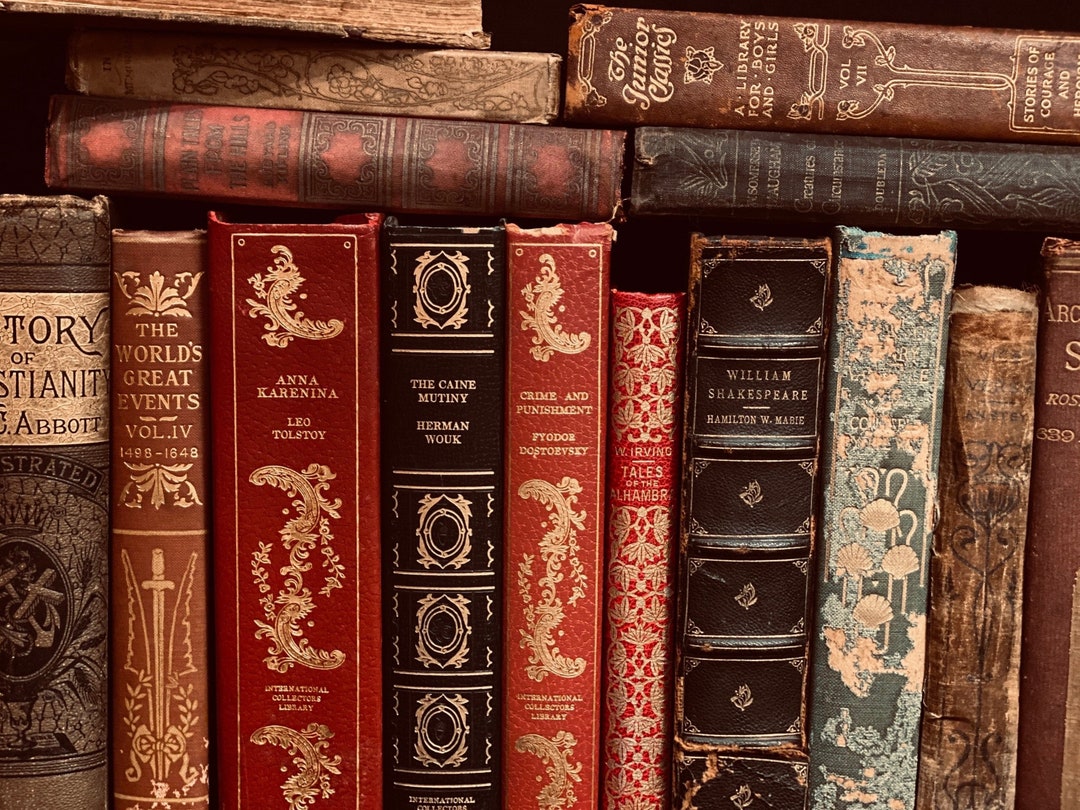
Set of 5 Vintage Books Customizable by Color Authentic Hardcover Farmhouse  Wedding Table Decor Art Deco Literature Library Antique Bookshelf - Etsy

Three things I am grateful for

I just wrote a blog talking about how I’m going to be in significant debt after college, so I feel like writing about things that I am grateful for.

  1. The cake I just ate. It was not very sweet, but it had a little bit of cream on it which was yummy.
  2. Tea. I am drinking a tea that I don’t really know the name of, but my mom told me it is called mei cha. It is very bitter, but once you drink the tea, you taste sweetness in your mouth. It is very interesting and I love it. My mom and I are drinking tea while she reads Dune and I type blogs for journalism. 
  3. My mom. She was very excited when she got her Dune books in the mail today. She has been reading the first book on her phone as a pdf, so she was excited to get the physical copy finally. After we watched the Dune 2 movie in theatres, she came home and bought the entirety of the Dune series, which is like at least 8 books. She likes to read the ending of a book before reading it, and she probably read the entire plot of the books on wikipedia before she even bought them.

Picture credit: amazon.com

little things

IMG_1163
pc: me

I have so much love for little aspects of life. I love to water my plants. I love to pet my cat because of how loud her purr is. I love to sit on the kitchen counters while dinner is being made, the smell of food circulating the air. I love to imagine those smells as colors floating around me and illuminating the warmth that fills the kitchen. I love it when people make me laugh, It feels like I’m at a loss of breath, which is somehow the best feeling in the world. I love to take the most skin-curdling, brain-melting shower right before bed. I love to hug people goodbye, I imagine the smile on my face the next time I get to see them. I love the song “a day in the life” by the Beatles. I love the book Daisy Jones And The Six. I love to lay on the floor because the hardness feels like an anchor when my mind starts to spin. I love to go to the beach because the sand sticks to my skin. I love to wash the day off of my tired face. I love to smell candles but not light them because I don’t want them to go away too fast. I love white daisy’s in a mason jar. I love to propagate vines. I love to make eye contact with people and let them break it. I love to play with little kids. I love to be at home with my family. I love to watch Formula 1 races. I love to swim and ride my bike at night. I love my mom and dad. And even though he doesn’t think so, I really love Vaughn.

So I’ve Been Reading Books Lately

(Spoiler warning for Song of Achilles)

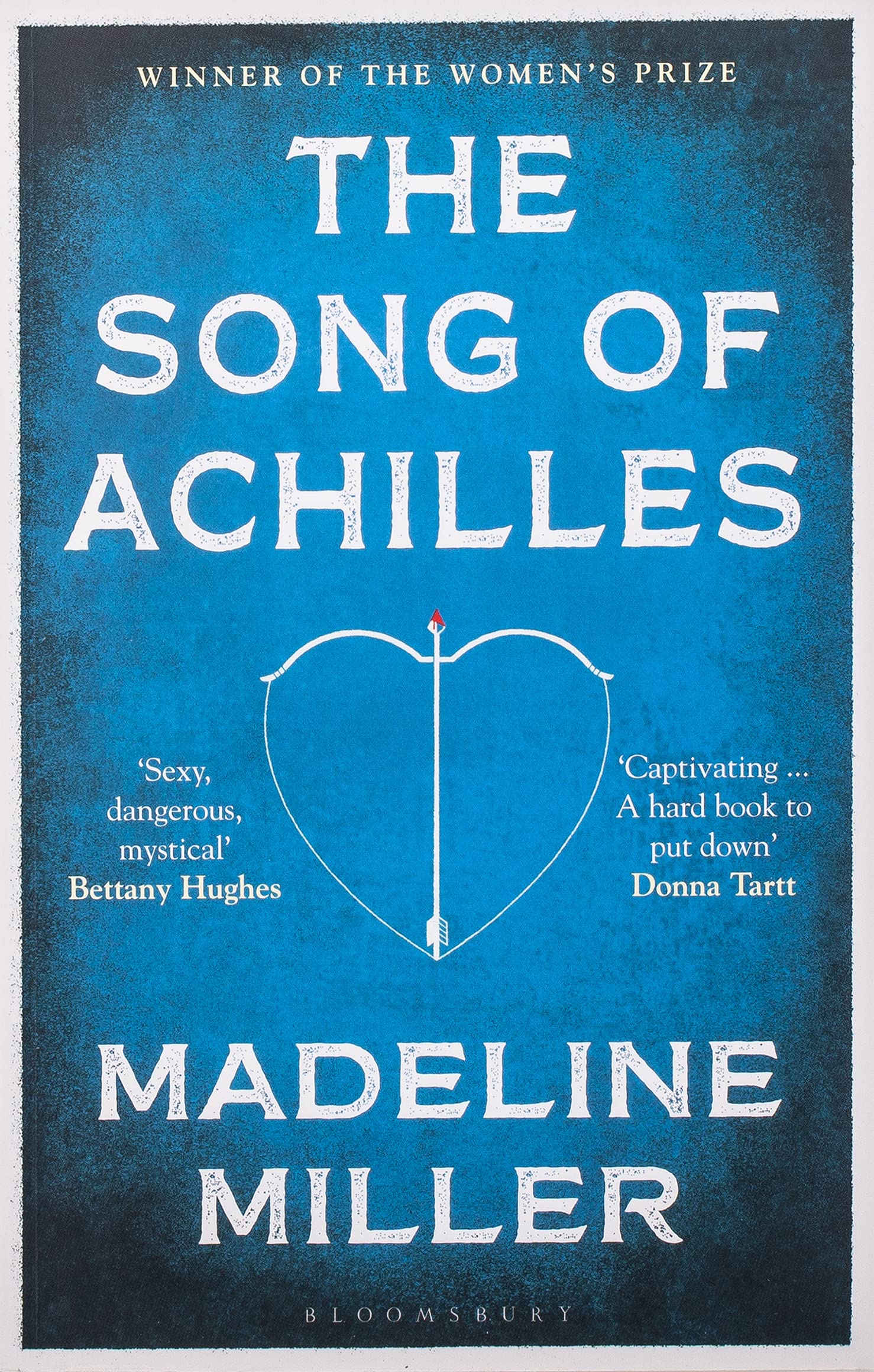
So I’ve been reading books for fun for the first time in about 4 years now, and I just finished Song of Achilles.

One word: devastating.

That’s not to say it’s bad- in fact, it was one of the best books I’ve ever read. However, it was horribly sad, which is expected with Greek myths and renditions of them, since everybody dies in most myths.

A quick synopsis of the book would be “two boys fall in love then go to war and die,” but there’s so much more to the story than that. It’s exciting, sweet, sad, and heartbreaking. There’s a ton of angst in it, especially during wartime, which is honestly my favorite part. It does end with a bittersweet happy ending, though, so it’s not just emotional torment to read.

If you read the Percy Jackson books, you’ll probably love this book. I definitely recommend this book to anyone who likes Greek mythology, gay love, and angst. It’s got a ton of all three.

http://www.amazon.com%2FSong-Achilles-Bloomsbury-Modern-Classics%2Fdp%2F1408891387&psig=AOvVaw29CFHCo4eSGdPCIhGvhDZY&ust=1649951931864000&source=images&cd=vfe&ved=0CAoQjRxqFwoTCICRxo20kfcCFQAAAAAdAAAAABBT

To a Stranger in Brooklyn Heights

Dear stranger in Brooklyn Heights,

I don’t know much about you, but I can infer some things.

I think you are someone who cares about your belongings.

Like your copy of Spoon River Anthology, for example.

Photo Credit: pinterest.com

I think you care about it because you stamped it twice – once inside the front cover and once inside the back.

Maybe you just didn’t want to lose it and for it to be returned to you if it ever did get lost. But, if that’s the case, how did it end up in a used bookstore in a town 3,000 miles away?

I would want to know which poems are your favorites, but it seems like you never read them. The pages are nearly perfect, despite being printed in 1962.

I wish I could ask you some questions.

How old were you when you bought it? How old are you now? Why didn’t you read it? How did it end up with me?

I don’t know who you are, but I want to say thank you. Your book that was originally sold for 95 cents is now my book that was sold to me for three dollars.

And now I have a story within a story, thanks to you.

I’m not sure if you still live in New York or if any of my assumptions about you were correct or if you’re even a person at all.

But just in case I was right, once I finish the book, I’ll send it back to you.


A Series of Unfortunate Events Season 2

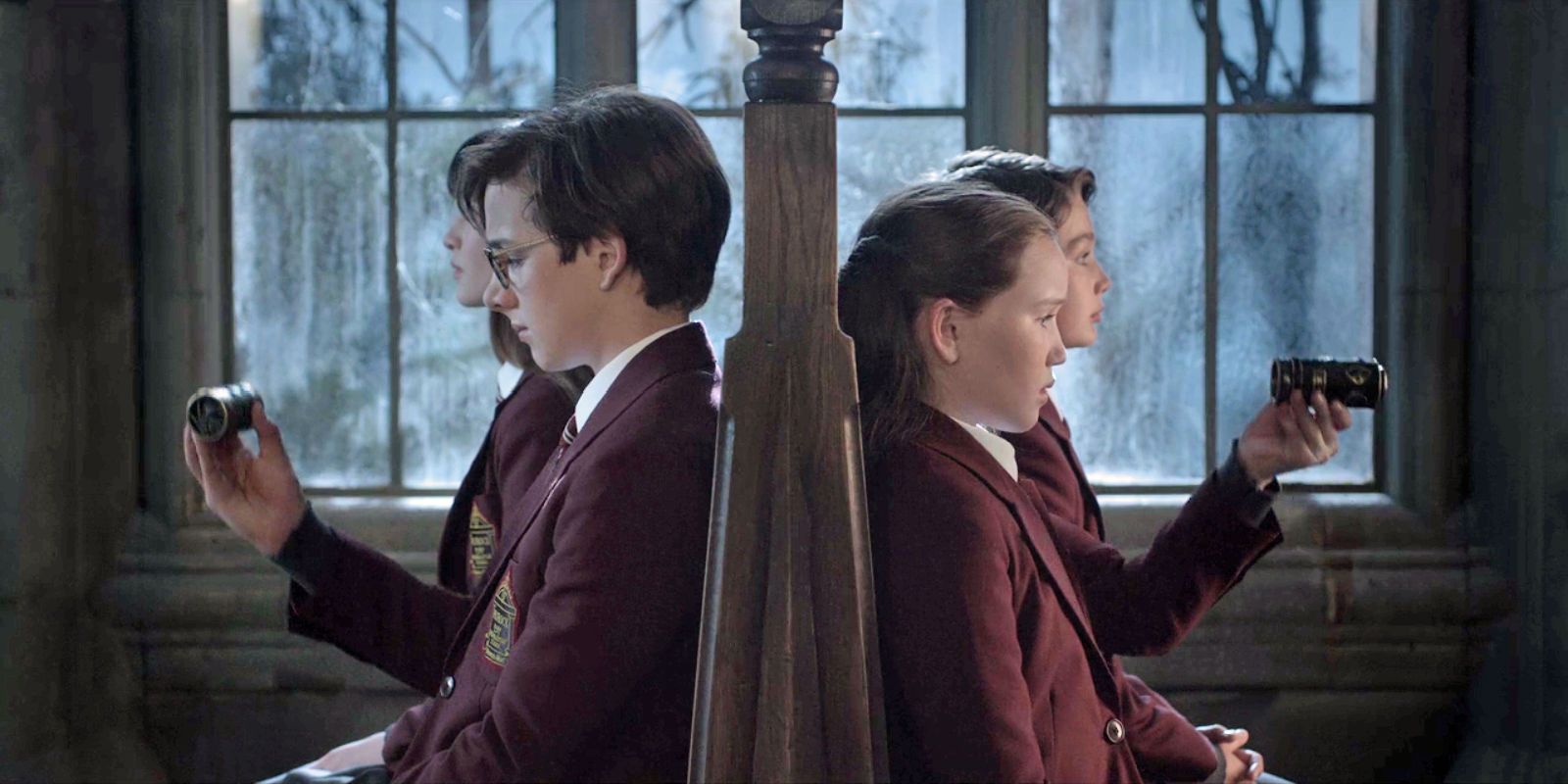
Just this past Friday, March 30, A Series of Unfortunate Events season two arrived with gusto. Streaming on titan platform Netflix, season two has expanded from eight episodes to ten and takes the views up through book nine.

Photo Credit: variety.com

This season sees the introduction of the two remaining Quagmire triplets, a swagger filled Nathan Fillion stepping into the role of Jacques Snicket, and a wonderful, fourth wall breaking, sense of self awareness that shows of this nature often lack.

While yes it does follow a predictable plot line, which was a problem many had with the first season: bad guardian –> something terrible –> Baudelaires escape. The beauty of this repetitive and predictable plot line though is it allows actors like Neil Patrick Harris (Count Olaf) and Nathan Fillon (Jacques Snicket) to really work their roles and have fun doing so, which is reflected as fully realized and sharp characters.

Photo Credit: syfy.com

The plot, instead of taking front and center like most shows/movies, takes a backseat to an incredibly immersive and rich world. Instead of trying to turn darkly fantastical source material into highly approachable comic realism (e.g. Marvel Comics), the plot champions a wonderful sort of self-realized, almost escapist fantasy that is unafraid to hit viewers in the face with a strong message of: This is our world, not yours.

With this world also comes the introduction of the highly secretive and, thus far, very vague secret society of VFD as the Baudelaires chase after red herring after red herring (ha).

Photo Credit: screenrant.com

This season is wonderful and keeps the Baudelaires on the move, it maintains the spirit of the books and the first season with dexterity, and manages newly introduced plot lines with ease. I recommend this show so highly it and I are probably in space. Go watch it.

Now I may be a bit biased by the fact that I get to see one of my all time favorite series on screen, if one is in the mood for a more comprehensive look at season two (spoiler warning) there is one here.

Home

Home is a loose word, I often find my mind and, in turn, my spirit in other places. Sitting wrapped in a blanket I’ll physically be here or there but, in truth, I’ll be far, far away. Henry David Thoreau once wrote, “At a certain season of our life we are accustomed to consider every spot as the possible site of a house.” House or home or somewhere in between? A trivial question when one is hunting for a place to rest one’s mind.

Photo Credit: hotelroomsearch.net

My tangible home will always be with my family in our small “faerie home,” surrounded by an unruly garden that seems to compete with the urbanity of the asphalt road and the ever shrinking street light (or perhaps I’m the one growing). Home with its boarding of white and blue, with a hand built white picket fence; home with a stylized and cohesive found object collection inside and hand painted walls of a whimsical forest land further from reality than the closest galaxy. Tangible home will be with my dad’s music blasting well above the sound threshold of his earbuds, shuffling in the Paint-Shack. Tangible home will be with my mom, picking up conversations we never started mid-way through a sentence. A home fit for part of my heart and part of my body.

But my true home, home for my mind, my spirit, the rest of my heart and body, that’s much harder to pin down. I’ve lived too many lives, I’ve walked the halls of Hogwarts and thieved the streets of Ketterdam. I have run through the Overlook Hotel and traveled the world in the Leviathan. I am inclined to call all these places my home despite the threat of horror and danger and pulse-stopping fear. But then again, I am just as inclined to call a solitary cottage at the edge of humanity surrounded by piles and piles of mugs and books my home.

When I was much younger I believed home would be among the pyramids and mummies of Egypt, studying a culture older than I could comprehend, dinosaur hunting while bouncing from continent to continent in search of the next great dinosaur find. Now I find myself lost, filled with wanderlust. Do I return to Ketterdam, Hogwarts, Brakebills? Do I follow the dust and jewels and bones of ancient history? Do I find my library tower with an endless supply of tea, coffee, pastry, and more books than I know what to do with? Do I find my corner of a city and people watch for the rest of my time?

Photo Credit: enlighten.pk

Maybe, what I’m getting at is I won’t find one home, there is no way to make that which is plural singular. I’ll always be hunting for the next city to make my heart beat faster and my lungs dance, the next country, the next world, the next universe. My home will be that glimpse of color disappearing around the corner, just slow enough for me to go skidding into the alley and see it go around the next corner. My home will be a sturdy pair of boots, one hell of a scarf, and a bag with an undetectable extension charm. My home will be that trip around the world finding the best food there is and then traveling to the Restaurant at the End of the Universe. Home will be that rare dinosaur in the middle of nowhere. Home will be Nefertiti’s tomb. Home will be finding that portal to Fillory, Hogwarts Ketterdam, Le Cirque des Rêves. Home will be the pens and paints I bring with me; home will be the countless notebooks of dreams, adventures, and future worlds.

Home will be the next great adventure. The never ending circular promise: the next place will be the place, the next place will be home. Part of me will always belong to the first home though, my little blue and white cottage in the forest of pavement and cars, but the rest of me? The rest of me is restless. Home will always be one step ahead of me, patiently waiting for me to catch up, always waiting for me to leave a little more of myself on the path.

What I Learned From The 100

Photo Credit: PureFandom.com

In January, I got the chance to miss three days of school and head up to Vancouver to watch the production of my favorite tv show, The 100. Now I probably know what a lot of people were thinking: this girl went on vacation to meet Bob Morley? Actually, yes, but while I did get to meet my favorite actors, eat sixty five dollar filet mignon, and find out so many spoilers for the show – and no, I’m not sharing – I also learned so much about the filming industry that I didn’t know before.

    1. A one minute scene that seems so well put together takes hours to be made. Literally, one small scene, and it won’t even be the entirety of it. I went to the outside set for one day, and they filmed the same scene for hours, and when I left they were still filming the same scene. It was absolutely fascinating how they did it. They filmed from every angle with multiple cameras. They’d have the same actor repeat the same line a hundred times just to capture a different detail of their face from a different angle from multiple cameras.
    2. The CW has the weirdest rules. For starters, actors could say any cuss word known to mankind, but they aren’t allowed to say the Lord’s name in vein. Also, actors aren’t allowed to show side boob in the shows. At all. So, basically the dresses lots of actresses wear at movie premiers would not be allowed on any of the tv shows from The CW we know and love.
    3. They usually don’t rehearse. Apparently they get their lines, have fifteen minutes of their own time to figure it out, and then get in front of a camera. That’s a part of the reason why there are so many bloopers, and so many retakes of several scenes. Their rehearsal is the filming.
    4. The camera makes people look bigger than they actually are. Not fatter, just bigger. When I met the actors, they were so much smaller than I expected, because they were a fourth of the size of what they look like on screen. They weren’t short or tall specifically, just tiny. It was definitely not what I expected.

I’m pretty sure that I learned a lot more things from that trip that I couldn’t have ever learned inside of a classroom, but that’s what I remember off the top of my head.

Autobiographies.

I often wonder how people write autobiographies. That wonderment often boils down to my curiosity of how life plays out. How does one go about living a life interesting enough to write about?

Photo Credit: diannedawson.com

What is it to live a life full of intrigue and well meaning? I haven’t lived that much of life but there are so many people my age or within margin that have already lived such extraordinary lives. I feel like I’m playing a game of catch up with a future I can’t even see.

How do I live an extraordinary life worth marking down in the books? How do I reach a point where I feel confident enough to write it myself?

I often wonder how people write autobiographies; do remarkable lives just happen or are they fought for? Am I fighting hard enough? Am I fighting for one at all? What does it take for a life to be incredible?