Burned Bridges

The United States has a complex and deep rooted relationship with the rest of the world. We stood beside Europe on the march to victory in the first two world wars. But then the 60s and 70s yielded economic and political corruption centered in Latin America, casting us in a malicious light. Then the 1980s saw the fall of the Berlin wall/ Soviet Union, which the US had a large part in. We were the heroes – until the Gulf Wars and Afghanistan, when we invaded places where there was no need to invade, while withdrawing from regions at crucial, inopportune points. Now, in October of 2019, we burned a bridge that had been forged with blood and brotherhood, united under a common desire for justice and peace. For decades, the Kurdish people, an ethnic group living between Syria and Turkey, helped the United States with intelligence, manpower, and resources. In turn, we drove radical insurgents from the surrounding area. But as of this week, the Kurds no longer see us as the ally we have always been. Despite strong warnings from various agencies and the pentagon, President Donald Trump ordered American troops out of a buffer zone between Turkey and Syria, which had for years stopped the Kurds from fighting with the Turks over land. By essentially opening the gate for the Turkish Army, the United States turned its back on the Kurdish people, which has resulted in a plethora of problems. Two issues that stand out greater than the rest are the fact that we betrayed a long standing and loyal ally, and that because of Turkey/Syria’s concentration on the impending conflict, large amounts of prisoners that belong to the Islamic State of Iraq and Syria (ISIS) have escaped from prisons that as of recent lack security. Many fear that an old and strong bridge has been destroyed, and that the future of the western Middle East may be drastically changed for the worst. The events that are to unfold are likely to be harrowing and unpredictable, so please read from reputable sources if you wish to learn more.  
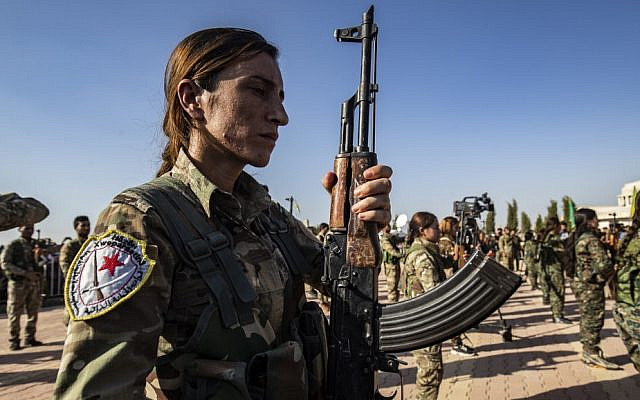
Image result for kurdish fighters
Credit: The Times of Israel

Senseless Violence

Photo Credit: Dailymail.co.uk

Quite frankly, when I thought about writing a post on the ISIS attacks over this past weekend I was afraid. Yes, I was afraid of speaking my mind about ISIS, in fear of ISIS. But, as I mulled over this I realized how wrong it was for me to be scared to voice my opinions because of a group who threatens many others for speaking theirs. So, I am writing this blog post because I will not let a terrorist group stop me from speaking my mind, because that’s what they want me and many others to do. ISIS staged an attack on Paris, but not only them, Paris is just ISIS’ most recent victim. ISIS also attacked Egypt and Beirut only weeks ago. And for what? Because they don’t agree with the way they live? Because traditions and norms that are shared throughout the US, UK, France, and more don’t coincide with how the members of ISIS choose to live? Is that why countless people have been killed, and not just by ISIS, in terrorist attacks? I could keep guessing the reasons, but honestly I don’t know.  And it gets even more twisted when I, personally, even try to conceive or understand how someone could kill innocent people, and for what I ask again? And though this post is surmised mostly of questions, that is all I have in this situation. Because it’s something that isn’t understandable. This isn’t a hard math problem, or a trick question that you finally understand after an explanation from the teacher; this is real life. Real, twisted life. And when one tries to explain a situation like this, only more questions arise. I mourn for all of the people who lost their lives, and I am deeply saddened. But I will not let these type of people deter me from living my life the way I want. And I will not live my life in constant fear that this will happen to me, and neither should anyone else.

The ISIS Crisis

We have all heard the horror stories of terrorism – beheadings, genocide, suicide bombings and kidnappings. They happen every single day in many different countries. But when is it time for international forces to step in?

Within the past year, an especially violent extremist group called ISIS has been popping up in my news feed quite a bit, usually with a title including the word ‘beheading’.

Journalists, school-children, women and tourists are the central targets for ISIS kidnappings. These are the most profitable groups of people as women and young girls can be sold to wealthy men, and the journalists and tourists will have families back home willing to give everything for their return.

Often, journalists who are kidnapped at their hands will never return, but the gruesome videos of their death will.

ISIS’s signature horror is far beyond anything any extremist group has bothered to do before: publishing the videos of beheadings and slitting of throats on the internet for everyone to see.

Photo Credits: topinfopost.com

The scary thing about ISIS is the unpredictability of their beheadings. There is no negotiating with ISIS – if they decide to kill a captive, they will.

But why has nobody killed their leader already?

Because extremist groups this large are like a Hydra (to reference Greek Mythology). You can eliminate one leader, but when you do, another will just take their place.

Currently there is no way international powers or the UN can end this reign of terror.

Still want to go hike those Algerian Mountains?