Lost In Translation

Being someone who considers themselves a second language speaker, I have always found that my native-language of Mandarin (although no longer as good as my English), holds a few words or phrases that I realized couldn’t translate into English. I say this not because there weren’t words for them in the English dictionary, because there were plenty, but because of the meaning that is lost in translating them into another language.
Mandarin has roots that trace back 3,000 years to the origin of the Chinese language, more recently becoming the common language of China over 700 years ago. Because of this, over the centuries, Chinese characters have gone from simply representing ideas or objects, to imbedding themselves into the deeper meaning of these ideas, becoming symbolic of what they represented.
I really don’t know if that would make sense to anyone who doesn’t have a non-English language where they can find an example of this. But essentially, what I’m trying to say, is as time as progressed, these words have solidified themselves as the sole-identifier for these ideas, meaning that the word in itself evokes instant imagery and clarity on whatever is being conveyed, it is the ultimate adjective, noun, verb, it requires no follow up, the word is a definition in itself just from the emotions it lets off.
Below I have jotted down a few that I’ve heard over the past several weeks that I don’t believe could ever be translated into another language and hold the same significance that it does in Mandarin.
香- xiang, like very good taste, smell, just feels right on the palate
哎哟,你做的饭好香啊
aīyō,nǐzuò dèfànhǎoxiāng a!
Oh my, this food that you made is so savory!
(Personally when I use this word, it evokes an image of that scene from Ratatouille when Remi takes a bite of the cheese and strawberry together and colors begin to swirl together on screen as he’s just in ecstasy. Just to give an example of what I mean by evocative)
情 qing, like very caring of, adoring, affection, lovey-dovey
转盼多情
Zhuǎn pàn duōqíng
a loving (or soulful) glance
辛苦- xin ku, working very hard, deserving of praise, worked to exhaustion, withstanding bitter hardships
路上辛苦了。
Lùshang xīnkǔ le.
You must have had a tiring journey.
脑海- nao hai, mind, same symbolic connotation as a heart that just doesn’t exist in English
你存在我深深的脑海里。
nǐ cúnzaì wǒ shēnshēn dè nǎohǎi lí
You exist, deep in my mind
存- cun, to exist, to protect it, cherish, withstand the test of time
爱长存。
aì chángcún.
Love will last forever
轻- qing, weightless, gentle, worry-free, relaxing
她走路脚步轻。
Tā zǒulù jiǎobù qīng.
She walks with a light, carefree step.
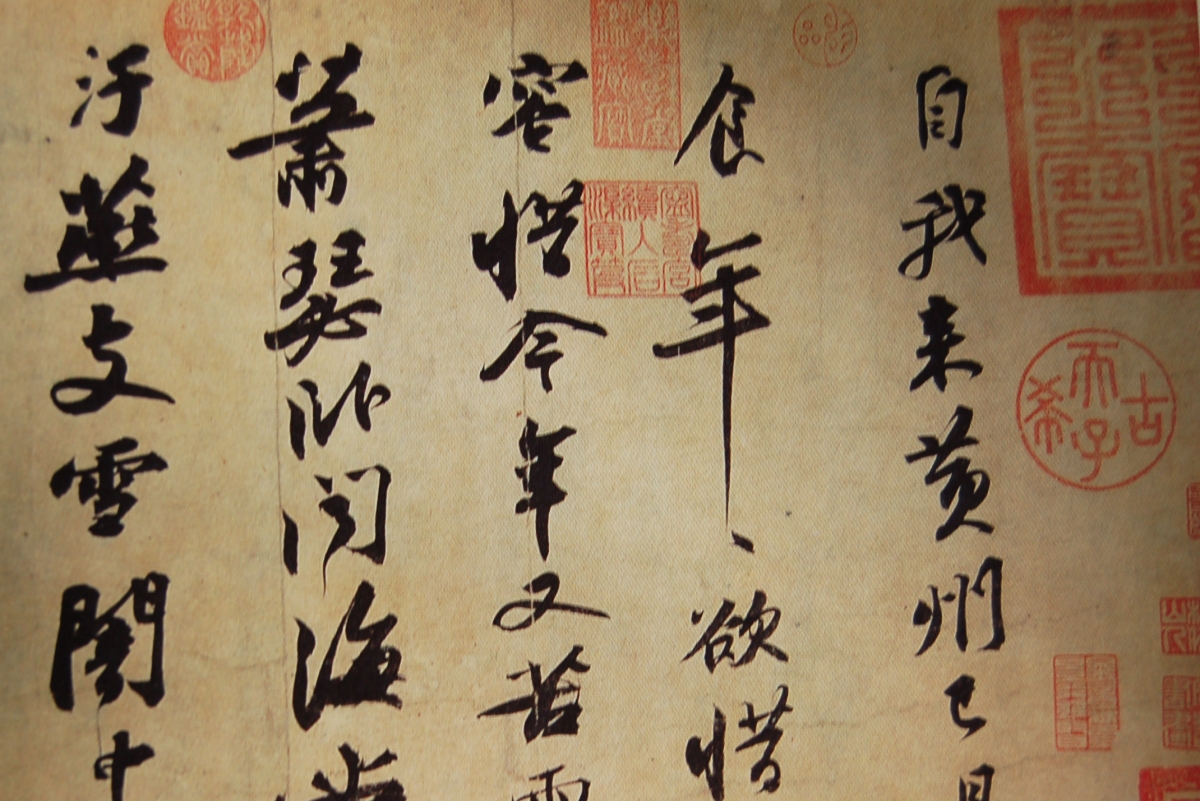
Source: AsiaSociety.org

Beijing Opera.

Beijing Opera, also known as “Peking Opera,” is one of the most representative performing art of Chinese culture. It is the largest Chinese opera form, and is extolled as “Oriental Opera.”

Having a history of 160 years, the Beijing Opera is developed from absorbing many other dramatic forms, mostly from the local drama ‘Huiban’ which was popular in South China during the 18th century. It is a scenic art combining music, performance, literature, aria, and face-painting. The performance focuses on the technique of expression and different roles have different meanings.

Some main roles in Beijing Opera are: Sheng, a common name of male characters; Dan, the general name for female characters; and Jing, which refers to some male characters with particular appearances or personalities. Lots of them are based on the real historical people.

Another feature of Beijing Opera is the facial painting, also known as Lianpu. Lianpu is regarded as the colorful dressing on actors’ faces. The colors are varied with each characters to represent different themes. For instance, red symbolizes loyalty, such as Guanyu, a great general during Three Kingdoms Period (220-280). Black signifies honesty and frankness.

Beijing Opera portrays the soul of Chinese national culture. It is the unique and eternal treasure of China.

World of Color.

Art is a mysterious world. Different culture produces different kinds of arts. As for my experience with ART, Chinese Watercolor is my favorite way to express this world.

Even though water color art actually originated in Europe, the Chinese were quite familiar with the use of the brush as they were expert calligraphers that worked with their own tools – brush and ink. The origin of it can be traced back to about 2000 years ago.

Initially the Chinese artists focused on realistic expression of their subject matter. This approach produced some fantastic paintings that displayed intricate detailing and an intelligent use of color.

Later on the Chinese experimented by adopting different techniques such as abstraction and exaggeration and other new techniques such as transfiguration and decoration. Colors are used in the two mayor styles of Chinese painting, in the detailed, more academic style called kung-pi (gongbi) and in the spontaneous style hsieh-i (xieyi).

Read More »

The Moon.

We are sitting here again. The dim moon hid her face behind the grey clouds, like home, gloomy and unreachable.

Today is the joyous Mid-Autumn Festival, the third and last festival for the living, which is celebrated on the fifteenth day of the eighth moon, around the time of the autumn equinox. Many referred to it simply as the “Fifteenth of the Eighth Moon”. In the Western calendar, the day of the festival usually occurred sometime between the second week of September and the second week of October.

This day was also considered a harvest festival since fruits, vegetables and grain had been harvested by this time and food was abundant. With delinquent accounts settled prior to the festival , it was a time for relaxation and celebration.


Jack came here this weekend to spend this special day with me. Also, our group which includes Vivian, Sophia, and other my Chinese friends on campus cooked Chinese food at the girls’ lounge.

We had a good time cooking the dishes that we used to have at home, and I called them “the taste of home”. We were laughing and talking about our own customs at home. We also ate moon cakes.

As foreign students, the only way to keep us together is to remember our cultures. Festivals of different cultures can be considered as profound bonds between time and distance.Read More »

5 Chinese Dining Habits

There are many myth and superstitions in Chinese culture, even in their eating habits. Here are five major superstitions in Chinese eating habits.null

The first one is never rest chopsticks vertically in the rice. Because it looks like an incense which represents someone’s death. Second, do not turn over the fish. Turning over the fish looks like you are turning over a boat. And this boat carries all your good luck and fortune. So if you flip the fish over, it symbolizes that you are throwing all the luck and fortune away.null Third, when you are eating the noodles, don’t cut off the noodles. Because the length of the noodles represents the longevity of your life. So if you cut off the noodles, it means that you are shortened your own life.null

Fourth, never let your tea cup run dry. If your tea cup is dry, that means that there is nothing left in your life, so at least there should be something in your tea cup and it should be refilled immediately. Fifth, always order an even number of dishes. Odd number of dishes represents death, because during a funeral meal, people usually order an odd number of dishes. So next time, when you eat dinner with some Chinese people, you better watch out for these table manners!