My Recent Duolingo Escapades

As of recent, I have been on my grind. It is not nearly as much as other people, I am aware of, but I have now obtained a 30-day streak on Duolingo learning German. I started this journey in an attempt to be able to communicate with my German friend, as I basically could not talk to her at all due to the language barrier. No I’m kidding, she actually has a slightly better grade in AP English class than I do. I still want to be able to try to talk to her in German, however, just because I think it would be pretty funny and she would probably laugh at me for my pronunciation and grammar. Honestly, after doing a minimum of a lesson a day for an entire 30 days, I should probably know more than I do. I basically can just order in a coffee shop and know very basic phrases and familial vocabulary. I also know random animals like mice and owls, which I’m not sure are a super relevant topic of everyday conversation if I were to be plopped in the middle of the street in Germany right now. The ultimate goal is not fluency, which I’m not sure is even possible through Duolingo alone, but I am hoping I can get somewhat proficient after some time.

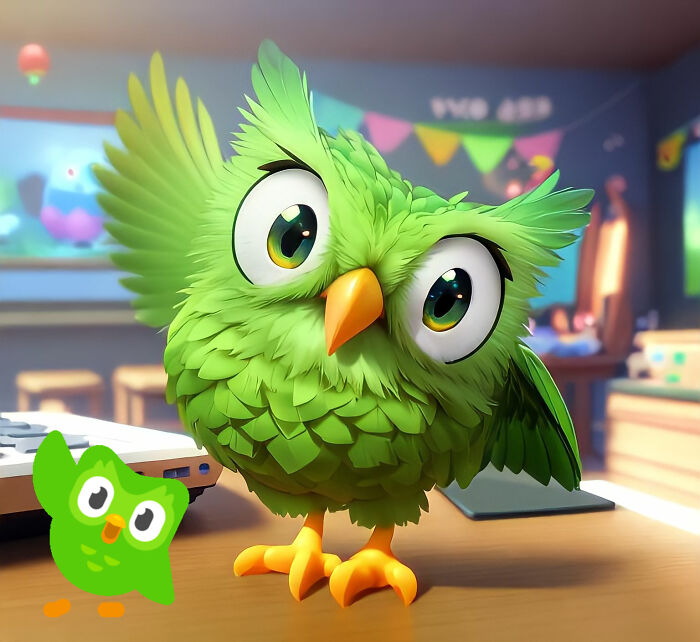
I Reimagined The Cast Of The Language Learning App Duolingo As If They Were  A Part Of The Pixar Universe (11 Pics) | Bored Panda

PC: https://www.boredpanda.com/blog/wp-content/uploads/2023/07/sketch1688901820147-64aa9fdf500bd-png__700.jpg

Lost In Translation

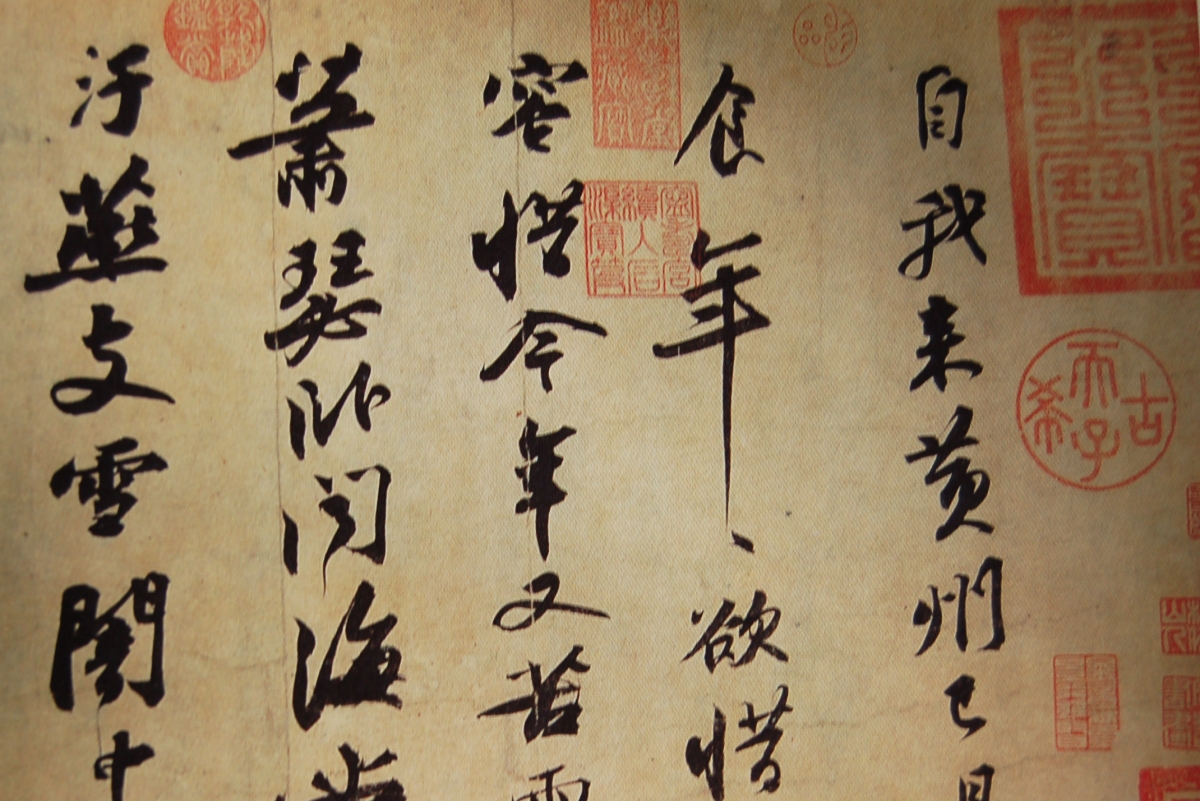
Being someone who considers themselves a second language speaker, I have always found that my native-language of Mandarin (although no longer as good as my English), holds a few words or phrases that I realized couldn’t translate into English. I say this not because there weren’t words for them in the English dictionary, because there were plenty, but because of the meaning that is lost in translating them into another language.
Mandarin has roots that trace back 3,000 years to the origin of the Chinese language, more recently becoming the common language of China over 700 years ago. Because of this, over the centuries, Chinese characters have gone from simply representing ideas or objects, to imbedding themselves into the deeper meaning of these ideas, becoming symbolic of what they represented.
I really don’t know if that would make sense to anyone who doesn’t have a non-English language where they can find an example of this. But essentially, what I’m trying to say, is as time as progressed, these words have solidified themselves as the sole-identifier for these ideas, meaning that the word in itself evokes instant imagery and clarity on whatever is being conveyed, it is the ultimate adjective, noun, verb, it requires no follow up, the word is a definition in itself just from the emotions it lets off.
Below I have jotted down a few that I’ve heard over the past several weeks that I don’t believe could ever be translated into another language and hold the same significance that it does in Mandarin.
香- xiang, like very good taste, smell, just feels right on the palate
哎哟,你做的饭好香啊
aīyō,nǐzuò dèfànhǎoxiāng a!
Oh my, this food that you made is so savory!
(Personally when I use this word, it evokes an image of that scene from Ratatouille when Remi takes a bite of the cheese and strawberry together and colors begin to swirl together on screen as he’s just in ecstasy. Just to give an example of what I mean by evocative)
情 qing, like very caring of, adoring, affection, lovey-dovey
转盼多情
Zhuǎn pàn duōqíng
a loving (or soulful) glance
辛苦- xin ku, working very hard, deserving of praise, worked to exhaustion, withstanding bitter hardships
路上辛苦了。
Lùshang xīnkǔ le.
You must have had a tiring journey.
脑海- nao hai, mind, same symbolic connotation as a heart that just doesn’t exist in English
你存在我深深的脑海里。
nǐ cúnzaì wǒ shēnshēn dè nǎohǎi lí
You exist, deep in my mind
存- cun, to exist, to protect it, cherish, withstand the test of time
爱长存。
aì chángcún.
Love will last forever
轻- qing, weightless, gentle, worry-free, relaxing
她走路脚步轻。
Tā zǒulù jiǎobù qīng.
She walks with a light, carefree step.
Source: AsiaSociety.org
What a punderful world!

Photo Credit: smosh.com

Many people hate me for it, or get annoyed in the bang-their-head-on-the-table kinda way. But I just can’t help it. I really, really love puns!

I think they are punny, puntastic, and it’s straight up a lot of pun to make them!

I’m about to get some serious hate for this, but here are some of my favorite puns:

“If you are in a restaurant, waiting for your waiter, aren’t YOU the waiter?” Hah. Ha. Or how about, “If you are cleaning the vacuum cleaner, aren’t YOU the vacuum cleaner?”

Okay. Those are some pretty good ones. But, there are only few things I appreciate more than a really well made, thought through pun. Take as an example, “A steak pun is a rare medium well done.” It’s so good! I’m really glad that @ahuj9 on twitter took the time to make up this beautiful joke, because it just made my day! Just like one that goes like, “I, for one, like roman numerals.” That is pure magic! It is so well made and I don’t care how ridiculous most people find puns like that, I am so fascinated by them!

There are so many puns in this word, but the sad thing is that there are so many that just don’t make sense in english! I realized that when I first tried to tell a joke to one of my American friends. But I totally forgot that it was a German joke. I tried to translate and explain it, but it didn’t work, because it was a pun! Damned be those fantastically awful little pieces of potential disappointment!

Anyways, if you are like me and are completely infatuated with puns, check out these 33 Bad Puns on Buzzfeed, because for some reason bad puns are the best puns!

Sleep talking in my second Language?

I have a roommate, and she tells me that I talk in my sleep. I sometimes speak in full sentences, such as “the Jacuzzi was good,” or I mumble. When I wake up I don’t remember what I talked about at all.

Photo Credit: frontiersin.org

I’ve heard that people dream in the language they are most comfortable speaking. My roommate says I speak in both English and in Japanese. I was speaking mostly Japanese until I was 16 years old, but I’ve been using more English these past three years. I thought I was more fluent in Japanese just by the number of years I’ve used it in comparison to English, but it seems like now I know English just as well.

I was trying my best not to speak in Japanese, not to read in Japanese and not to watch Japanese T.V. shows for the past three years in order to be more fluent in English. But I never thought I would be as fluent in English as Japanese. So I am very proud of myself for achieving my goal of being bilingual.

Becoming Bilingual

When school starts back up after Christmas break, it will mark two years of living in the U.S. for me. I’m from Japan and went to a Japanese-speaking school most of my life. Since my father is an English speaker, my English listening skills were perfect when I came to America, but I couldn’t express myself verbally.

I came to the U.S. when I was 16, and I knew it was my last chance to become truly bilingual, since 16 is the age you start losing the natural ability to learn a second language. So I made a strict rule for myself: I couldn’t speak any Japanese to anyone at my school (since there are Japanese students.) It was very difficult to stop using my first language all of a sudden. When a Japanese student would start speaking to me in the language, I would ignore them. It felt awful. At first it was very difficult both emotionally and physically, but because of my strict rule, my English improved very quickly. For four months I followed this rule, until the school nurse reached out and told me to relax, and not to be so strict with myself. I took her advice and started speaking Japanese and making Japanese friends.

There was a period of time when I felt I couldn’t speak any language, since I was trying to improve my English but at the same time was losing my Japanese. After getting through that, I finally can say I can speak both Japanese and English. It was worth the struggle.

Photo Credit: i.huffpost.com

Speak emotion, not words

fef

When a human speaks what comes out?

Is it failures, hopes, dreams?

Do the words represent freedom?

Or just a logical way to communicate?

Humanity has not always been united in this regard.

Thousands of cultures have existed.

These ancient people made art, tools, and crafted language.

Progress always had it’s price.

Skin color, cultural values, and language all warped.

People could their differences to others.

It is these differences that has caused conflict.