Death Note to Whitewashing

In an interesting turn of events, Ed Skrein, who was originally set to star in Hellboy, backed out of his role this summer because of his character’s mixed-Asian decent. Now, I’m upset that not enough people are talking about this. Hollywood is known for casting white actors in place for roles that are for people of color. However, Ed Skrein is the only actor, that I’ve heard of at least, that has declined a role because of this reason.

This is big news because of how rare it is. We’ve seen actors and actresses with amazing, prolific careers ignore whitewashing and accept a role that a person of color deserves. Earlier this year, Scarlett Johansson played main character Major Mira Killian, adapted from the Japanese manga series Ghost in the Shell. The movie barely saw any profit, less than 70 million made in its entire box office career. Matt Damon starred in the Great Wall, a movie literally about a white man leading a gigantic Chinese army against monsters attacking the grand fortress. Most recently, Netflix released Death Note, starring Nat Wolff, another adaptation of a popular Japanese manga.

Talking about Death Note for a moment, back in 2015, when Nat Wolff was announced as the film’s lead, Light, there were obviously mixed responses. One came from up and coming actor, Edward Zo, who was denied the opportunity to even audition for the same role. Why? Because he was “too Asian.” Here is his story below:

Something he said really stuck with me. “Hey, your story is really cool. Everything about this story is awesome, except you,” he said, when explaining what whitewashing feels like. What directors are doing is taking away the authenticity of a story. You don’t see white actors playing slaves, it’s not their story to tell. Manga, a style of Japanese comics, is quintessentially Japanese. Not white. What you get are stories that stay with Japanese adults and kids alike. Why take that essential part away in the movie version?
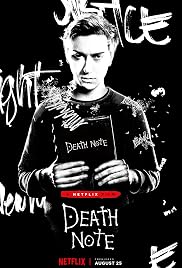
Photo Credit: imdb.com

What I just talked about are just actors stealing roles from Asian, more specifically Japanese, actors. I could show hundreds of examples of Hollywood whitewashing. Some older movies even use blackface and yellowface instead of just hiring people of color. What all these movies have in common nowadays are their social media outcry based on their faulty casting. I hope that Skrein’s decision and the obvious negative effects it has on a movie’s reviews will deter Hollywood from whitewashing in the future.

Sleep talking in my second Language?

I have a roommate, and she tells me that I talk in my sleep. I sometimes speak in full sentences, such as “the Jacuzzi was good,” or I mumble. When I wake up I don’t remember what I talked about at all.

Photo Credit: frontiersin.org

I’ve heard that people dream in the language they are most comfortable speaking. My roommate says I speak in both English and in Japanese. I was speaking mostly Japanese until I was 16 years old, but I’ve been using more English these past three years. I thought I was more fluent in Japanese just by the number of years I’ve used it in comparison to English, but it seems like now I know English just as well.

I was trying my best not to speak in Japanese, not to read in Japanese and not to watch Japanese T.V. shows for the past three years in order to be more fluent in English. But I never thought I would be as fluent in English as Japanese. So I am very proud of myself for achieving my goal of being bilingual.

Becoming Bilingual

When school starts back up after Christmas break, it will mark two years of living in the U.S. for me. I’m from Japan and went to a Japanese-speaking school most of my life. Since my father is an English speaker, my English listening skills were perfect when I came to America, but I couldn’t express myself verbally.

I came to the U.S. when I was 16, and I knew it was my last chance to become truly bilingual, since 16 is the age you start losing the natural ability to learn a second language. So I made a strict rule for myself: I couldn’t speak any Japanese to anyone at my school (since there are Japanese students.) It was very difficult to stop using my first language all of a sudden. When a Japanese student would start speaking to me in the language, I would ignore them. It felt awful. At first it was very difficult both emotionally and physically, but because of my strict rule, my English improved very quickly. For four months I followed this rule, until the school nurse reached out and told me to relax, and not to be so strict with myself. I took her advice and started speaking Japanese and making Japanese friends.

There was a period of time when I felt I couldn’t speak any language, since I was trying to improve my English but at the same time was losing my Japanese. After getting through that, I finally can say I can speak both Japanese and English. It was worth the struggle.

Photo Credit: i.huffpost.com

International Lunch

As I mentioned in my previous post, Baklava, our school put on an international lunch on Sunday. Students from different countries and backgrounds cooked a native dish, and everyone else got to eat it. A guy from Italy made real Italian pasta (and let me tell you, it’s all it’s hyped up to be). A pair of twins from Japan made sukiyaki, someone else made guacamole, salsa, and tacos, and I made baklava.

There was a ton of food, and it was really really good. It was really cool to be able to taste the different foods from different countries, as made by people who actually lived there (even though I never have lived in Greece). The food wasn’t from a restaurant. It was made by someone who lived there, ate it regularly, and knew how to cook it.

It was delicious.

Especially the homemade by a real Italian pasta.

Although the turnout wasn’t as much as was expected, those of us who were there had a lot of fun and really enjoyed the food. In my mind, it was a success, and hopefully we do it again soon.

Doolittle Veterans

f4g45

History time. Monday, November 11th is Veteran’s Day. Veteran’s Day is a day that celebrates those who have served in the armed forces. A famous group of veterans are the surviving members of Doolittle’s Raid.

Doolittle’s Raid was a US military operation that occurred after the Japanese attack at Pearl Harbor. Lt. Colonel Doolittle proposed a risky plan of flying B-25s over the Japanese capital, Tokyo. Doolittle was told that once over Japan the B-25s would become low on fuel, furthermore there was no safe place to land. On April 18th 1942 Doolittle, along with an all-volunteer group of pilots, dropped bombs upon Tokyo. Some of Doolittle’s men were shot down then captured by Japanese forces, others crashed in the Pacific, most would bail out of their aircraft over China and survive.

Doolittle and his men would become American heroes; Doolittle himself would be given the Medal of Honor and promoted to Brigadier General. Today there are only four surviving members of Doolittle’s Raid. This year the surviving members held the last commemoration of the raid.

coolest nationalities

null

A CNN survey ranks the world’s coolest nationalities, and the Brazilians come out on top.

Without Brazilians, we wouldn’t have samba and Rio Carnival, and we wouldn’t have the beauty of soccer. Moreover, their zealous characteristic has brought our world power.

The people Singapore came in second place. During this century, the knowledge of technology has been so important to us. In Singapore, they have a surprisingly computer-literate population.

The Jamaicans came in third place. They have the craziest religion, Rastafarian, and they have an accent which makes all English-speaking people jealous.

Fourth place went to the Mongolians, who still make people think that they are a group of mystery people who still live nomadic lives.

Other nationalities that made the survey include the Americans, Spanish, Japanese, Botswanans, Chinese, Nepalese, and Turks. Although this survey may not be totally accurate, it show us that every country has their own coolest part.