Artemis

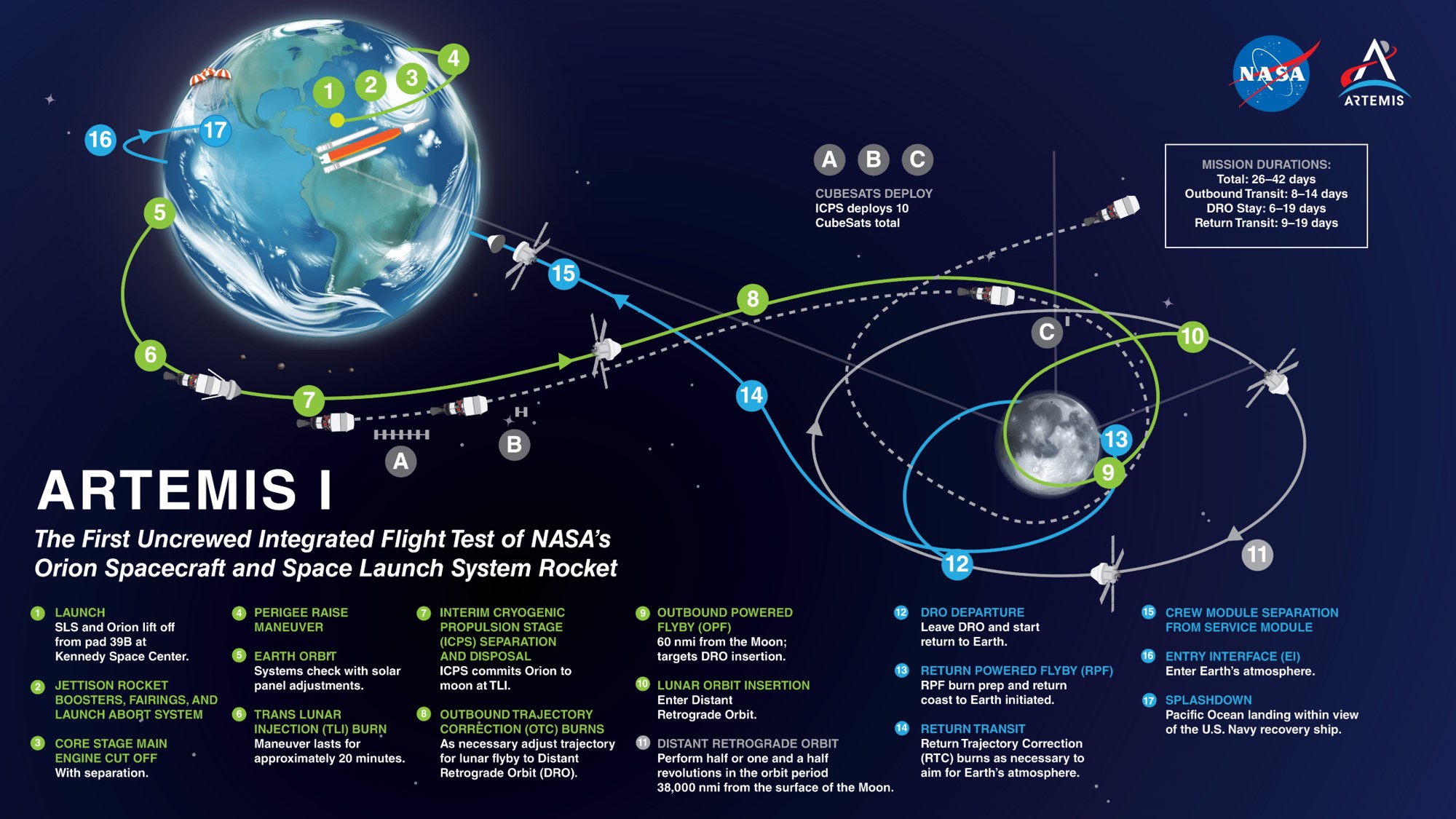
So NASA has a moon landing program called Artemis. This program is going to take the next group of Americans to the moon, including the first woman and person of color to ever go to the moon. Today, the Artemis rocket was rolled out onto the launchpad from the vehicle assembly building. In the coming days, the crew will practice loading and unloading fuel from the rocket and go through a full launch procedure known as the “wet rehearsal”. The first launch of this rocket will be uncrewed ahead of the crewed launch to the moon to bring the first astronauts to the moon since the 1960’s. When Artemis I launches in 2024 it will go farther than any human-rated spacecraft ever. It will go 40,000 miles past the moon carrying testing equipment and data measuring devices to see how humans will fare in the Artemis spacecraft. Once Artemis II launches it will carry humans on a 4-6 week journey to the moon and back.
Artemis I Undergoing Final Rounds of Testing | APPEL Knowledge Services

Photo cred- NASA

Death of the ISS

Well, it’s official, the ISS (international space station) will be falling out of the sky by 2031. NASA has stated that in ten years’ time they will bring the ISS down into Point Nemo in the Pacific ocean. What’s special about Point Nemo? It’s the furthest point from land on the earth. It has become a spacecraft graveyard, dozens of satellites, telescopes, rocket boosters, and other such things. The ISS has provided us with tons of experiment data, product testing, and even some world records. It has become a safe international space, where men and women from multiple countries come together to spend a few months doing repairs, experiments, and other space things they might be required to do. It has given us opportunities for peace as well as development. The next ten years will see the last experiments done on the station and then its ultimate burial in the sea. In ten years’ time, we will no longer see the small dot flying across the night sky.

International Space Station | NASA

PC: NASA. gov

Some more cool space stuff

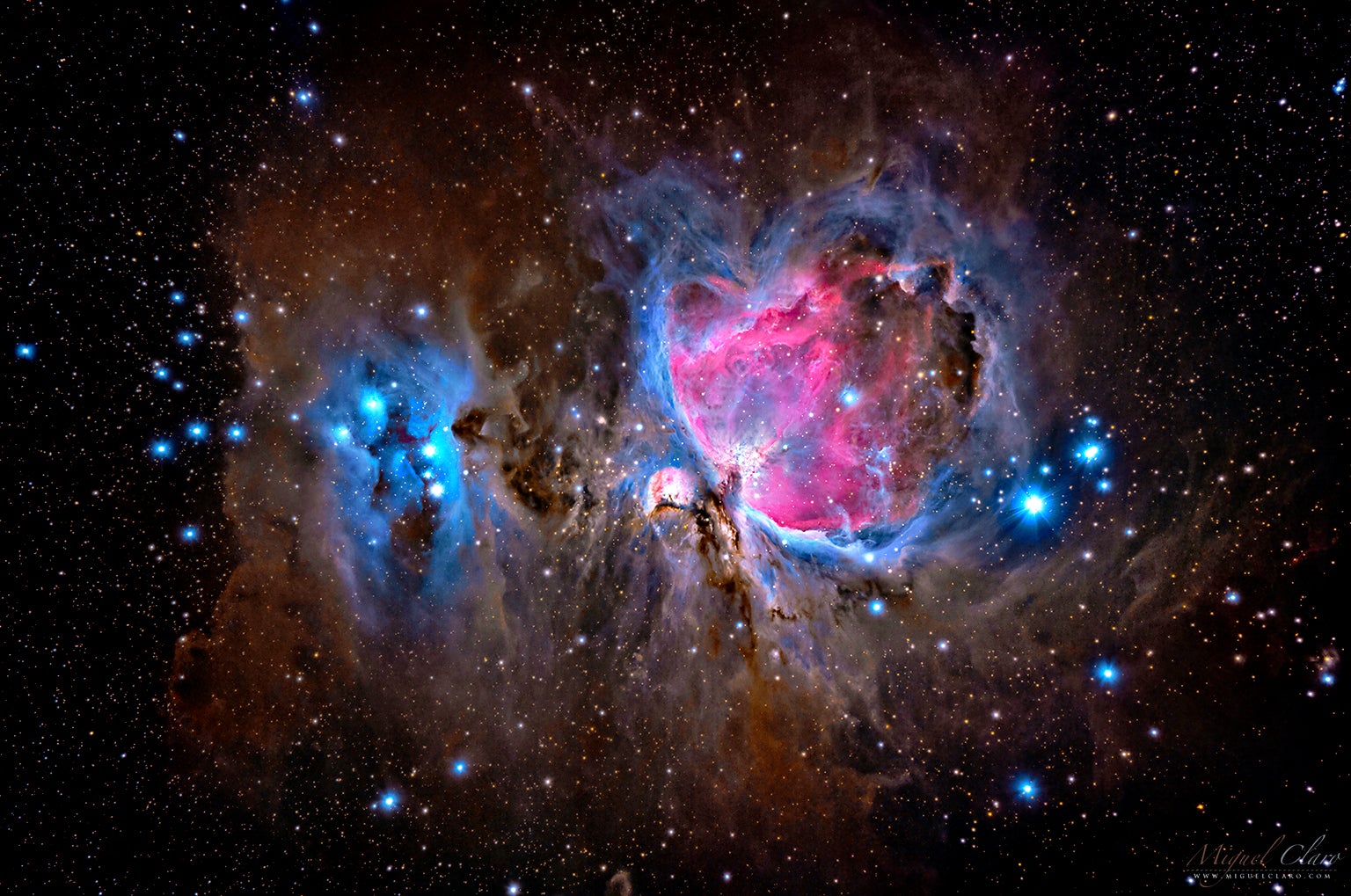
A “cavity” in the Milky Way Galaxy was discovered today. This essentially is a large area in which theres nothing, just the massive open void of space. It’s approximately 500 lightyears wide, and may hopefully help research into star development in the near future. NASA’s Insight mission, that put a lander on the surface of Mars to measure seismic activity on Mars, has detected three powerful “Marsquakes” of magnitudes up to 4.2. This may become a major factor in the eventual colonization of the red planet. SpaceX’s inspiration 4 crew landed safely back on earth after a 3 day mission to space that made the astronauts the first civilians in space. These milestones just make commercial space travel more and more tangible with every success. Finally, research into the near-constant gamma ray bursts coming into our atmosphere reveals that they may be caused by massive stellar explosions in space. This discovery boosts our research into star formation and destruction, and may give us some insights as to what goes on in the massive universe all around us.

Stunning Astronomy Photographs Look like They're Shot from Space -  Scientific American

The Space Races Finish Line

The U.S. Space Program if floundering to say the least. Obama, in an effort to cut spending, has cut much of NASA funding. This decline has led to other countries, in this case Russia, to advance their own space programs. They have started conducting unmanned missions, even sending craft as far as Mars.

Russia like many countries in Europe is not alone in their efforts, but has received some support from the European Space Agency. (Even though they are not members.) Russia has assisted the ESA on numerous occasions, most recently locating a lost Mars probe.

The name of the once missing probe is Phobos-Grunts and shortly after its launch on November 9th it disappeared. The accepted theory was that it was not powerful enough to break out of Earths orbit and thus became trapped. On  November 22nd a Russian Space Station picked up a signal from the probe.

They were able to determine exactly were it is and the ESA have several plans to bring it back to Earth. Unfortunately for Phobos-Grunts it will no longer be able to complete it mission to go to Mars. Not only has it missed its window of opportunity but also has very little fuel left.

I for one am glad that countries have banded together to further advance Space technologies

Mysterious Mercury

This is the first time that Earth has a regular orbiting eye-in-the-sky spying on the smallest planet in the solar system, Mercury. NASA’s spacecraft is called Messenger, which was successfully launched into a pinpoint orbit on Thursday night. Messenger was launched in 2004, which has cost NASA $440 million. The scientists believe that Messenger will start to transmit pictures and investigate the mysterious magnetic field and unusual density of Mercury. This is the fifth planet in the solar system that NASA has orbited. “Everybody was whooping and hollering; we are elated,” Messenger’s chief engineer, Eric Finnegan said. “There’s a lot of work left to be done, but we are there.” Mercury is one of the most difficult planets to get to, because of its extreme climate. While it is facing the sun. the temperature can get to 800 degrees. However, when it is not facing the sun, the temperature can get low to 300 degrees below zero. Robert Strom of the University of Arizona was a scientist on the Mariner, a spacecraft that NASA has launched to Mercury in 1970s, and current Messenger missions and he said he thought he wouldn’t get a second peek at the mysterious Mercury. The main purpose of this mission is to look for any living species in the planet and any liquid form water in those craters with frozen ice.

null

The moon is alive!

nullScientists have found significant amounts of water in a crater at the moon’s pole. This significant discovery will revise the impression of moon as a dead planet, which attract more attention on future human space missions. “The moon is alive,” declared Anthony Colaprete, the chief scientist for the Lunar Crater Observation and Sensing Satellite mission. A rocket has punched a hole about 100 feet deep from the moon’s surface, and then they found about 25 gallons of water in the form of vapor and ice. “It’s kind of like when you’re drilling for oil. Once you find it in one place, there’s a greater chance you’ll find more nearby.” said Peter Schultz, a geology professor at Brown University. This discovery has make NASA’s plan seem practical, which is to return to the moon at the end of next decade and construct a lunar base where astronauts can live and work for several months. However, in order to fulfill this plan, NASA needs at least 3 billion dollars a year from the Obama’s administration!

Space doesn’t seem so far anymore

When most people think of space, they imagine a massive area splattered with start and planets, forming thousands of galaxies that seem intangible. However science is now not too far away from actually attempting to spread our species to other planets.

Space exploration has been a hot topic since we first landed on the moon, but who would’ve thought that actually living on another planter would become realistic in our time?

A total of 1,235 collective planets have been discovered including 68 Earth-sized, 288 super-Earth-sized, 662 Neptune-sized, and 165 Jupiter-sized planets all from between 500 and 3,000 light years away. Optimistically speaking, one of those has to be realistic option.

I mean honestly, how cool would it be to be re

For more information click here