Burned Bridges

The United States has a complex and deep rooted relationship with the rest of the world. We stood beside Europe on the march to victory in the first two world wars. But then the 60s and 70s yielded economic and political corruption centered in Latin America, casting us in a malicious light. Then the 1980s saw the fall of the Berlin wall/ Soviet Union, which the US had a large part in. We were the heroes – until the Gulf Wars and Afghanistan, when we invaded places where there was no need to invade, while withdrawing from regions at crucial, inopportune points. Now, in October of 2019, we burned a bridge that had been forged with blood and brotherhood, united under a common desire for justice and peace. For decades, the Kurdish people, an ethnic group living between Syria and Turkey, helped the United States with intelligence, manpower, and resources. In turn, we drove radical insurgents from the surrounding area. But as of this week, the Kurds no longer see us as the ally we have always been. Despite strong warnings from various agencies and the pentagon, President Donald Trump ordered American troops out of a buffer zone between Turkey and Syria, which had for years stopped the Kurds from fighting with the Turks over land. By essentially opening the gate for the Turkish Army, the United States turned its back on the Kurdish people, which has resulted in a plethora of problems. Two issues that stand out greater than the rest are the fact that we betrayed a long standing and loyal ally, and that because of Turkey/Syria’s concentration on the impending conflict, large amounts of prisoners that belong to the Islamic State of Iraq and Syria (ISIS) have escaped from prisons that as of recent lack security. Many fear that an old and strong bridge has been destroyed, and that the future of the western Middle East may be drastically changed for the worst. The events that are to unfold are likely to be harrowing and unpredictable, so please read from reputable sources if you wish to learn more.  
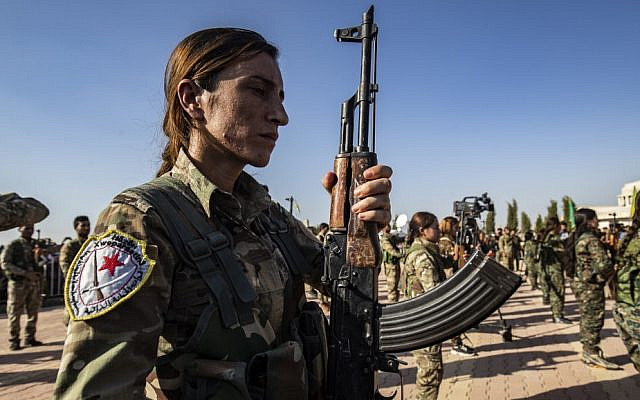
Image result for kurdish fighters
Credit: The Times of Israel

Shattered State

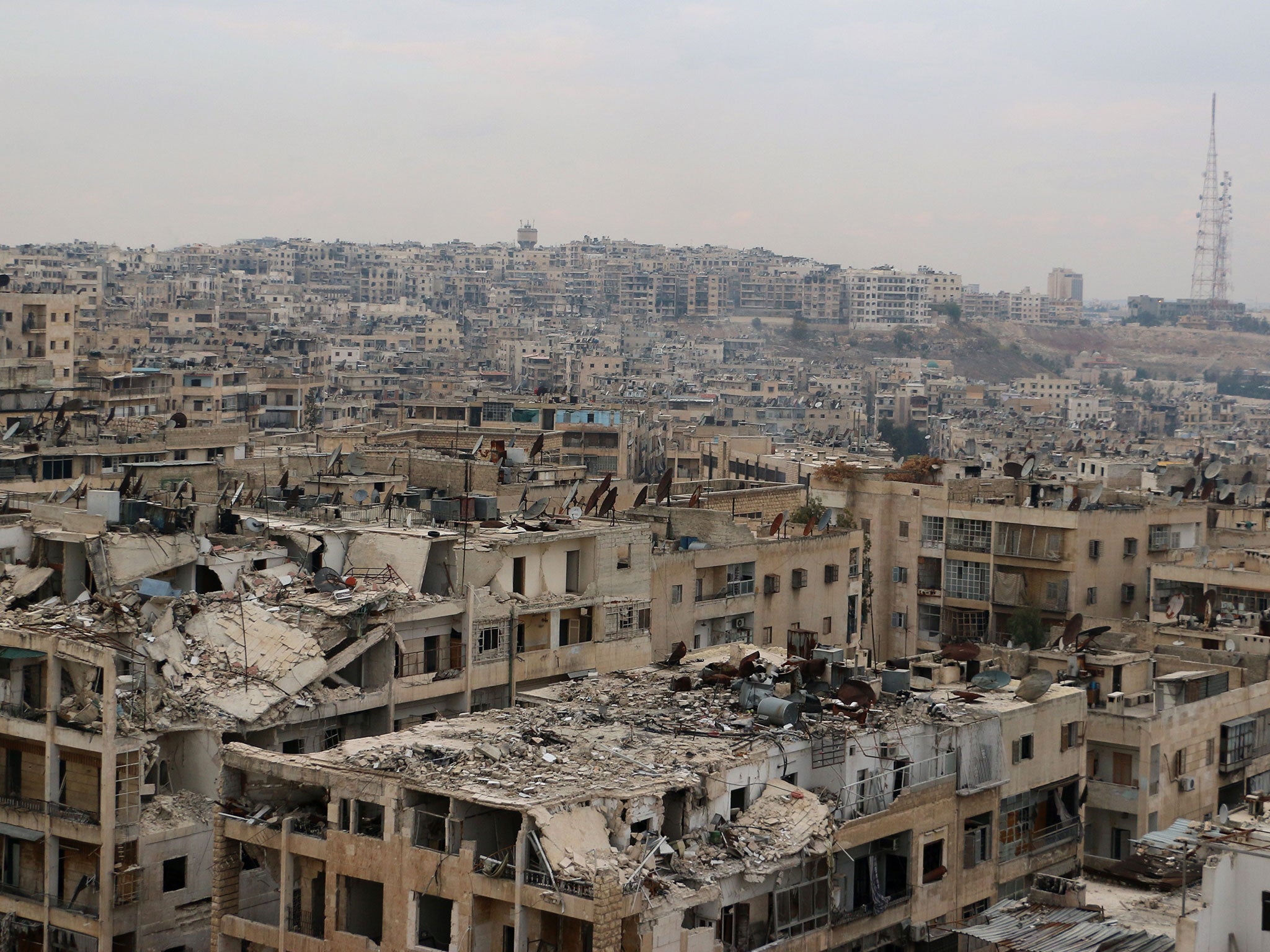
Syria has been the centerpiece of an ISIS invasion, revolution, Russian aggression, and Western Concerns. With Aleppo as the prime example of what has befallen of Syria, entire populations have disappeared.

Photo Credit: Independent.co.uk

Sections where thousands walked daily are now ghost towns, filled with rebels, daily Russian bombings, and the desperate ones who don’t want to leave their homes. The country once filled with tourism and stability has taken a sudden turn into total chaos, chaos originating from an Arab Spring pro-democracy protest opposing the torture of a group of students in 2011.

Following the mass demonstration, dozens of people were killed, between protesters and the aggressive police, prompting protesters to gain weapons to defend themselves, then eventually rid government forces altogether in cities.

Five years later and millions have run from the country, with the majority landing in Turkey and surrounding Islamic Nations. A small percentage migrated into Europe, prompting anti-Islamic protests within such Nations.

Russia takes lead in defending Syria’s failing government with aggressive bombardment on civilians and rebels alike. The UN has stopped sending aid to civilians due to attacks on their convoys, and the U.S. arms Democratic Revolutionaries throughout Syria while the Islamic State advances. This Nation has fallen apart, and now third parties stroke the flames instead of leaving the situation alone between the revolutionaries and the government.

So where does it end?

So far, there is no ending from a diplomatic viewpoint; the Geneva talks have only been another platform over which the U.S. and Russia disagree. There’s no clear sign over the future of the Nation, or whose hands it will fall into. Whether it’s Western powers, Russia, or radicals, the nation and it’s structure will remain shattered for year to come.

The Real Battle For Syria

Asides from the rumors of the United States arming rebels, the Obama administration hasn’t truly intervened in the ongoing Syrian conflict all that much until recently. The deployment of chemical weapons in Syria caused a major disturbance that cried for the US government to step in. However, is a US intervention truly necessary? Or is it just fresh lemonade for America’s insatiable oil thirst? Most people would argue that the purpose of an intervention is to protect refugees and civilians. Others would argue that the US is after Syrian oil fields. Unfortunately, both of those assumptions are wrong. We all wish it was just that simple; however, considering America’s Predator Drone rampage in Pakistan, it is safe to assume the Obama administration doesn’t really care about civilians, and Syria’s oil fields resemble a droplet of water in comparison to Iran’s massive ocean.

Bashar Al-Assad leader of Syrian government.
Bashar Al-Assad, leader of the Syrian government.

So one may ask, why is the United States of America meddling in this foreign mischief? Simple, the answer is oil. Not Syria’s oil, but rather Iran’s. In 2010, Syria, Iran and Iraq set a plan in motion which was set to build a pipeline connecting the south of Iran, through Syria and into Europe. Seems harmless right? Considering that all that precious oil will most likely end up in western hands. However, the original plan was to include Qatar, one of the world’s largest oil producers, and a beloved ally of the USA, to supply a pipeline that would go through turkey and into Europe. Nonetheless, Bashar Al-Assad, the ruler of Syria, decided that its enemy Sunni states shouldn’t be involved, so he denied their participation. Instead, Syria chose to stick with the Iraq and Iran plan with Russian support over the Qatar and Saudi Arabia option with American support. If Syria, Iran and Iraq  permit the involvement of Qatar and Saudi Arabia, the Nabucco pipeline, a project set to diminish European dependence on Russian energy would be successful. However, Iran and Syria refuse to support the Nabucco project and decided to stick with the Syrian pipeline, also known as the Trans-Arabian . Nabucco would go through Turkey instead.

To this point it is obvious that the reason the United States wishes to topple the Assad regime is to gain control of that pipeline and restart it. This time with the main participation of Qatar and Saudi Arabia. This also explains the constant intervention of Turkey, Qatar and Saudi Arabia, who have been supplying weapons to the Free Syrian Army and the rebels. To summarize, the pathetic excuses of the Obama administration are specifically designed to maintain the public distracted from the real intentions of the US, which are and will always be to obtain more oil. A perfect example was set in the Bush administration, where George W. Bush claimed that there were WMDs present in the region of Iraq and invaded the country. The US found no WMDs and the entire war just ended up on another pipeline that  the dutch company Shell now controls.

Links:

http://www.eia.gov/countries/cab.cfm?fips=SY

A snake bites a tiger

4g4g

The nation that rides the East and the West is a serpent to all.

It is large, powerful, and not easily defeated.

Not even the western tiger can hope to quell its fang.

Kindness, grace, or even hope for the future does not calm the serpent’s fury.

It must bite and poison all of mankind to be satisfied.

No law is strong enough, no punishment is harsh enough.

The western tiger claws at its elongated body, the serpent squeezes tighter.

The western tiger loses breath, and begins to fall.

The tiger pleads for compromise, the serpent’s squeezing stops.

They return to their lands and the cycle begins again.