I’m craving to write something, but I simply can’t. I’m sitting here with so many thoughts running through my mind, yet none of them can leave.
I sit here with my hands immobilized while trying to think of what key to touch next. I’m mindlessly staring at the glaring screen in front of me trying to think of something to write that’d make someone in this world proud of me, but I can’t. My mind is empty, and my heart is too drained to come up with any creative concoction of words to form some poem or sad element of my life to send chills down someone’s spine just reading it.
My thoughts are begging to be expressed in writing, yet they’re trapped inside my mind, and I’m sitting here helplessly trying to figure out how to let them out.
Photo Credit: sarwrites.com
It’s just not possible right now. I’m trying to write for me – or, maybe, for anyone – but every time I start a poem or a story, I exit the tab. And draft after draft later, I’m left with tens of unfinished passages into my thoughts, and now I’m just here writing out every insecurity I can think of about my writing.
But even then, these words don’t even share half of it. They don’t share half the conflicts I face when it comes to my writing. How I constantly think my writing won’t be beautiful enough, good enough. That it won’t be something extraordinary, just something plain and forgettable. I’m still battling myself, trying to figure out the right words that accurately express what I’m trying to portray about myself, yet right now it’s useless.
In this moment I have nothing to share. Sometimes, I have so much inspiration I’m writing one blog post after another, one story after another, and I’m sharing one dream after another, but right now… I’m empty.
Home is a loose word, I often find my mind and, in turn, my spirit in other places. Sitting wrapped in a blanket I’ll physically be here or there but, in truth, I’ll be far, far away. Henry David Thoreau once wrote, “At a certain season of our life we are accustomed to consider every spot as the possible site of a house.” House or home or somewhere in between? A trivial question when one is hunting for a place to rest one’s mind.
Photo Credit: hotelroomsearch.net
My tangible home will always be with my family in our small “faerie home,” surrounded by an unruly garden that seems to compete with the urbanity of the asphalt road and the ever shrinking street light (or perhaps I’m the one growing). Home with its boarding of white and blue, with a hand built white picket fence; home with a stylized and cohesive found object collection inside and hand painted walls of a whimsical forest land further from reality than the closest galaxy. Tangible home will be with my dad’s music blasting well above the sound threshold of his earbuds, shuffling in the Paint-Shack. Tangible home will be with my mom, picking up conversations we never started mid-way through a sentence. A home fit for part of my heart and part of my body.
But my true home, home for my mind, my spirit, the rest of my heart and body, that’s much harder to pin down. I’ve lived too many lives, I’ve walked the halls of Hogwarts and thieved the streets of Ketterdam. I have run through the Overlook Hotel and traveled the world in the Leviathan. I am inclined to call all these places my home despite the threat of horror and danger and pulse-stopping fear. But then again, I am just as inclined to call a solitary cottage at the edge of humanity surrounded by piles and piles of mugs and books my home.
When I was much younger I believed home would be among the pyramids and mummies of Egypt, studying a culture older than I could comprehend, dinosaur hunting while bouncing from continent to continent in search of the next great dinosaur find. Now I find myself lost, filled with wanderlust. Do I return to Ketterdam, Hogwarts, Brakebills? Do I follow the dust and jewels and bones of ancient history? Do I find my library tower with an endless supply of tea, coffee, pastry, and more books than I know what to do with? Do I find my corner of a city and people watch for the rest of my time?
Photo Credit: enlighten.pk
Maybe, what I’m getting at is I won’t find one home, there is no way to make that which is plural singular. I’ll always be hunting for the next city to make my heart beat faster and my lungs dance, the next country, the next world, the next universe. My home will be that glimpse of color disappearing around the corner, just slow enough for me to go skidding into the alley and see it go around the next corner. My home will be a sturdy pair of boots, one hell of a scarf, and a bag with an undetectable extension charm. My home will be that trip around the world finding the best food there is and then traveling to the Restaurant at the End of the Universe. Home will be that rare dinosaur in the middle of nowhere. Home will be Nefertiti’s tomb. Home will be finding that portal to Fillory, Hogwarts Ketterdam, Le Cirque des Rêves. Home will be the pens and paints I bring with me; home will be the countless notebooks of dreams, adventures, and future worlds.
Home will be the next great adventure. The never ending circular promise: the next place will be the place, the next place will be home. Part of me will always belong to the first home though, my little blue and white cottage in the forest of pavement and cars, but the rest of me? The rest of me is restless. Home will always be one step ahead of me, patiently waiting for me to catch up, always waiting for me to leave a little more of myself on the path.
Writers block, what a foe. It feels like everything I could write has already been written or far too close to my heart.
I’m full of non-noteworthy thoughts: is there ice cream in the freezer? Do I really have to finish that assignment or can I avoid it a little longer? Do I have the time to watch that episode? Should I read that book or this one? Is it actually likely that I can learn that language? Is tomorrow going to be a good day or one that makes me feel like crawling into bed and never reemerging?
So what should I write about? It’s not as if there is nothing going on.
Photo Credit: fanpop.com
Anyway, it feels like I could use 700 years of sleep, I don’t seem to do anything and I’m tired anyway. Why is that? I don’t even have the motivation to do the things I enjoy, much less the things that I don’t. I love doing certain things but all it seems I’m able to muster myself to do is sit around and, for all I can tell, do nothing.
So the motivation to tell stories and write is seemingly gone. Writers block has hit hard, senioritis even harder. Ugh.
Is it bad that I’m 100% ready to crawl into bed not having done anything productive today? I wonder sometimes, if given the choice, if I would sleep in excess and just not get out of bed at all really, if I would push all other things in my life off my plate and roll over and go back to sleep.
I often wonder how people write autobiographies. That wonderment often boils down to my curiosity of how life plays out. How does one go about living a life interesting enough to write about?
Photo Credit: diannedawson.com
What is it to live a life full of intrigue and well meaning? I haven’t lived that much of life but there are so many people my age or within margin that have already lived such extraordinary lives. I feel like I’m playing a game of catch up with a future I can’t even see.
How do I live an extraordinary life worth marking down in the books? How do I reach a point where I feel confident enough to write it myself?
I often wonder how people write autobiographies; do remarkable lives just happen or are they fought for? Am I fighting hard enough? Am I fighting for one at all? What does it take for a life to be incredible?
The memory of you fades more and more each day I grow older.
What I remember is the crashing waves against the sandy coast lines of Malibu.
The wind blowing into my hair from the rolled down windows.
The blinding sun shimmering in my eyes, and I’d squint hoping it’d go away, unaware of how I’d long for the feeling again in the near future.
The bright blue sky in the distance.
The cheeseburgers that somehow always tasted better near the ocean
The laughter in my heart, and my squeaking voice as I’d sing off key to my favorite Abba songs with you and Rachel.
There wasn’t a care in a world during those moments, but they never lasted long anyways.
I remembered the endless nights just as clearly as the endless days.
The hours of screaming. The hours of crying.
The secondhand cigarette smoke and uncleaned bedrooms.
The weekends moving from your place to dad’s.
Child support money being gambled away on lottery tickets, and gas money for late night drives when I’d rather be sleeping.
One day I was pulled out of school early. I said goodbye to my friends, to my crush, and to my teacher, unaware that I’d never see them again.
Unaware that I’d never step into a school building again until fifth grade.
Unaware that I’d never live the life I longed to have until you weren’t there to experience it with me.
I never said goodbye. May 14th you made a promise to get better, but you never kept that promise for me or my sister. You left me, and never came back. Sometimes I see you in the crows that’d never leave me alone, and they’ve always annoyed me, but I’d take their beauty for granted because I never knew what it meant.
I blame you for leaving me. I blame you for worrying about the relationships in your life that constantly broke your fragile heart more than your own daughters who loved you more.
Photo Credit: Tumblr
I hate you for never being the mother I always wanted to have.
I was ten years old. I’ll never have a mother to help do my hair for my senior prom. Instead, you chopped it off to my ears when I was nine, and left a curse on me so it’d never grow back.
You left me.
I’d never have a mom to meet my first boyfriend, to move me into college, to watch me go to law school and take on the world I always craved to explore. I have aunts, but is that really the same?
It’s been six years. All you are to me is a faint memory. A small memory, similar to a memory of passing smoke in the air. The same smoke that’d leave your lips. The same smoke from a habit you never really broke.
But you, my mother, are everything I loved and hated at the same time.
You are the sound of my favorite band, and the warmth I felt when I finally hugged them for the first time. You are the stars in the galaxy; the ones I don’t look at enough, but I know they’re always there. You’re the scent of oceans on a summer day, and the sweetness of my favorite cookies.
But you’re also the sound of terrifying police sirens coming to get me when I know I’m safe in my bed. The vision of snarling fangs glowing from a beast growling under their breath. The thought of betrayal; when those I love most don’t love me back, but you did.
At least I thought you did. You’ve told me so many times, but did I believe you? I always wanted to, but love is such a frightening concept to me that I can’t recognize even when it’s right in front of me. I can’t appreciate it like other people do when they love their own family, boyfriends, or best friends.
You’ve made me into who I am today. You’ve lit the match that sparked the fire in my soul. You made me appreciate music. You made me curious about the world. You gave me happiness in the smallest ways even when we didn’t have much.
But you also ruined me. You isolated me from the world, and when I returned to it I was fearful. It took me so long to learn how to communicate again, how to express myself, and even then I’m not sure if I’ll ever have the same, fiery spirit I had when I was a kid full of happiness and innocence. You made me closed off, and I might never forgive you for it. I can never fully place my trust into someone else’s hands, because it’s already been destroyed by yours.
But I thank you, Mother. You gave me life, though a part of it died with you.
But even then, I’m the happiest I’ve ever been. Do I miss you? No. Do I miss the thought of what you could’ve been? The thought of having a mother to watch me grow up? I miss that everyday.
So, Mom, I hope you’re happy up in Heaven. I never really believed in God, but I know you did, and I hope you’re happy there if that’s where you wished to be. Because after all the pain, the sadness, the tragedies, and heartbreaks you’ve been through, all I wish for you is happiness.
Frank abruptly walked headlong into a grimy wall. His mind wishing for the beautiful side of the city had tried to take a right turn, but he was on a rounded road. He tapped his pocket again, for comfort, to remind himself of his dreams, to remind himself what the city had promised him, what the city had baited him with. He pulled the postcard out of his pocket. It was lined and greasy, the creases were chipped, he could barely make out the beauty he had once found so heart achingly perfect. He was too late. His toes had hit the steps of a factory.
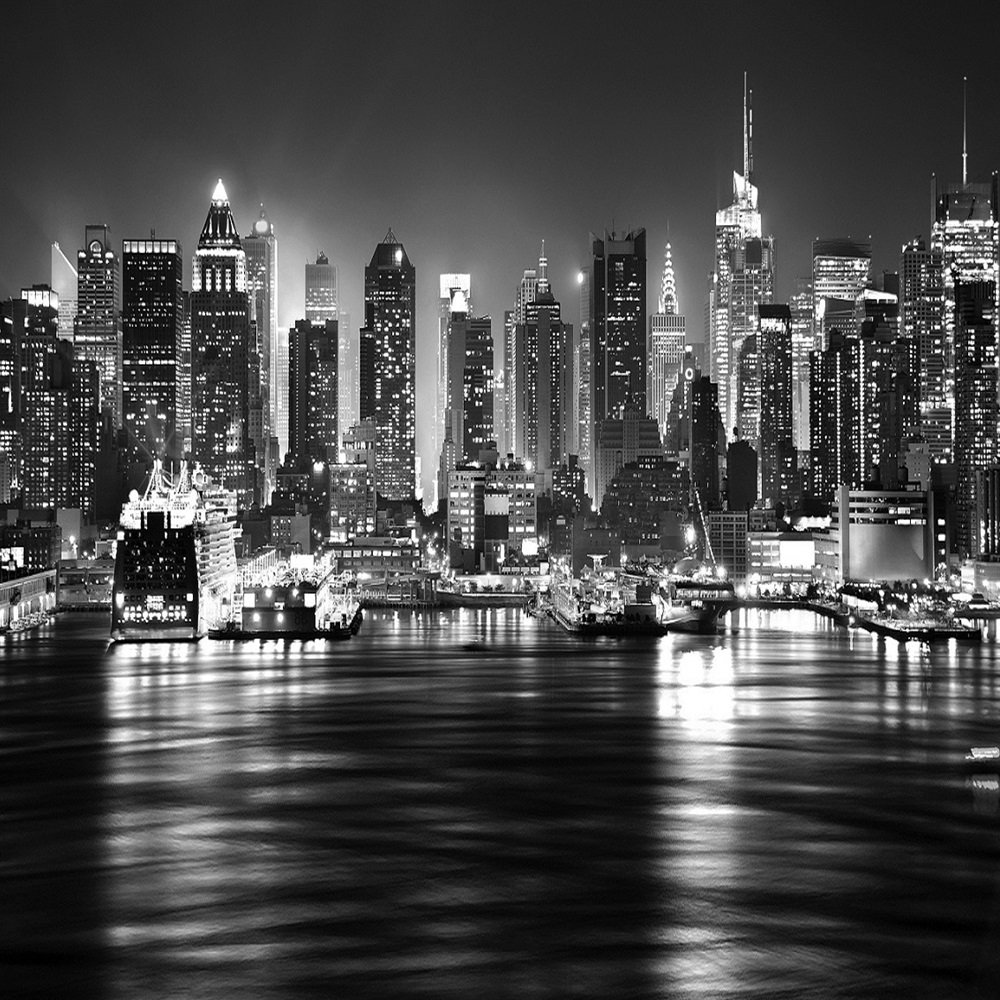
Amelia slowly stepped out of the elevator. The sounds of the crowds reached her first, then the bright flashes of cameras. Her new world was set to be bright. She was designed for the city. The city was designed for her. She stepped out the doors, the cameras followed her, she turned to the monoliths, she understood: Harborside knew the world and the world knew Harborside, within Harborside was the world. She turned to the sea, there laid the cradle of life, status, money; it flooded into her the meaning of value, the true meaning: money.
Photo Credit: http://funguerilla.com/
As she walked the city doors opened to her. She was Amelia, the city was hers. She would never be lost to the crowd, the city would never bowl over her, time would not forget her, Frank was already fading.
She wandered the city all day, the crowd only grew around her, but as she strayed closer and closer to the borders of her postcard the crowds grew restless. Space seemed to shift. Where she walked she owned, the postcard was empty space with blank people, but where she walked new hope, new futures sprang up like daisies in her wake. But as she neared the last corner, the last wide boulevard, her daisies seemed to fight for sunlight. Her unique ownership was being pushed back by the ownership of the many, the workers no longer singular but one full moving entity, lost to the mindless grind of the crowd, the fingers became a hand.
She had reached the end of the immunization ring, the end of the filigree border on the postcard of Harborside and standing on the other side of the glass was Frank.
Before Amelia, who was the crux of the city, eyes of the future, was Frank, whose hands bled from his first shifts in the factories, who was beginning to smudge around the edges.
Before Frank, the disenchanted dreamer, a man of ideals and cities past, was Amelia, a small mechanical girl with holographic eyes and the entire modern world and future in her circuit board chest.
Amelia was city-made and city-grown. From where she lived the city was just a writhing mass, gridded like a chessboard, and full of monotony. Her circuits were overstimulated. She was surrounded by wires, cords, and progress. She was living modernity and on clear days she could almost feel like a part of the masses, she could almost feel like she interacted with them. Almost.
Frank wandered the city, cataloguing every face and type like a child seeing the world for the first time, walking a new language, but the people seemed to pass by him – no, look through him, like he didn’t matter. In truth, he began to think, do they really matter to me? But as he took another sharp corner, his mind clipped the edge of the building and then lodging was on his mind. He was in the right district given the signs hanging above doors and out from awnings, but he soon found he barely had enough money to stay the week out. How strange that what had had so much value previously in his life was so empty and useless in exchange here in Harborside.
Amelia was coming down from the clouds about to face the world for the first time, naive and one of the richest and rarest people in the city, but equally mysterious. Her mind had yet to grasp value; everything to her was bought and categorized away into an advanced filing system of uses.
Photo Credit: ashleyhooper3d.wordpress.com
The sky filtered into her windows, if she reached out, the clouds almost reached back, but who cared about clouds when she was going down to the ground.
From Amelia’s window far above Harborside its postcard appearance was breathtaking, heart-stopping from the aerial view, perfectly aligned like an OCD wet dream – but beyond the picture perfect Harborside was its dark truth, its fingers, its slums. Where the roads wended their way around makeshift homes, bodies being consumed by the cobbles of the city. The roads staggered like a drunk artist’s footsteps. The slums belied truth, the reality of the city for the majority. The true artists, the ultimate image of life, a slow burn out. The truth was, the city moved too quickly for anyone – even the top Moguls and Traders – to live contentedly, too fast for them to not eventually blend into the tapestry of time, of the city.
But while Amelia’s elevator sunk level by level, Frank’s feet were dragging him from job to job, ebbing closer and closer to that blight, the narrow streets, the moss, the dark sky, the forgotten, the true heart of the city. The cost of living had drained Frank, his week was up. Once a private person, he now broadcasted all he could, he needed all the help he could get. He dreamed of the past. When he was well off in the country, people tipped their hat to him, they knew his name, they cared. He dreamed of a city long past, just emerging from the harbor, crawling onto land like a new life form, full of opportunity and riches. His feet were carrying him further from the monoliths of global life. From the masses that thrived on standing out from the crowd, from the masses who had found what they sought, or at least the veneer of what they dreamed.




You must be logged in to post a comment.