‘The Things They Carried’ Essay Pt. 1

I wish I had the time to write something good but I am in a rush. Here’s part of an essay from earlier this year in English class:

  1. What servicemen chose to carry revealed who they were. Select 3 of the characters. Explain what each carried and what was revealed about that character.

The Things They Carried is Tim O’Brian’s semi-fictionalized account of his time spent fighting in the Vietnam War. Told in a series of short memoirs, the author jumps from character to character, a story to story, in order to explore a range of themes: from death and ethics, to love and the relationship between truth and fiction. In Chapter I, O’Brien describes the physical items each soldier chooses to carry during their march. With this, the reader gets a sense of the characters, their emotional baggage, and their coping mechanisms; all of which are expanded on throughout the novel.

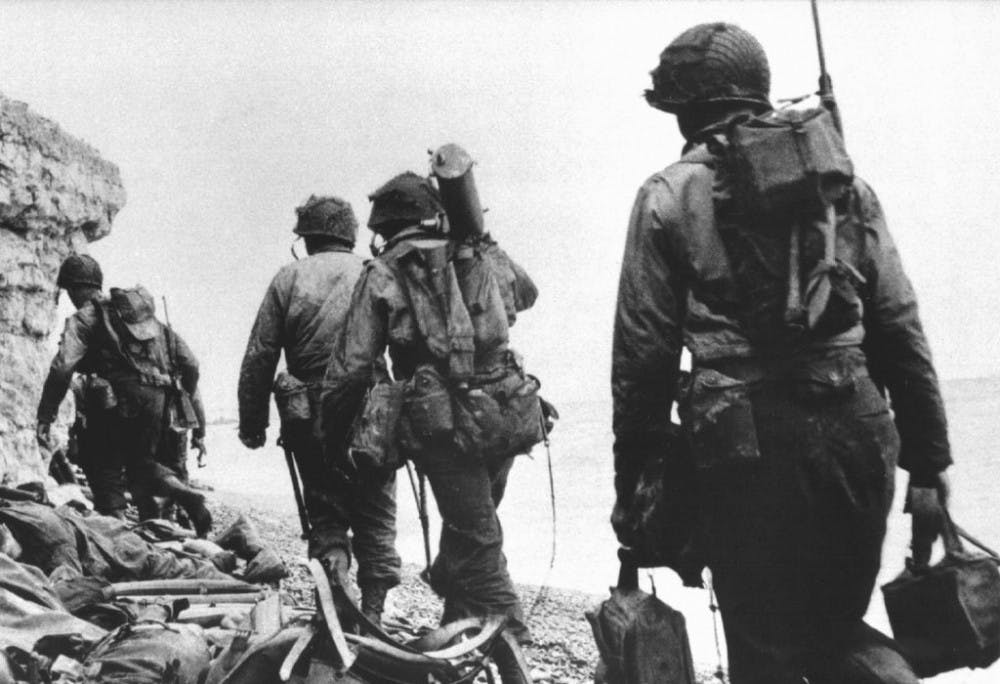
In just the first few pages of the book, the platoon leader is introduced through his chosen supplies. Jimmy Cross, simply referred to as Lieutenant, carries with him correspondence from a girl named Martha, who lives back home in Ohio. “In the late afternoon, after a day’s march, he would… unwrap the letters, hold them with the tips of his fingers, and spend the last hour of light pretending.” Among these letters are also two photographs and an oval pebble collected from the Jersey shoreline and gifted to him for good luck. The Lieutenant’s memorabilia expresses that he is lovestruck, and wishful and turns to his imagination in order to escape his dire reality. In fact, Cross will one day be so absorbed in his fantasies that when a fellow troop, Lavender, is shot on his watch, he blames himself and burns the letters. Because, while he may be a romantic, the Lieutenant also has a great sense of duty. As the unit commander, “Jimmy Cross carried a compass, maps, code books…and the responsibility for the lives of his men.” Altogether, the Lieutenant’s possessions reveal his sentimental and dutiful true nature – two qualities that he relies on during the intensity of warfare.

PC: https://snworksceo.imgix.net/jhn/334322c3-3260-4fc4-a9ba-1e713aea3c73.sized-1000×1000.jpg?w=1000

Girls‘ Last Tour

At that time, the earth’s surface is not suitable for living anymore, so people built new cities on top of old cities and they kept stacking higher and higher. Two girls left their family and started a journey on their German half-track motorcycle, with the goal of survival and trying to reach “the top”. But they travel up to higher levels, they only found war machines and other leftovers of human activities.

Even though their findings were depressing, they did not hold the girls back. They kept looking for resources and moving forward. They even gave up their most valuable things such as the dairy and books to keep themselves alive. The girls’ desire for survival in a world full of despair is admirable.

Lastly, this is a poem by Hermann Hesse that was cited in this manga.

Out Wandering

Don’t be sad, soon comes the night,
When we watch over the faint countryside,
As the cool moon secretly laughs
And we rest hand in hand.

Don’t be sad, soon comes the time,
When we rest. Our small crosses will stand
On the bright roadside together,
And it rains and snows,
And the winds come and go.

Auf Wanderung

Sei nicht traurig, bald ist es Nacht,
Da sehn wir über dem bleichen Land
Den kühlen Mond, wie er heimlich lacht,
Und ruhen Hand in Hand.

Sei night trauig, bald kommt die Zeit,
Da haben wir Ruh. Unsre Kreuzlein stehen
Am hellen Strassenrande zu zweit,
Und es regnet un schneit,
Und die Winde kommen und gehen.

photo credit: aminoapps.com

on arrival

Decisively led and decisively fought 

He galumphed well ahead

The war won

The battles overthought

To his werriwinkle eyes

In their bleary sockets

Victory had begun to melt into rose gold tapestry

The ride home was as merry as it was raucous

The steel by his waist sweltered with pride

Gold in his face beamed gaily wide

But on his arrival

The earth that had been trodden

By his gate

Since his adolescence

Was sown with salt

And marred with pestilence

Photo Credit: pinterest.com

Shattered State

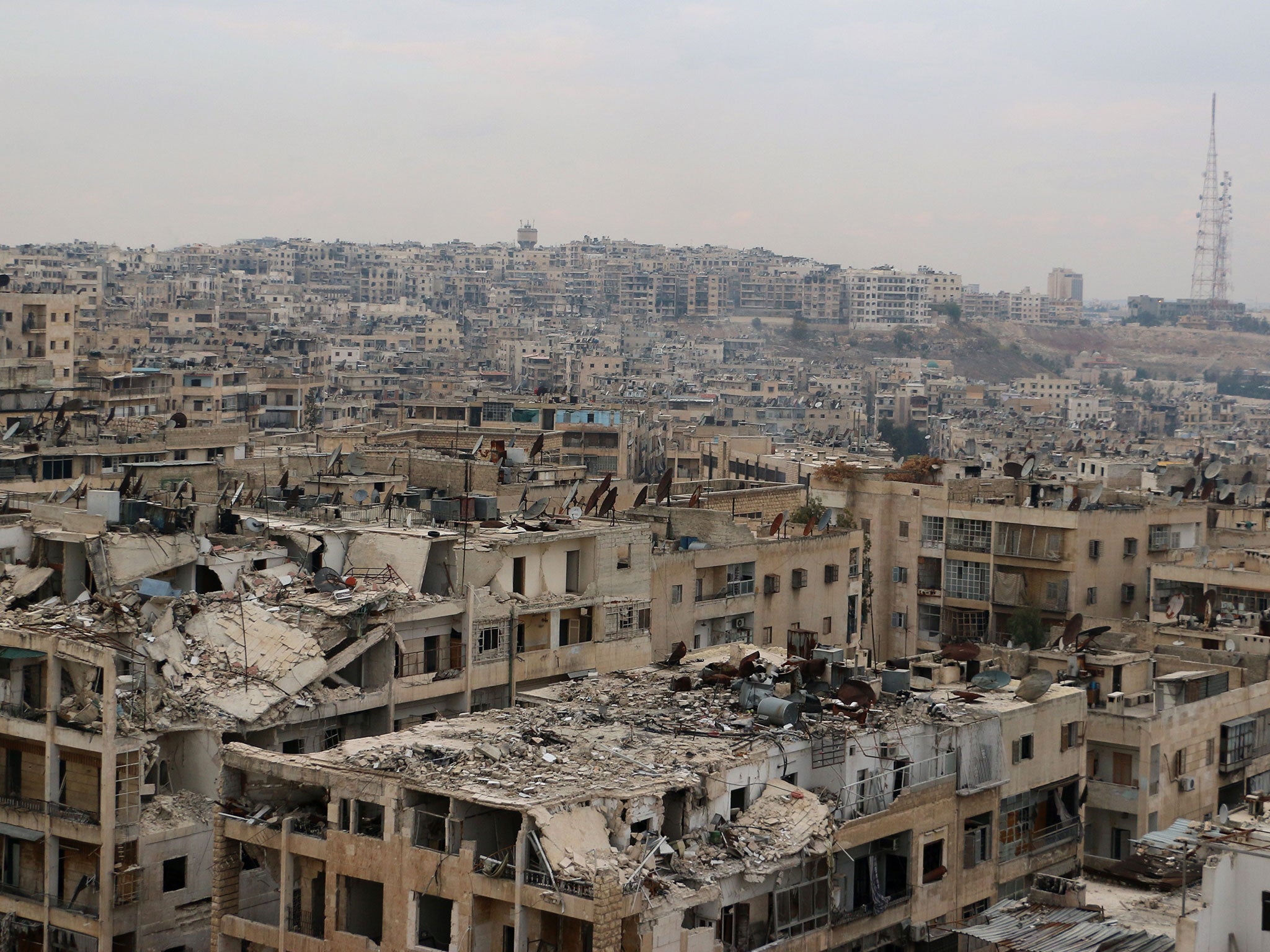
Syria has been the centerpiece of an ISIS invasion, revolution, Russian aggression, and Western Concerns. With Aleppo as the prime example of what has befallen of Syria, entire populations have disappeared.

Photo Credit: Independent.co.uk

Sections where thousands walked daily are now ghost towns, filled with rebels, daily Russian bombings, and the desperate ones who don’t want to leave their homes. The country once filled with tourism and stability has taken a sudden turn into total chaos, chaos originating from an Arab Spring pro-democracy protest opposing the torture of a group of students in 2011.

Following the mass demonstration, dozens of people were killed, between protesters and the aggressive police, prompting protesters to gain weapons to defend themselves, then eventually rid government forces altogether in cities.

Five years later and millions have run from the country, with the majority landing in Turkey and surrounding Islamic Nations. A small percentage migrated into Europe, prompting anti-Islamic protests within such Nations.

Russia takes lead in defending Syria’s failing government with aggressive bombardment on civilians and rebels alike. The UN has stopped sending aid to civilians due to attacks on their convoys, and the U.S. arms Democratic Revolutionaries throughout Syria while the Islamic State advances. This Nation has fallen apart, and now third parties stroke the flames instead of leaving the situation alone between the revolutionaries and the government.

So where does it end?

So far, there is no ending from a diplomatic viewpoint; the Geneva talks have only been another platform over which the U.S. and Russia disagree. There’s no clear sign over the future of the Nation, or whose hands it will fall into. Whether it’s Western powers, Russia, or radicals, the nation and it’s structure will remain shattered for year to come.

War

The air was cold. The wind, a warning. As we unloaded the bus nervous jawing could be heard among the new recruits. “We are so gonna die.” Veterans could only hide their agreement with a snark grin. “You’ll be fine, it’ll only hurt for a little bit.”

The soldiers unconsciously split into herds, discussing amongst themselves their past experiences or worries. Our troop leader, donned in a large gray hoodie, talks to the general, who is gathering our gear.

Guns, masks, and bullet holders are lined up against a stall. “E’ery one grab a gun, grab a helmet, and grab a holder.” A young child, no doubt the offspring of the general, hurries about getting the gear for our new recruits.

“Make sure the safety is on, right here! Make sure you keep your barrel plug on! And when you’re on the field, do NOT take off your mask!”

Introductions pass by quickly as nervous energy rises. Recruits want to take their first breaths of the battlefield, veterans want to sink into familiarity.

“Split yourself up into two teams! Here.” I am handed a pink ribbon. Guess I’m joining their team. “Here, let me help you with that,” he continues, reaching back for the ribbon. “I can do it myself,” I almost scoff, turning away and carefully looping the bright ribbon onto my left arm.

To my dismay our leader was on the blank side, as well as many of the rookies. Bins of bright orange bullets are dropped onto our table and everyone rushes to fit as many as they can into their bullet holders, tied around the waist, and into their guns.

Weapons loaded, masks on, we are led to our first battlefield by another general. “Your objective here is to take the flag, set in the middle here, and bring it to the base of the opposite team.” Everyone nods in agreement. “Blanks, you’ll stay here. Ribbons, take a walk.”

Self-designated captain of our small group of seven quickly knits together a loose plan. “You two take the right side, you two on the left, two of you stay here and guard the base, and I’ll charge for the flag.”

The whistle blows, and I dive for the nearest hay bale. Shots are fired, and I already feel glass-like shells of bullets spraying my neck. Hay flies everywhere, and I’m already breathing heavy.

Without firing a shot, I weave between hay bales, watching the enemy and my comrades alike. Once I looked up – our leader was facing away from me! I shoot once, twice, thrice, curse these horrible guns and their horrible aiming, then I hit him on the head. He spins around, trying to catch a glimpse of his attacker. I turn, concealing myself behind the hay again. He raises his gun and walks out.

Up ahead I can see a good friend of mine, someone who roughhouses with me but is actually soft as a puppy, charging two young rookies desperately hiding behind their hay base. He stands square, pointing his gun. Although I can’t see his mouth, I can imagine him yelling “surrender! Surrender!”

I look away and leap for the next bale of hay – and almost collide with person. I see a flash of pink and assume he’s a ribbon, but upon closer inspection I realized he was actually a blank. He raised his gun at me and I feel a flash of fear rise within, causing me to draw my own gun up. We stare each other down for a moment before simultaneously lowering our guns. “Shoot each other already!” The general’s voice comes at us from somewhere above. We don’t, and simply ignore each other for whatever reason.

Bodies of three, four pile along the edges of the field. Though before I know it, the match is over. “Yeah!” Captain shouts, “we kicked a**!”

I finally got shot in the second round while stalking behind large electrical wiring wheels. The bullet hit me directly on the inner side of my right knee, a sensitive spot for a person with knee problems like me. I raise my gun and breath deeply to ease the pain as I quickly limp out. Gotta watch your left side, I remind myself, watch your left side.

Somewhere in round three I got shot three times in a row. I had ducked, but was not close enough to the poorly constructed building to hide my body. I was hit on my left elbow first, followed by the left side of my chest, followed by my left hip.

The pain didn’t come until I walked out of the battlefield. Breathing shallow, I put my hands on my knees to wait the pain out. “Don’t worry,” our captain says, patting my back with paint-stained hands, “it’s ok.”

The worst battle by far was the last. Ammo had run low, and our three rookiest rookies had decided to flee. The teams were now six to five, with odds in neither of our favors.

Our shields were large, colourful, and dripping with paint. They were inflatable and grew out of the ground, rounded at the edges, making it poor cover.

At the whistle I ducked and weaved, rounded orange bullets whizzing around me at alarming speeds. There’s our leader again, in his conspicuous gray hoodie! I kneel down and take a dozen shots, all of which go in a comical arc around his body. These freaking guns, I swear.

Pink team won again. Celebratory shots were fired, leftover ammo used up, and tired and injured troops saunter out of the battlefield. They talk amongst themselves as if the war never happened. How can they?
On my thigh is a perfect imprint of the accursed paintball, a full moon of purple bruising growing thick around it.

This is the pain of paintball.

The Real Battle For Syria

Asides from the rumors of the United States arming rebels, the Obama administration hasn’t truly intervened in the ongoing Syrian conflict all that much until recently. The deployment of chemical weapons in Syria caused a major disturbance that cried for the US government to step in. However, is a US intervention truly necessary? Or is it just fresh lemonade for America’s insatiable oil thirst? Most people would argue that the purpose of an intervention is to protect refugees and civilians. Others would argue that the US is after Syrian oil fields. Unfortunately, both of those assumptions are wrong. We all wish it was just that simple; however, considering America’s Predator Drone rampage in Pakistan, it is safe to assume the Obama administration doesn’t really care about civilians, and Syria’s oil fields resemble a droplet of water in comparison to Iran’s massive ocean.

Bashar Al-Assad leader of Syrian government.
Bashar Al-Assad, leader of the Syrian government.

So one may ask, why is the United States of America meddling in this foreign mischief? Simple, the answer is oil. Not Syria’s oil, but rather Iran’s. In 2010, Syria, Iran and Iraq set a plan in motion which was set to build a pipeline connecting the south of Iran, through Syria and into Europe. Seems harmless right? Considering that all that precious oil will most likely end up in western hands. However, the original plan was to include Qatar, one of the world’s largest oil producers, and a beloved ally of the USA, to supply a pipeline that would go through turkey and into Europe. Nonetheless, Bashar Al-Assad, the ruler of Syria, decided that its enemy Sunni states shouldn’t be involved, so he denied their participation. Instead, Syria chose to stick with the Iraq and Iran plan with Russian support over the Qatar and Saudi Arabia option with American support. If Syria, Iran and Iraq  permit the involvement of Qatar and Saudi Arabia, the Nabucco pipeline, a project set to diminish European dependence on Russian energy would be successful. However, Iran and Syria refuse to support the Nabucco project and decided to stick with the Syrian pipeline, also known as the Trans-Arabian . Nabucco would go through Turkey instead.

To this point it is obvious that the reason the United States wishes to topple the Assad regime is to gain control of that pipeline and restart it. This time with the main participation of Qatar and Saudi Arabia. This also explains the constant intervention of Turkey, Qatar and Saudi Arabia, who have been supplying weapons to the Free Syrian Army and the rebels. To summarize, the pathetic excuses of the Obama administration are specifically designed to maintain the public distracted from the real intentions of the US, which are and will always be to obtain more oil. A perfect example was set in the Bush administration, where George W. Bush claimed that there were WMDs present in the region of Iraq and invaded the country. The US found no WMDs and the entire war just ended up on another pipeline that  the dutch company Shell now controls.

Links:

http://www.eia.gov/countries/cab.cfm?fips=SY

Destructive Tiger

efg

The tiger has made threat once before.

It came descending on those who value freedom.

It was pushed back into the depths of poverty and despair.

Yet the idle threats begin once again.

Perhaps to make a point or boast to the world.

It does no good, it merely aggravates tensions.

The rest of kingdom takes the threats no longer.

They journey far vanquishing the mighty Tiger.

The Tiger does not go gracefully.

The Tiger roars and claws onto its last remains of power.

Heat and energy decimate the world.

Why?

Simply because of an unjust tiger refusal to die.

Joyeux Noel

Years ago, I remember watching a French movie about war. In all honesty, that’s about all I remember, except for this one scene in the middle of a snowy field with an officer in blue standing in the middle. The actors spoke in French, and being fluent in French myself, I followed along as best I could. What I didn’t quite catch, I would refer to the english subtitles in order to interpret.

Because I was so focused on understanding what the characters were saying, I missed a lot of what was actually happening in the film. I do remember that it was amazing though.

This week in A.P. World History, we were assigned group projects. My partners and I were assigned a prompt asking us to compare what our textbook told us about WWI to the song “Christmas in the Trenches” by John McCutcheon. As I listened to the song, I suddenly realized that the scene being set by the singer was one somewhat familiar to the movie I had seen years before, Joyeux Noel.

This week, my research has helped me to understand why that movie was so amazing. I had no idea that it was reenacting the Christmas Truce of 1914, where soldiers on a battlefield during WWI called an unofficial truce for the holidays.

Read More »

War


My name is not important, but it will be. I will stand in front of an army of thousands and watch empires fall. But that is not where this story starts.

We must move past the burning dart, and the ruins of Rome. I am Caesar and Alexander the Great. I led the armies of barbarians against my empire, and I destroyed what I had helped build.

I am locked in a battle with a younger more ambitious spirit. Limitless power emphasizes the qualities of a man, the good and the bad.

I was the first omnipotent being, my only son is the other. Time became our battleground. He grew corrupt with his power, and so did I.

Countless lives were lost.

And now I stand here at the end of the universe staring my enemy in the eye, and I can’t help but feel that this was just a matter of misplaced emotion. We could have stopped this.

The Foxes and Coyotes

ere

In a great desert lived Foxes and Coyotes.

They got along great for a time.

A holy man led them both to an oasis.

To a desert paradise.

The Oasis sought to divide them.

Eventually the Oasis did.

Foxes and Coyotes were brothers once.

But both now fight and die.

The other desert creature sought to end the bloodshed.

They drafted an unbreakable truce.

Foxes gleefully accepted, their numbers had withered down.

Coyotes barely accepted, not wanting to share with the Foxes.

Time passed, the Coyotes outnumbered the Foxes.

They attempted to exclude Foxes from oasis lands.

The Coyotes launched an attack and surprised the Foxes.

The Foxes had something the coyotes did not.

Courage and an unbreakable will.

The Foxes stopped the Coyote attack.

The Coyotes lost much of their land.

The other desert creatures were furious and tried for another truce.

The Coyotes vowed for vengeance and would eventually attack again.